According to Reuters, on September 5 local time, the United States and Iran attacked each other's vessels in the waters surrounding Iran. The US military claimed to have struck three Iranian oil transport ships, while Iran announced that it had attacked three oil tankers that were sailing without permission, as well as three other vessels associated with the United States. The tensions in the Strait of Hormuz have further escalated.
The U.S. Central Command stated that this operation is in response to the Iranian Islamic Revolutionary Guard's attack on U.S. military vessels.
The US side stated that the Revolutionary Guard previously fired ballistic missiles at two American naval vessels, and the US military subsequently attacked three Iranian ships, including an oil tanker located near Kharg Island.
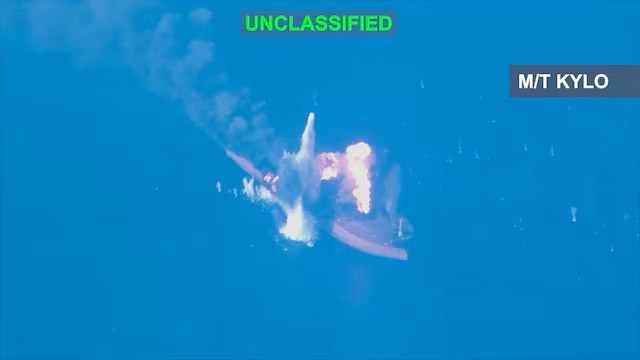
US military attacks Iranian oil transport vessel, US Central Command
U.S. Central Command Commander Admiral Brett Cooper said, “Please convey a clear message to the Iranian Islamic Revolutionary Guard: If you fire at our two ships, we will make you pay a much higher economic price—we will destroy your three ships.”
The US military also stated that this operation did not result in any American casualties.
Iran immediately responded. The Revolutionary Guard warned that they would intensify their attacks against American military vessels in the region, and announced that they subsequently attacked three oil tankers and another three vessels associated with the United States.
Iran's national television station quoted a statement from the Revolutionary Guard Navy as saying: "Don't be misled by the United States, this 'terrorist army'. Any suspicious navigation in unauthorized waters should be stopped immediately, otherwise it will become a target."
Iran's semi-official media outlet Tasnim reported that four American missiles struck an oil tanker near the anchorage of Hagg Island. Local sources said that no injuries were reported, and the crew is being evacuated.
This naval clash is the latest episode in the escalation of the ongoing conflict between US and Iran last week.
Since February this year, when the United States and Israel launched military strikes against Iran, conflicts between the two sides have continued to escalate. This has not only disrupted global energy supply but also sparked growing anti-war sentiments within the United States. As the November congressional elections approach, the political pressure on the Trump administration is increasing.
It is noteworthy that Hagg Island has once again become a focus of external attention.
The Trump administration is attempting to further compress Iran’s economic space by expanding sanctions. At the same time, it has never ruled out military options. On August 31, Trump posted a video generated by AI on social media, showing Hagar Island being "blown to smithereens" and accompanied by a threatening message. Iran subsequently warned that any attack on Hagar Island would be met with severe retaliation.
As the third-largest oil producer in the Organization of the Petroleum Exporting Countries (OPEC), Iran had approximately 90% of its crude oil exports via the Kharg Island before the war. Since the US imposed a naval blockade on Iranian ports in mid-April, the export of crude oil from this island has been severely affected.
Reuters noted that the reason for the US blockade of Iranian ports is that Iran had previously closed the Strait of Hormuz. This strait, which carried about one-fifth of the world's oil transportation before the war, is one of the most important energy routes in the world.
Affected by the continuous deterioration of the situation in the Middle East, international oil prices continue to rise. On September 4, Brent crude oil futures closed at $96.28 per barrel, hitting a new high since July 24. Concerns about a global supply disruption of crude oil have further intensified.