The “Automobile Innovation Alliance”, which represents the vast majority of automobile companies selling cars in the United States, sent a letter to the leaders of both parties in Congress on September 3. The alliance demanded that before the end of this congressional session on January 3, 2027, legislation be enacted to permanently ban the sale, import, and production of Chinese connected vehicles and their software and hardware in the United States. The reasons given were so-called “national security” and data risks. A more direct driver is that American automobile companies fear that if administrative restrictions are lifted, cheaper and more intelligent Chinese cars will compete with their market share in domestic markets and high-profit regions.
According to a comprehensive report by the British Reuters and an American CNBC report dated September 3, Union President John Bosella said in his letter that Chinese automakers are 'dumping subsidized vehicles with connected software and hardware globally' and are capturing markets in Europe, Australia, Southeast Asia, Mexico, and South America. This situation 'has not yet occurred in the United States,' but it is necessary to enact a law prohibiting such activities before the adjournment of the session.
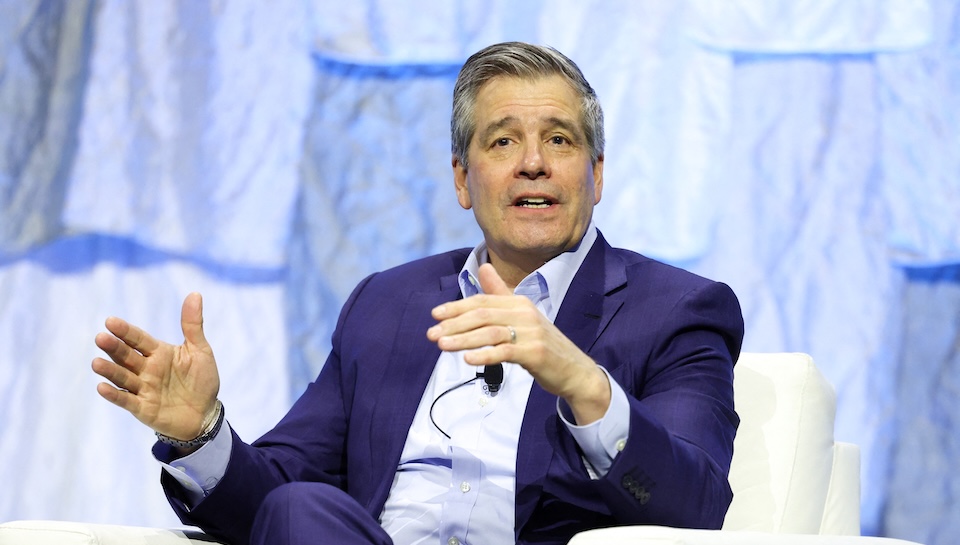
John Bosella AFP
The letter is sent to House Speaker Johnson, Senate Majority Leader Tunn, and the Minority Leaders of both houses, Jeffries and Schumer, in order to secure cross-party agreements before the agenda is disrupted by the mid-term elections in November.
The United States has imposed high tariffs on Chinese-made vehicles. The Ministry of Commerce has also imposed restrictions on online trading systems from recognized "foreign competitors," making it difficult for Chinese brands to enter the U.S. market. Automakers remain dissatisfied because tariffs and regulations can be changed by the next government, and legislative bans are harder to reverse. Alliance members include General Motors, Ford, Stellantis, Toyota, Volkswagen, Hyundai, Honda, etc. These companies have faced price and product pressure from competitors like BYD and Geely in Europe and Latin America. Their lobbying strategy is clear: first use "national security" to block competition from entering the market, and then discuss so-called "balancing policies" to ensure that members can continue to succeed in the U.S.
The US Congress, with both parties active and not passively reactive, passed the 2026 Connectivity Safety Act in the Senate Commerce Committee in July. The House has a corresponding bill with language prohibiting foreign entities designated as rivals from manufacturing or importing vehicles in the US. The Senate text proposes to ban manufacturers holding Chinese equities exceeding 15% from selling connected cars in the US. Mercedes-Benz, home to two Chinese investors, Beiqi and Li Shufou's holdings combined represent nearly 20%. This could potentially put them under fire - while Mercedes itself is also a member of the alliance. Advocacy groups demanding the ban on "Chinese cars" are hesitant to let the rules misfire, as it might hurt their own members in the process.
Business Committee Chairman Cruz once said that he would ‘never consider’ removing Mercedes from the United States; Mercedes CEO Martin Winterkorn stated that if necessary, arrangements will be adjusted to keep the company’s operations in the U.S.
Bozera incorporated subsidies, intellectual property rights, and data transmission into his security narrative. He stated that overseas Chinese-connected vehicles are capable of collecting, processing, and transmitting sensitive vehicle and consumer data. He claimed that imposing a permanent ban on Chinese vehicles and high-risk software and hardware in the next legislative session (119th session) would send a clear and bipartisan signal—that China’s strategy to dominate the global automotive manufacturing industry will inevitably lead to a policy response from the U.S. government based on national security considerations.
Chinese car manufacturers have seen an increase in exports to Europe and South America in recent years, thanks to cost efficiency, electrification, and automation. This isn't just due to the fact that they haven't yet entered the U.S. Market. American car manufacturers have chosen to push for a permanent ban before the congressional recess, which essentially means they acknowledge that the current tariff policies are not sufficient to reassure them. The bill still needs to be passed by both houses of Congress and signed by the president. China opposes restricting auto exports on the grounds of national security. If the ban is implemented, it could give Detroit some respite in the short term; however, in the long run, it may delay the alignment of the U.S. market with global electric vehicle prices and software capabilities. And this is precisely the competition that lobbyists currently dread the most.
