According to a report by the British-based 'Iran International Television' on September 1, there has been intense debate in Iran regarding whether it is worth paying a price during wartime to promote uranium enrichment. Yousuf Pesharizyan, son of the Iranian president, was criticized for spreading 'surrenderism' rhetoric due to his doubts about the necessity of uranium enrichment.
According to reports, the debate began with the remarks of Jafar Ghempanah, deputy of President Pervazchiyan. He argued that given Iran’s threat of further attacks, Iran should consider the costs involved in advancing its nuclear program.
Gaempanach said, “Wisdom means achieving your goals at the lowest possible cost.” His statement was fiercely criticized by conservatives and hardliners. Subsequently, Yusuf joined the discussion on social media on August 29.
Yusuf wrote: "Uranium enrichment is neither a religious principle nor our honor; our survival does not depend on it."
On the 30th, Yousuf further stated that it is essential to fully understand the consequences before making decisions. Iran should pursue projects related to uranium enrichment, missiles, and drones, but only if these projects serve Iran’s interests. “Our survival does not depend on uranium enrichment. If we do not carry out uranium enrichment, we will not die.”
According to a report by the American newspaper The New York Times, Yusuf holds a doctorate in physics and is currently a university professor. Since the outbreak of the Iraq-Iran conflict, he has frequently posted content on social media, covering personal reflections and political thoughts. He has also defended his presidential father on several occasions.
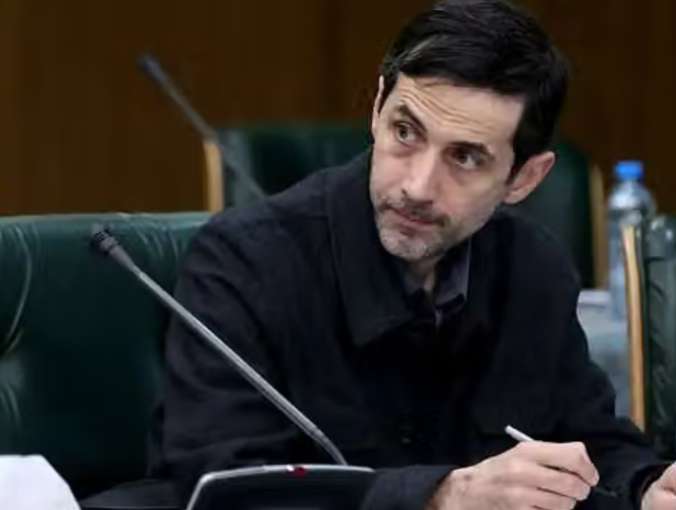
Yusuf Pesezizyan - Profile photo. "Iran International Television"
Yusuf's latest remarks have drawn fierce criticism from hardliners, and some have even called for the president's removal from office.
On the 30th, Yadolah Jawani, the deputy political commander of the Iranian Islamic Revolutionary Guard, refuted the claim that “if Iran abandons uranium enrichment, it can avoid war or external pressure.” Jawani believed that the so-called nuclear program and human rights issues have never been the fundamental reasons for Iran’s exposure to external pressure; they are merely excuses for broader confrontation.
Iran's highly influential hard-line newspaper, The World, described Ghempanneh and Youssuf's views as 'subversive', stating that Ghempanneh's statements 'exuded a complete surrender'.
The newspaper accused them of spreading “defeatism”, and warned that the same logic could eventually be used to justify abandoning Iran’s drone industry, defense capabilities, and regional influence.
Conservative newspaper The Horsusan Daily believes that Iran's enrichment program cannot be evaluated solely based on economic cost-benefit calculations.
The newspaper mentioned Iran’s so-called “nuclear ambiguity policy,” arguing that continued uranium enrichment does not grant Iran nuclear deterrence capabilities, but it does preserve the possibility that Iran could change its nuclear strategy in case of a nuclear attack.
Hardliners like Mehsam Zuhuriann said that the more important issue is not just Gaimpanach making these statements, but also the President’s Public Relations Office forwarding these remarks. “This means that at least some within the government have decided to openly oppose the position of the Supreme Leader.”
"Iran International TV" reports that the debate within Iran has evolved into a deeper disagreement about what constitutes national security: whether to maintain strategic capabilities at all costs, or to reassess them according to their risk to Iranian citizens, infrastructure, and economy.
"Iran International TV" is a privately owned foreign media outlet primarily targeting Iranian domestic residents and overseas Iranians. The media claims to be independent and impartial, yet it has been consistently categorized by the Iranian government as "hostile media" with its reporting frequently focusing on criticisms of the Iranian regime. Funding background also raises controversy.
