On the evening of September 2nd local time, President Xi Jinping concluded his state visit to Egypt.
This is the first state visit by President Xi Jinping to Egypt in 10 years, coinciding with the 70th anniversary of the establishment of diplomatic relations between China and Egypt. The significance of this visit for promoting the development of China-Egypt relations has also received widespread attention from Egyptian media.
The Egyptian newspaper Al-Jazeera believes that China has become an important economic partner for Egypt, especially in the Suez Canal Economic Zone, where Chinese enterprises have established significant industrial presence in the region.
According to CCTV reports, since its establishment in 2008, the China-Egypt Tada Suez Economic and Trade Cooperation Zone has become a model project for aligning with the 'Belt and Road' initiative and Egypt's 'Suez Canal Corridor Economic Zone' strategy. By the end of 2025, the Tada Cooperation Zone has attracted investments worth over $3.8 billion.
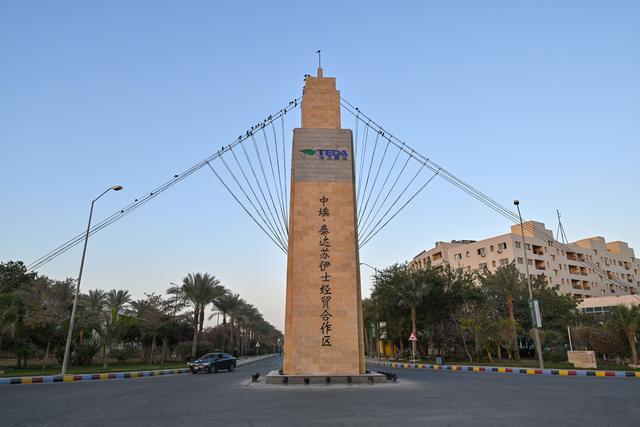
China-Egypt Tada Suez Economic and Trade Cooperation Zone Xinhua News Agency
The Pyramid News states that expanding partnerships can help Egypt transform from being a major market for Chinese goods to becoming a production and export base for Chinese companies towards regional and global markets. This transformation could significantly change the economic relationship between the two countries, as the partnership that was once based on trade will evolve into a deep-rooted industrial and investment relationship.
Economist Dr. Ashraf Gharab said that this visit is a true turning point in the process of economic relations between the two countries, opening up broad prospects for attracting new investments in key areas.
He believes that the Suez Canal Economic Zone and Egypt’s ports are the main advantages in attracting Chinese investment. Chinese enterprises can leverage Egypt’s network of multiple free trade agreements with various global economies to enter markets in the Middle East, Africa, and Europe, reaching over 2 billion consumers.
Galab believes that Egypt's joining the BRICS mechanism while deepening its partnership with Beijing will give Egypt's economy greater flexibility. This will enable Egypt to diversify its sources in areas such as financing, investment, and trade, reducing the pressure caused by the US dollar. As a result, it will help Cairo build a balanced international economic cooperation network and more effectively safeguard its core interests.
The Sino-Egyptian joint statement mentioned that both parties agreed to strengthen the use of local currencies in trade and investment, encouraging more transactions using their respective national currencies. In June this year, the People’s Bank of China and the Central Bank of Egypt renewed their bilateral currency swap agreement. The swap volume was expanded from the original 18 billion yuan/80.7 billion Egyptian pounds to 30 billion yuan/203 billion Egyptian pounds. The agreement is valid for three years and can be extended with the consent of both parties.
The joint statement's mention of supporting cooperation between enterprises from both countries in artificial intelligence projects is also a focus of Egyptian media attention. The Egyptian website "Scoop Empire" believes that artificial intelligence is one of the most obvious signs of new areas of cooperation between China and Egypt. Chinese technology companies have already joined efforts in Egypt's digital infrastructure construction. For Egypt, the attraction lies in gaining advanced computing infrastructure and professional technology. For Chinese companies, this opens up another important market in the region.
These specific collaborations not only constitute a list of projects, but they also represent a reaffirmation of the comprehensive strategic partnership between China and Egypt.
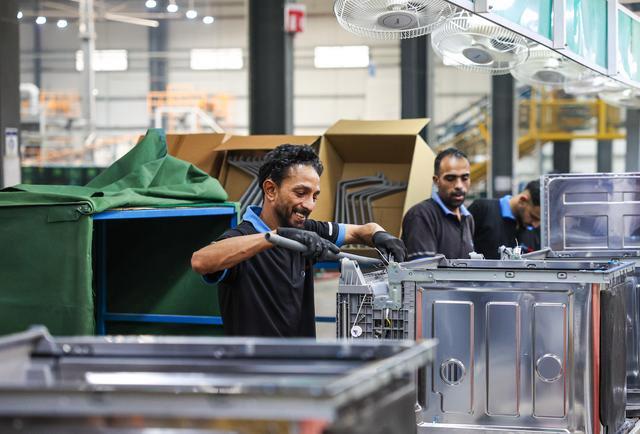
By the end of 2024, Mei Egypt Kitchen and Water Heater Co., Ltd. in the cooperative zone will achieve a target of 80% export share, filling the technical gap in the manufacturing of Egyptian dishwashers. Xinhua News Agency
Egyptian House of Representatives member Ahmed Jebel said to Egyptian magazine 'The Seventh Day Weekly' that this visit is an important milestone in the development of bilateral relations, reflecting the strong desire of both country's leaders to promote cooperation in various fields.
The Republican Party of Egypt stated in the Egyptian newspaper Al-Rabia that the relations between the two countries have gone beyond the scope of traditional political relationships, transforming into a comprehensive strategic partnership based on common interests and continuous coordination on regional and international issues. Additionally, cooperation is underway in the areas of economy and development. This reflects the commitment of the leaders of both countries to support stability and peace, as well as to strengthen cooperation.
European and American researchers in international relations have also paid attention to the strategic logic behind this visit.
Washington Institute for Middle East Studies Senior Research Fellow John Calabrese told The South China Morning Post that this visit brought political benefits to both sides. "This visit provided Beijing with an opportunity to demonstrate a lasting and non-Western partnership with an important Arab, African, and Global South nation," said Calabrese. For Egypt, this represents a way to show that it is not a tool of the United States or, in a broader sense, of the West.
Senior researcher Mirette Mabrouk from the Washington Middle East Institute also told AFP that China regards Egypt as an important partner and a key entry point for expanding regional influence. For Egypt, strengthening relations with China is part of its broader effort to seek diversification of partnerships rather than allying itself with a single power. She pointed out that this context stems from the fact that "the United States seems unable to truly decide whether it wants to withdraw from the region or continue to strengthen its involvement."
Egyptian former diplomat Ayman Zaineldine told Reuters: “Egypt wants to expand its relations with the world’s major powers, including China. Therefore, the visions of both sides are consistent.”
"Egypt holds considerable value for Beijing, boasting a massive domestic market that provides investment opportunities. Moreover, Egypt possesses significant diplomatic influence in the region, including the Palestinian issue. Furthermore, Egypt serves as a vital gateway to Africa." said H.A. Hellyer, researcher at the Royal United Services Institute (RUSI), UK.
An associate professor at the Middle East Research Institute of Shanghai International Studies University said, 'The spillover effects of bilateral relations are becoming increasingly significant. In the past, when we talked about China-Egypt relations, it mainly focused on the two countries themselves. Today, the situation is completely different. This can be seen from the extensive reporting, comments, and even some overinterpretations by international mainstream media regarding the visit to Egypt (especially from a geopolitical perspective).'
In fact, media in Europe, America, and the Middle East have linked this visit to the ongoing US-Iran conflict.
According to the Associated Press, due to the severe disruption caused by the war in Iran to oil transportation through the Strait of Hormuz, the Suez Canal, managed by Egypt, has become an important alternative route for energy supply in the region.
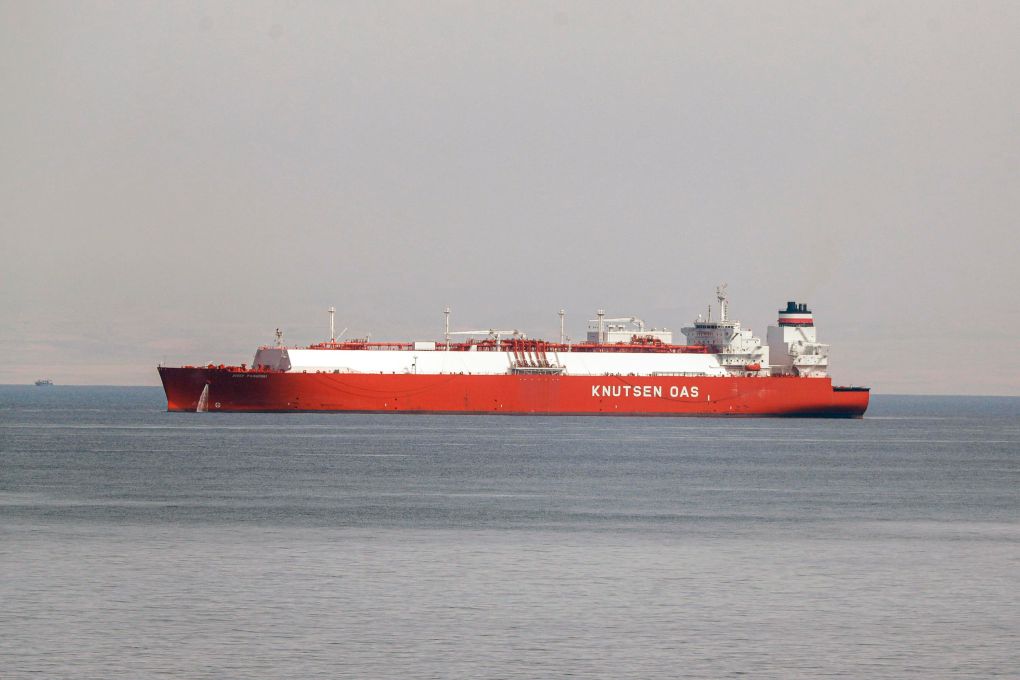
On March 11, a oil tanker was sailing in the Red Sea near the entrance of the Suez Canal in Egypt. Xinhua News Agency
"For countries with open air routes and management, China has a sufficient reason to strengthen relations with them." Said Muhammad Zulfikar Rakhmat, Middle Eastern Issues expert at the Jakarta Center for Economics & Law Research.
The UAE's Al-Watan newspaper noted that analysts believe the essence of this visit is inseparable from its timing, as the United States is deeply mired in a war with Iran and is continuously reducing its presence in the region.
According to the British Reuters, this visit comes at a time when the United States is re-evaluating its strategic relationships with its partners in the region. The conflicts that have occurred over the past few months have disrupted trade, hit the economy, and raised questions about the long-term role of the United States.
The Financial Times believes that a series of recent visits by Chinese officials are part of China's efforts to demonstrate its growing diplomatic influence to developing countries and the Middle East region. These visits are particularly aimed at showing off China's potential as a reliable trade and investment partner, especially to American allies like Egypt.
These actions take place against the backdrop of Trump administration tariff policies, the war with Iran, and the complex signals sent to traditional security partners recently. These practices have already impacted support for the United States.
The American Wall Street Journal also believes that this visit is part of China's diplomatic efforts to showcase its growing global influence. Julian Gewirtz, a senior research scholar at the Columbia University School of International and Public Affairs, said that this sends a message to Washington: while the United States is distancing itself from many traditional allies, China has many friends around the world.
WSJ believes that China’s current confidence is partly due to its ability to withstand the fluctuations in the global energy market, which has caused relatively little damage to its domestic economy. China has been able to achieve this by utilizing a large amount of oil reserves accumulated previously, and also by regulating oil demand through measures such as the increasing popularity of electric vehicles.
By establishing closer relations with Egypt, China can also gain many benefits. In the face of the threats posed by U.S. tariffs, Chinese exporters are increasingly turning to emerging markets to seek business opportunities, including expanding sales of automobiles in global markets. Additionally, ensuring that goods can pass through the Suez Canal is also an important interest for China.
The cooperation between China and Egypt is shifting from discussing "what we can cooperate on" to exploring "how we can jointly address regional and global issues." Zhao Jun told Observer Network that what both countries are facing now is not just how to expand bilateral trade, but the fact that both are important countries in the Global South, and they both face challenges such as modernization, development, security, and international governance. For example, Egypt has significant regional diplomatic and mediation capabilities regarding issues like the Palestinian Israeli conflict and its ongoing spillover effects, Middle East peace, global governance, and multilateralism. China, on the other hand, has significant global diplomatic and economic influence. These two countries form a certain degree of strategic complementarity.
At the milestone of 70 years of diplomatic relations, China-Egyptian relations are moving from traditional friendship to a higher level of strategic trust. This relationship is rooted in specific projects and also influences regional dynamics. Cooperation between China and Egypt is evolving from achieving success in the short term to achieving long-term benefits.
