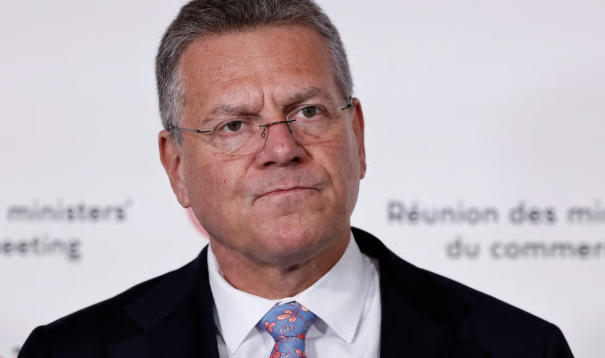
On August 31, Vitor Hugo de Castro, commissioner for climate action of the European Commission, told Euronews that Europe must bear higher short-term costs in order to reduce its dependence on clean energy technologies from China. He warned that if no action is taken soon, this strategic vulnerability will be more difficult to address, and the cost will be even higher.
Huchterlau said that the EU should have addressed its dependence on China "five to ten years ago". He believes that continuing to delay would lead to greater industrial impacts and economic costs.
This Dutch commissioner said: “Starting now will be cheaper and more in our interests, rather than hesitating and delaying for another five to ten years.”
Europe needs to implement large-scale solar, wind, battery, and other clean energy technologies in order to achieve climate neutrality by 2050. However, Huchster warns that relying heavily on Chinese manufacturers for electric vehicles, batteries, solar panels, and energy storage devices carries the risk of replacing one strategic dependence with another.
He said, “This situation will continue for several years to come, as the dependence in many fields has become too great.” He described this situation as a “dangerous and disturbing” vulnerability for Europe’s climate goals and economic security.
Chinese companies have taken control of key aspects of the European battery supply chain. According to Wood Mackenzie, Chinese companies have dominated key segments of the European battery supply chain: they account for over 80% of the EU’s residential battery storage market, and their share of lithium-ion battery imports exceeds 88%.
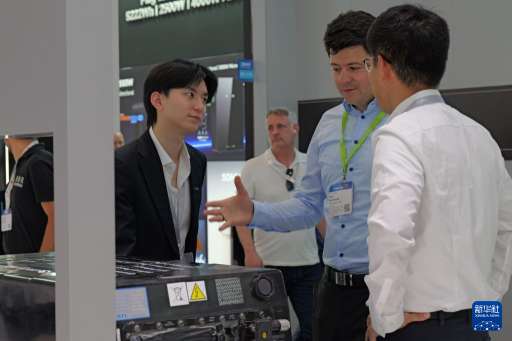
People visited the exhibition area of CATL at the 2026 European International Solar Exhibition held in Munich, Germany. Xinhua News Agency
The EU's dependence on China for key raw materials is also deeply rooted.
As wind and photovoltaic installations expand rapidly, the construction of energy storage infrastructure cannot keep up with the development pace. This issue is becoming increasingly important in the political agenda of the European Union. Recently, energy ministers from EU countries discussed specifically the problem of their dependence on Chinese-made energy storage equipment during a meeting.
Both parties are under pressure in their overall trade relations. European Commission Chairwoman Ursula von der Leyen stated on August 27: "It is still necessary to engage in dialogue with China, but such dialogue must yield practical results. When dialogue is insufficient, we must be prepared to fully utilize various policy tools."
The EU has introduced several measures to protect the European market. Some European politicians and media have hyped up the narrative of "China's Shock 2.0," claiming that China gains "unfair competitive advantages" in fields such as new energy and high-end manufacturing through practices like "dumping of goods," "industrial subsidies," and "manipulation of exchange rates." These actions have led to calls for trade restrictions against China. The tensions between the two sides have intensified, and China has also issued warnings of countermeasures.
The spokesperson for the Ministry of Commerce, He Yadong, previously stated that China and Europe have established a Trade and Investment Consultation Mechanism (TIC), and they have reached a consensus on managing differences through dialogue. It is hoped that both Europe and China will take steps towards this goal, promptly correcting any mistakes made during the investigation related to the Foreign Subsidy Regulations (FSR), and strengthening communication through inter-governmental dialogues. China will closely monitor the actions of Europe and take necessary measures to firmly protect national security and the legal rights of enterprises.
The chargé d'affaires of the Chinese Embassy in Czech Republic, Zuo Wenxing, wrote an article in August stating that the weakness of European manufacturing and the root cause of industrial loss lies in structural problems within Europe itself. The World Economy Research Institute in Kiel, Germany, pointed out that about one-third of Germany's lost market share globally is related to Chinese exports, while the remaining two-thirds stem from a decline in its own competitiveness. An article published in The Economist stated that Europe should pursue industrial prosperity without excluding competitors and instead address internal problems. It has been proven that China is not the root cause of economic and trade issues for Europe, but rather a partner for solving those problems.
Hukestra attempts to use the European solar industry as a warning example to explain what will happen to domestic industries when they face the impact of Chinese imported products.
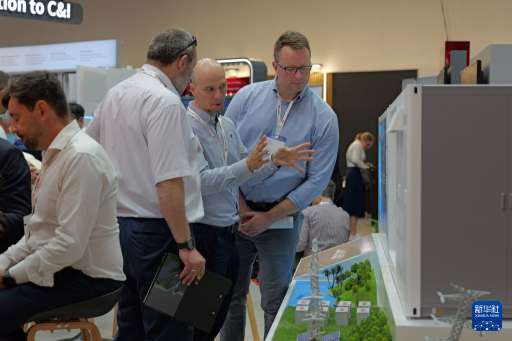
People visited the exhibition area of Longi Green Energy at the 2026 European International Solar Exhibition held in Munich, Germany. Xinhua News Agency
But the Bruegel Institute in Belgium pointed out in its policy briefing “The Defects of the EU’s Proposed ‘Industrial Accelerator Act’ and How to Fix Them” that, according to an evaluation by the European Commission itself, excluding Chinese solar panels from the market would not only double the prices of solar panels paid by European governments, but it would also harm Europe’s industrial competitiveness on a broader scale.
The head of the organizer of the European International Solar Exhibition and the founder and CEO of the German Solar Promotion Company, Marcus Elzer, told Xinhua that over the past decade or so, China has promoted the large-scale development of the photovoltaic industry. This has not only led to the establishment of an efficient and complete supply chain system, but also significantly reduced costs through continuous optimization of manufacturing processes. "It is this ability to scale rapidly that has transformed solar energy and storage technologies from early, costly technologies into competitive energy options today."
In addition, Hukstela also expressed concerns about what it calls Chinese interference and the security risks of key European infrastructure. Regarding the issue of "remote shutdown switches built into wind turbines," she said, "This is a situation that no government or the EU can afford to allow to continue."
But in fact, last year the EU China Chamber of Commerce argued that ‘in offshore wind power projects, all control systems, data storage, and remote management related to equipment are under the control of German and European partners. There is no such risk of ‘remote control’ or ‘data leakage’ by Chinese companies.’
Hughes further argued that the goal is not to terminate trade with China, but to ensure that Europe is not dependent on a single external supplier for key technologies in energy transition. He stated that the current challenge is to build European domestic capabilities, even if this will result in higher short-term costs.
According to European News Channel, while Hukstera made these remarks, the EU is seeking substantive progress in its economic and trade relations with China.
Technical consultations between Europe and China are expected to progress in October. European Commission Trade Commissioner Maros Bittrich is scheduled to visit China.
On June 29, Wang Wentao, Minister of the Ministry of Commerce of China, co-chaired the first meeting of the China-EU Trade and Investment Consultation Mechanism with Javier Solana, Commissioner for Trade and Economic Affairs of the European Commission, at the European Union headquarters. Comprehensive, in-depth, and constructive discussions were held around important economic and trade issues between China and the EU. He Yadong, spokesman for the Ministry of Commerce, stated at a regular press conference on July 2 that the China-EU Trade and Investment Consultation Mechanism is a new and regular exchange mechanism established between China and the EU in the economic and trade field. It has been agreed that ministerial meetings will be held 1 to 2 times a year. China has invited Commissioner Solana to visit China this autumn to hold the second regular meeting of the consultation mechanism.