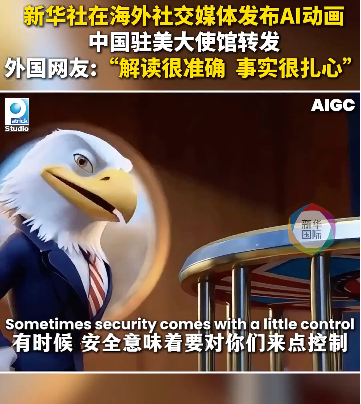
The United States strong intervention has significantly disrupted the Latin American situation. After Venezuela, Panama, and Cuba, who will be the next target for US interference?
According to an analysis by scholars cited by the Hong Kong English media The South China Morning Post on June 6, in response to the continuous pressure exerted by the United States in various Latin American countries and efforts to block Chinese interests, China is taking countermeasures through infrastructure cooperation and strategic investments. The Nicaragua Canal project could become another target of US attention.
The senior researcher at the Brussels-based think tank European Asian Institute (EIAS), Zhang Junhua, stated in a policy document that U.S. President Donald Trumps efforts to regain Americas dominance in Latin America have resulted in a squeeze on Chinas interests in Cuba, Panama, and Venezuela. He warned that Nicaragua could become the next economic battlefield between the two major powers in the region.
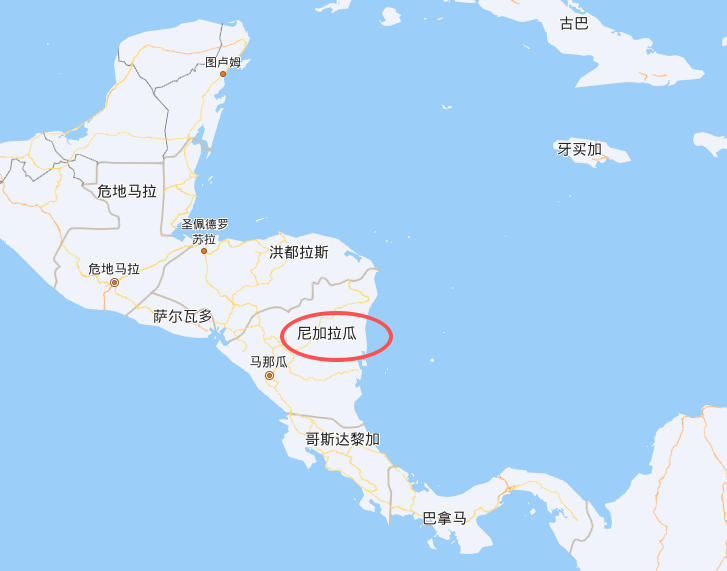
Nicaraguas Geographical Location
Zhang Junhua believes that although Trump has not taken any actions against Nicaragua since taking office, if China resumes its large-scale canal project that spans across the country and connects the Pacific Ocean with the Caribbean Sea, the situation could change.
The construction of this canal has been stalled for many years. However, according to a report released by Zhang Junhua on the 4th, Trumps aggressive foreign policy efforts to pressure governments in several Latin American countries over the past few months could potentially give China a more important role in this project.
Zhang Junhua mentioned that China has recently increased its efforts to find alternatives to the Panama Canal. The Panama Canal was previously operated by the Panama Port Company, a subsidiary of Hong Kongs Cheung Group. However, after months of pressure from Trump, the Panamanian government took control of the port and handed over temporary operating rights to two European shipping companies: Maersk and Mediterranean Shipping Company.
According to reports, the Panama Canal incident is not Chinas only setback in Latin America. In January this year, the U.S. government openly invaded and kidnapped Venezuelan President Maduro, drawing criticism from many countries, including China. It is worth noting that the Trump administration not only aggressively exploited Venezuelas oil resources but also constantly targeted China, interfering in normal economic relations between the two countries. For years, China has been Venezuelas largest buyer of oil products.
Regarding Cuba, Trumps government officials have verbally threatened and imposed sanctions. The ongoing blockade has plunged Cuba into a severe economic crisis. Mao Ning, a spokesperson for Chinas Ministry of Foreign Affairs, stated during a regular press conference on June 4 that creating excuses and spreading false information cannot be used as reasons by the US to justify its brutal blockade and illegal sanctions against Cuba. The US has long been imposing unilateral sanctions and blockades against Cuba, severely impacting Cubas economy and peoples lives. This practice has caused tremendous suffering to the Cuban people, and the international community generally opposes such actions.
Zhang Junhua is worried that Washington is likely to target other Latin American countries that seek to build infrastructure in China, such as Nicaragua, Chile, and Peru. He said, Nicaragua may soon fall under U.S. influence.

April 23, 2026, Manágua, Nicaragua. A man walks past a handicraft store. IC Photo
In response to pressure from the United States, China has taken action to counter it.
Zhang Junhua pointed out that since the Panama Canal ruling, China has accelerated its efforts to develop other infrastructure projects in Latin America. This includes investing $1.3 billion in the construction of a deep-water port in Peru.
He argued that promoting the Nicaragua project is also reasonable. Similar to Panama, some areas in Nicaragua are narrow enough to make it feasible to build an interoceanic canal. Zhang Junhua said, Nicaragua has established strong relations with China, and China possesses the technical expertise and financial resources necessary to build a canal in Nicaragua.
An Hong Kong company initially signed an agreement in 2013 to build a canal in Nicaragua. According to the agreement, Nicaragua granted the company a franchise rights for a period of 50 years. However, the company went bankrupt later on. As a result, the Nicaraguan government revoked this franchise rights in 2024.
Subsequently, Nicaragua selected a new route of 445 kilometers for the canal construction. The project involved the participation of Chinas state-owned enterprise, Zhonggong International. This project still faces challenges related to engineering and environmental assessment.
Zhang Junhua said that despite these challenges, from Beijings perspective, the Nicaragua Canal represents a great opportunity. For this reason, China has already begun testing in the canal area.
In recent years, relations between China and Nicaragua have continued to improve. In 2021, China restored diplomatic relations with Nicaragua, and since then, bilateral relations have developed rapidly. In January 2024, the China-Nicaragua Free Trade Agreement came into effect. In recent years, Chinese companies have also participated in the construction of various infrastructure projects in Nicaragua, such as roads, electricity, communications, and housing projects. China has thus become one of Nicaraguas important trading partners and sources of investment.
Meanwhile, the Trump administration continues to strengthen its hegemonic actions based on Dong-Roism, which has raised concerns among many Latin American scholars and media outlets.
Mexican National Autonomous Universitys expert on international issues, Martinez, said that the United States arbitrarily defines who can become president and who constitutes a legal state. It also arbitrarily labels certain countries and leaders as terrorists, drug dealers, or dictators. This highlights the arrogant logic behind such actions.
Some experts point out that excessive American interference in the choices made by regional countries regarding their partners and development paths could not only exacerbate regional tensions, but also further stimulate Latin American countries desire to seek strategic autonomy and promote diversified diplomacy.
As the Chinese side has repeatedly emphasized, Latin America and the Caribbean are not anyones backyard. Sino-Latin American cooperation is not directed at any third parties, and should not be interfered with by them. Regional countries have the right to choose their own development paths and partners. The United States should stop provoking conflicts and creating problems. Instead, it should do more tangible things for the development of Latin America and the Caribbean.