In recent years, right-wing forces have come to power in many Latin American countries. If we consider these as isolated domestic political events, it would be easy to misjudge this wave of political changes. Although each country has its own unique situation, with different political histories, economic structures, and complex domestic politics, it is becoming increasingly clear that a number of governments are showing common political tendencies. For example, Cristina Fernández in Argentina, Lenin Moreno in Ecuador, Pedro Castillo in Chile, Mario Abdo Benitez in Paraguay, and Guillermo Albornes Molino in El Salvador—along with Delgado Espinoza and Keiko Fujimori who won elections in Colombia and Peru respectively—are all moving in the same direction: promoting market liberalization, cutting government spending, adopting right-wing policies, using tough measures to manage society, and aligning their foreign policies with the United States, while rejecting Latin American left-wing ideologies.
This is no longer just a domestic political issue for each country, but a regional phenomenon that crosses national boundaries. What this change truly concerns is not which government is in power, but the future path of development in Latin America: what role countries should play, how sovereignty should be maintained, how social rights should be guaranteed, and whether Latin American countries can find an independent path of development in the competition with major powers.
The current international order is undergoing profound adjustments. Although the United States remains the world's leading military and financial power, its hegemonic system is increasingly showing internal contradictions: high public debt, continuously widening fiscal deficits, and escalating political polarization. Its long-term reliance on war, sanctions, and military intervention to maintain global influence has also led to doubts about its leadership status. At the same time, China’s rise and the growing influence of the BRICS mechanism have encouraged more countries to seek strategic autonomy, making the trend towards multipolarity in the world even more apparent.
It is against this backdrop that the growing Latin American far-right groups share certain common characteristics: radical neoliberalism, cultural conservatism, centralized political power, criminalization of social movements, and a high degree of dependence on the United States in foreign policy.
Clinging to US strategy is not a coincidence
If we talk about the most distinctive common characteristics of these right-wing governments, foreign policy undoubtedly ranks high on the list.
In recent years, although the right-wing governments in Latin America have different backgrounds, their choices regarding foreign strategies show a high degree of consistency. They actively move closer to the United States, and they present this proximity as the core direction of national diplomacy.
Taking Argentina as an example, after Millet took office, she quickly established maintaining strategic consistency with the United States and Israel as an important pillar of her foreign policy. Argentina not only joined the so-called "Shield of the Americas" security cooperation mechanism, but also continuously deepened its military cooperation with the United States. As a "global partner," it strengthened its ties with NATO and increasingly followed the positions of the US and Israel in multilateral forums such as the United Nations.
Paraguay's President Peña continued the country's long-term pro-US and pro-Israel foreign policy. Under his leadership, Paraguay further strengthened its relations with the Netanyahu government, maintained close coordination with the US in international forums such as the United Nations, and expanded security cooperation agreements, creating more space for the presence of US troops in Paraguay.
The situation in Ecuador is also worth attention. Many local social organizations believe that since the government declared the country in a state of "internal armed conflict" and expanded military cooperation with Washington, national sovereignty has increasingly been subordinate to America's geopolitical interests, leaving the country with less autonomy in terms of diplomacy and security.
From these cases, it can be seen that foreign policy has ceased to be a tool for maintaining national interests in the hands of these governments. Instead, it increasingly shows a clear logic of ‘alignment with certain sides’—its core is to embed one's own position within the US-led regional security system.
"Shield of America": Is the new grappling hook for reshaping regional influence?
In this round of Latin American political shifts, the emergence of "The Shield of America" is undoubtedly one of the most noteworthy new trends.
According to official statements, this mechanism is designed to jointly combat drug smuggling, terrorism, and transnational organized crime. However, in reality, this project has established permanent military coordination, intelligence sharing, and joint operations between the United States and regional allies, going far beyond mere law enforcement cooperation.
If this mechanism is placed within the historical context of political development in Latin America, its significance obviously extends far beyond that.
During the Cold War, the United States used Operation Condor to coordinate military dictatorships in Latin America in suppressing left-wing forces, thereby maintaining its strategic control over the Western Hemisphere. Today, although the “American Shield” involves cooperation among elected governments, the geopolitical logic behind it is somewhat similar—both aim to establish a regional security order centered around the United States, with the United States playing a leading role in its implementation.

Xinhua News Agency has launched an 18-second AI animation titled "Shield of Americas, or Shackles of Americas?" on overseas social media platforms.
Precisely because of this, there is a structural continuity between 'Operation Vultus' and 'The Shield of America': both are based on the same premise—that the security affairs of the Western Hemisphere should be led by the United States, with Latin American countries participating as components of this system.
In this sense, the inclusion of governments led by Millet, Novoya, Bucquet, and Pena in this mechanism indicates that Latin American neoliberalism can no longer be simply seen as a product of domestic politics in individual countries. They not only resonate ideologically with each other, but are also connected through conservative political networks, military cooperation, security coordination, and common economic interests, gradually forming a transnational political bloc that supports each other.
A governance model that normalizes emergency states
Another common feature is that unconventional means of power are being used more and more frequently in national governance.
The situation in El Salvador is even more pronounced. The emergency state, which was implemented in March 2022, has been extended multiple times and has now become a normal state of affairs in the country. During this period, over 85,000 people have been arrested. Human rights organizations continue to report a large number of cases of arbitrary detention, hundreds of deaths in custody, and systematic allegations of torture. What was originally a temporary measure to deal with the crisis is now becoming a normalized form of governance.
In Argentina, the Mille government implemented significant institutional reforms through Decree No. 70/2023, a "Necessary and Emergency Decree," and subsequent legislation known as the "Basic Law" (the Comprehensive Act on the Free Basics and Paid Services for the Argentine People). These measures resulted in a further centralization of administrative power, while the traditional democratic checks-and-balances mechanisms were weakened.
In these cases, the 'exceptional state' in a legal sense is no longer a tool for dealing with short-term crises, but has gradually become a long-term mechanism for maintaining political operation and social control.
Social movements becoming criminal activities
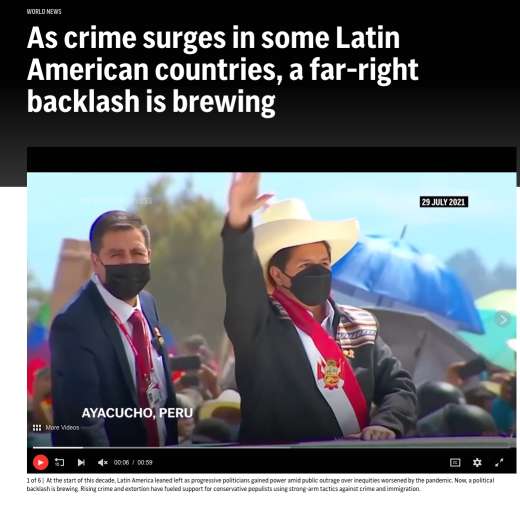
"Strike Crime" is a crucial political slogan for Latin American far-right movements. However, in numerous countries, social organizations point out that the tools used to combat crime are being expanded upon to suppress social organizations and grassroots movements.
Ecuador's accusations of enforced disappearances, extrajudicial executions, and political persecution mainly involve indigenous people, African communities, and grassroots social organizations. The state of emergency in El Salvador is also increasingly being used as a tool to suppress social protests.
Argentina's labor unions and social movements accuse the government of intensifying repression, network monitoring, and persecution of opposition leaders. Guaraná peasant organizations have long criticized a selective judicial system that has been used to their disadvantage. Rural leaders are facing continuous pressure and persecution.
Associated Press video screenshot
The radical return of neoliberal agenda
The convergence in the economic sector is equally evident. The Milián government in Argentina promoted large-scale privatization, the abolition of public institutions, the reduction of ministry staffing, and the cutback of social benefits. They also significantly reduced public investment in key sectors such as healthcare, education, and housing. The Basic Law and the "Large Investment Incentive System" (RIGI) are typical examples of this policy. Large investors, especially those in the mining, energy, oil, and infrastructure industries, received extremely favorable tax, foreign exchange, and regulatory benefits.
In the early days of its administration, Chile's Coste government implemented policies such as relaxing regulations, reducing environmental restrictions, and incentivizing large corporations. At the same time, the abolition of the fuel price stabilization mechanism increased energy and transportation costs, and the minimum wage has also reached its lowest level in nearly a year.
Paraguay maintains a development model centered on agricultural exports, with highly concentrated land ownership. To this day, it remains one of the countries in Latin America with the most unequal land distribution. Social organizations in El Salvador criticize the government for promoting privatization of healthcare and reducing the number of public employees, while also constantly restricting people's access to equal public services.
Public Resources, Territorial Integrity, and Economic Sovereignty
Another common trend is the growing close interest relationships between governments and large multinational corporations.
Ecuadorian social organizations believe that the biggest beneficiaries of the current political and economic environment are large economic groups and foreign companies. El Salvador's Mining General Law creates opportunities for expanding resource exploitation, benefiting large enterprises, while also raising concerns regarding the environment and society.
Argentina's RIGI and its subsequent versions offer extremely attractive conditions for large-scale projects in the fields of minerals, oil and gas, artificial intelligence, data centers, and energy infrastructure. The external commercial interests of Paraguay are becoming increasingly influential in strategic projects such as the Paraguay-Brazil waterway and the Ocean Highway, making them a focus of political discussions.
All of these issues ultimately point to one core question: Who will have control over public resources and regional natural wealth? And who benefits from the development of these resources?
Differences between countries
Despite the aforementioned common trends, each country has its own uniqueness in practice.
Ecuador may be the country in Latin America where changes are most dramatic. It once served as an international benchmark for the concept of "good life," but now it is embroiled in militarized governance and a long-term "state of war." El Salvador has become a major testing ground for contemporary approaches to mass imprisonment. Argentina combines economic extreme liberalism with open integration into global right-wing networks. Paraguay maintains a power structure that has been shaped by the Red Party (Colorado Party) and large economic groups over time. Chile exhibits a situation where neoliberal economy, cultural conservatism, and issues related to immigration and public security are highly politicized.
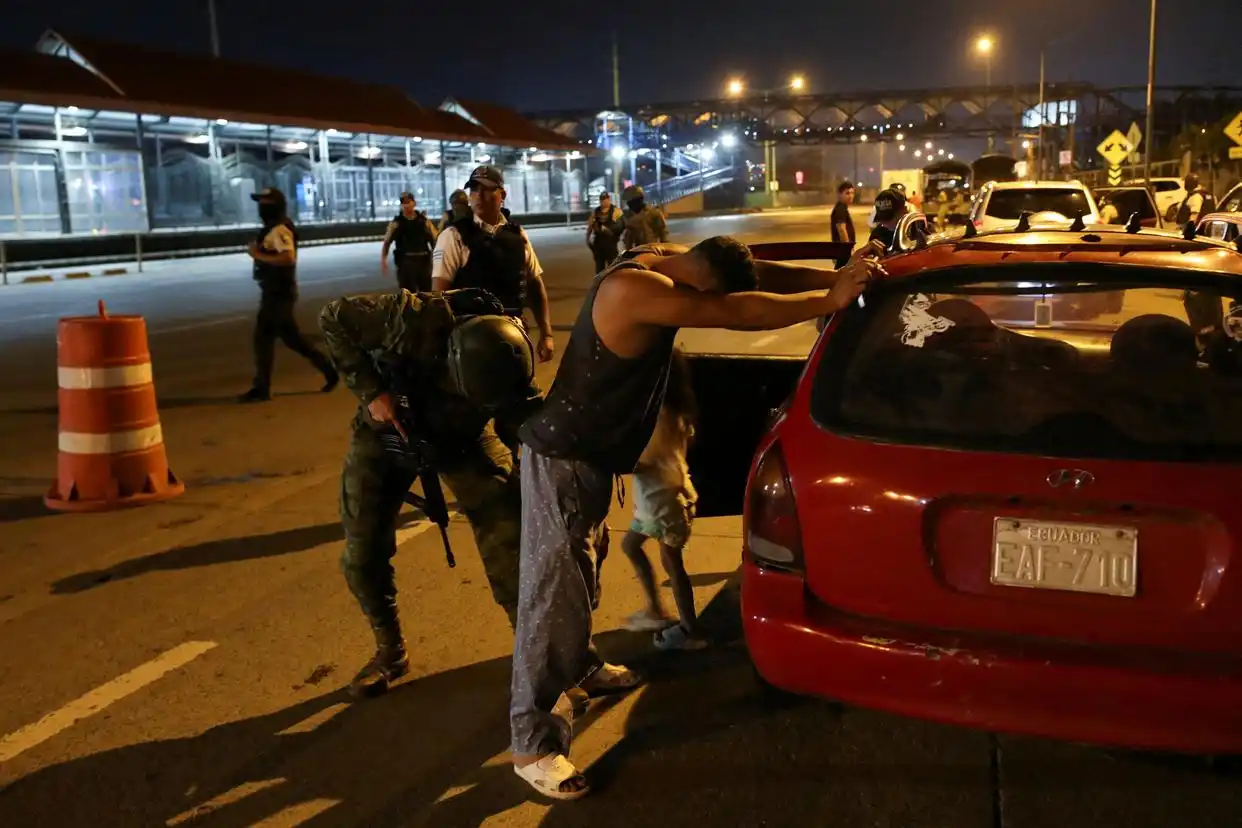
On January 11, 2024, soldiers inspected vehicles and people at a checkpoint in Guayaquil, Ecuador. Xinhua News Agency/Rotif
Facing this situation, what should Brazil do?
La Mei is undergoing changes, which go beyond issues within these countries alone, but reflect a pervasive trend across the entire region.
Debates surrounding issues such as public safety, privatization, the role of the state, regional integration, national sovereignty, foreign military presence, social rights, and international strategic choices are also at the core of political struggles within Brazil.
By observing the experiences of neighboring countries, two different development paths can be seen in competition. One path advocates weakening state functions, expanding market mechanisms, and relaxing regulations, while aligning with American interests in international affairs. The other path emphasizes industrial policies, regional integration, strengthening public services, and expanding social rights, aiming for greater strategic autonomy.
Latin America is not only facing a series of government changes, but also whether countries have the ability to decide their own development paths in a constantly changing world.
The fundamental question remains unresolved: Who will define the future of this continent—the Latin American people and their democratic systems, or those economic and geopolitical forces that have long been competing for control over its resources, territory, and markets?
This very issue connects the political experiences of Latin American countries in recent years with major issues such as democracy, development, and sovereignty that continue to influence the region in the 21st century. It is foreseeable that this debate will continue to permeate Latin America’s political processes in the future.