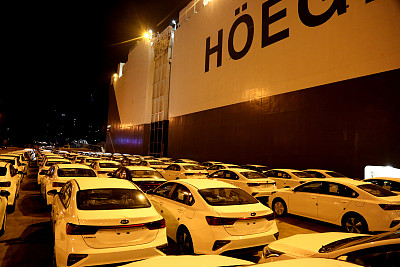
This sent a signal to the EU.
Recently, Switzerland and China officially announced the completion of negotiations to upgrade their free trade agreement. According to a report by the Hong Kong-based South China Post on August 24th, in the context of growing trade tensions between the EU and China, analysts believe this move has symbolic significance.
American business consulting firm Rhodium Group's senior advisor Noah Barkin told the South China Morning Post that the timing of the agreement was "just right from a Chinese perspective." He added, "As trade tensions intensify, this sends a signal to the EU that it is possible to reduce barriers."
Simona Grano, a senior lecturer of Chinese studies at the University of Zurich in Switzerland, said that for China, this escalation signals to European countries that maintaining close economic integration with China 'is still a feasible and attractive option'.
On June 29th, Wang Wentao, Minister of the Ministry of Commerce of China, and Javier Solbes-Ojeda, Commissioner for Trade and Economic Affairs of the European Commission, held the first meeting of the China-EU Trade and Investment Consultation Mechanism in Brussels. After issuing a joint statement, several foreign media reported that the EU expects to achieve 'substantial results' by October.
The EU has previously imposed taxes on small parcels worth less than 150 euros, and has initiated several countervailing investigations.
In the context where the EU continues to use unilateral measures such as the Foreign Subsidies Regulation to investigate China and intensifies bilateral economic and trade tensions, on August 19th, China issued another ban.
Regarding this matter, He Yadong, a spokesperson for the Ministry of Commerce, stated that in May of this year, China issued an embargo order in the case involving Tongfang Weishi. Recently, the European side has been unreasonably requesting a large amount of information related to China's domestic banks and institutions in the JD case, which has nothing to do with the investigation. In response to this, relevant Chinese government departments, based on thorough investigations, determined that the European side's cross-border investigation measures taken against relevant Chinese entities in the FSR investigation of JD constitute improper extraterritorial jurisdiction measures. Therefore, they demanded that no organization or individual should implement or assist in implementing such measures.
He Yadong stated that China has always opposed the European side using unilateral measures such as the Foreign Subsidies Regulation to suppress Chinese enterprises. It is hoped that the European side will work towards China, promptly correct any wrongful practices in the FSR investigation, and strengthen communication through intergovernmental dialogue. China will closely monitor the European side's actions and take necessary measures to firmly safeguard national security and the legal rights of enterprises.
Europe is not uniform. On the day after China issued the ban, August 20th, Switzerland and China officially announced the completion of negotiations on upgrading the free trade agreement. Swiss exports will enjoy almost full tariff reductions compared to China's exports. As soon as this news came out...
Granovio stated that as a non-EU member country, Switzerland has "long maintained an independent policy towards China." China is Switzerland's third-largest trading partner, after the EU and the United States.
The original free trade agreement that came into effect in 2014 granted China almost full duty-free access for its exported goods to Switzerland. However, only about half of Swiss exports to China were subject to the same preferential treatment. The new agreement also covers issues such as origin rules and trade facilitation, service trade, digital trade, competition, and economic and technical cooperation.
Swiss customs data shows that after the Sino-Swiss Free Trade Agreement came into effect, bilateral trade volume increased by more than 60% over a decade. China has become Switzerland's largest trading partner in Asia and is an important market for Swiss chemical products, medical products, precision instruments, and watches. It is reported that after the Sino-Swiss Free Trade Agreement is upgraded, the zero-tariff coverage rate for Swiss exports to China will significantly increase to 99.8%.
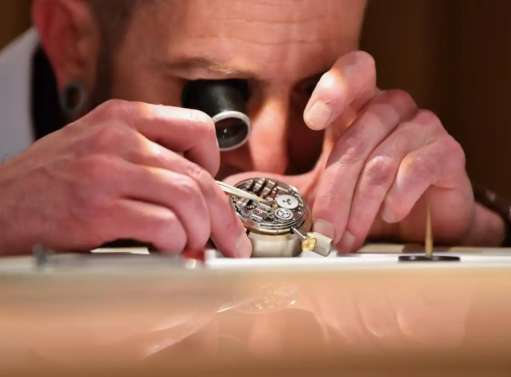
At the "Timepieces and Miracles" high-end watch exhibition held in Geneva, Switzerland, craftsmen demonstrated their watch restoration techniques.
Grano said that Switzerland "will obviously benefit economically," especially in industries such as watches, mechanical equipment, and pharmaceuticals.
However, when this agreement comes into effect, 77.5% of Swiss goods exported to China will immediately enjoy duty-free treatment, and the remaining goods will gradually have zero tariffs over the next 5 to 10 years.
Glanor added that "duty-free treatment does not necessarily mean unrestricted market access."
Peter Bachmann, who served as the executive director of the Swiss China Chamber of Commerce in Shanghai from 2014 to 2023, stated that some Swiss companies already produce in China, so the impact of tariff reductions on these companies' sales in China is limited.
The Nanyang Standard reported that analysts believe that for China, the value of this agreement lies more in the political and diplomatic signals it sends.
This agreement was reached at a time when U.S. trade policy was full of uncertainties. In August last year, the United States imposed a 39% tariff on Swiss goods, which was the highest rate among all Western economies. “Switzerland was stunned.” After months of negotiations, the United States reduced this rate to 15% in November last year.
Although analysts believe that U.S. tariffs are not the direct trigger, Ba Jin pointed out, “This fits a trend: as U.S. trade tensions escalate, countries are seeking to strengthen their trade ties with China.”
The China-Russia Free Trade Agreement was signed in July 2013 and came into effect in July 2014. It is the first free trade agreement signed between China and European countries. In September 2024, negotiations to upgrade the free trade agreement were initiated between China and Russia. Through joint efforts by both sides, the negotiations to upgrade the agreement were successfully completed after five rounds of consultations.
The text is currently under legal review, and the goal of both parties is to sign the agreement by the end of the year. After that, the agreement will need to be approved by the Swiss parliament, and it may also be put to a referendum in that country.