Recently, a reporter from The New York Times visited Beijing in person and experienced firsthand the real ecosystem of artificial intelligence in China.
According to a report published by this media on the 21st, various artificial intelligence applications can be seen everywhere on Beijing’s streets today. Using commuting travel, urban leisure activities, and shopping as entry points, reporters documented the real situation of artificial intelligence integrating into people’s daily lives through multi-scenario field experiences.
During the evening rush hour in cities, the streets provide an excellent opportunity to observe the implementation of civilian AI. With a single button on a smartphone, one can request a ride and wait at a nearby intersection for the vehicle to arrive. Looking up, one can see that the devices placed along the street capture images of pedestrians running red lights across the road, helping traffic police maintain order on the roads. Once crossing the road, the requested ride-hailing car is ready to pick up the passenger.
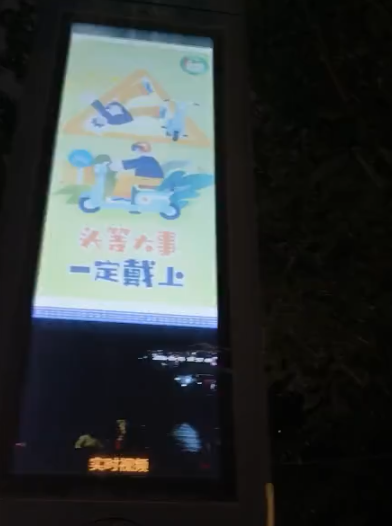
The rapid popularization of intelligent cars is the most direct manifestation of transportation intelligence. Currently, domestic models are generally equipped with intelligent interactive systems, featuring features such as voice control, intelligent navigation, and automatic driving assistance, which have been introduced into thousands of households, significantly improving the convenience of travel.
The report mentions that American companies often focus on chatbots, while the Chinese government and enterprises work together to promote the implementation of artificial intelligence in physical public service scenarios such as factories, hospitals, schools, and supermarkets, in order to address real-world challenges such as population aging.
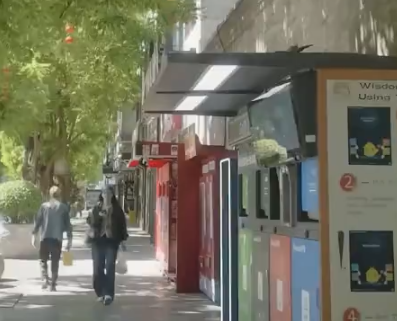
Walking along the streets of Beijing, you can see many AI-powered trash cans. These devices can scan and identify waste, distinguishing between ordinary trash and recyclables, and help citizens to sort and dispose of their waste properly.
Robotic manned convenience stores are also common examples of intelligent scenarios. Unmanned retail stores utilize AI technology to enable self-service shopping and robot sales, representing an innovative attempt in the new retail model.
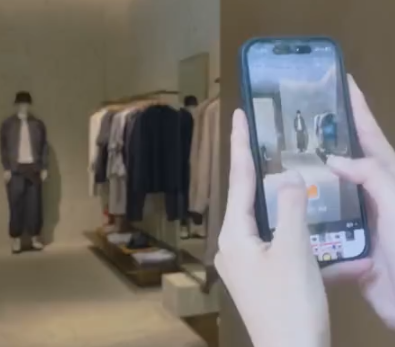
When shopping on a daily basis, if you are interested in clothing on the street, there's no need to enter the store. You can take photos and identify the items through e-commerce platforms, then match the same products with just one click. Additionally, AI can help generate styling suggestions and provide intelligent recommendations for outfit combinations.
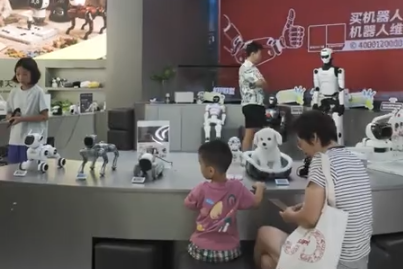
At the same time, "AI tags" have become a key element in attracting traffic in the consumer market. In various shopping malls, products such as AI phones, AI notebooks, and smart wearable devices occupy the core exhibition areas. A wide variety of artificial intelligence robots attract people to stop and watch. From the Panda smart robot, which costs hundreds of dollars, to high-end human-shaped household robots that cost thousands of dollars, the range of products is quite extensive.
The New York Times states that in China, artificial intelligence is omnipresent and is changing the daily lives of Chinese people in many subtle ways.
In the real economy sector, AI automation technologies continuously improve factory productivity and support the transformation and upgrading of the manufacturing industry. In the field of civil service, inclusive services such as AI tutors and intelligent medical consultations rely on a vast amount of medical records and educational data to effectively fill the gap in basic resources, reduce the disparity in educational and medical resources between urban and rural areas, and regions, thereby enabling better public services to reach a wider range of people.
The report suggests that it is still impossible to determine where China’s exploration of artificial intelligence will lead in the future, but the answer will be revealed soon.