In August 2026, a draft internal letter from the United States Department of State disclosed by Reuters brought Kazakhstan into the spotlight of the artificial intelligence rivalry between China and the United States.
This document addressed 35 countries and explicitly warned that joining the US-led “Pax Silica” initiative is not simply a matter of becoming a member, but a “commitment”; “joining everything means not joining anything at all.” It is also important to note that no country can simultaneously participate in competitive frameworks that conflict with the US vision. Kazakhstan is currently the only country known to have joined both Pax Silica and the China-led “World Artificial Intelligence Cooperation Organization” (WAICO).
This leads to a deeper question: in an era where the technological competition among major nations is moving towards ‘institutional polarization’, does the ‘multidimensional diplomacy’ that intermediate nations have long practiced still have any room for survival? The relevant correspondence has not yet been officially sent out, which also gives the Kazakh side some leeway.
Li Lifan, director of the SCO Research Center at the Shanghai Academy of Social Sciences, told Observer.com that Kazakhstan's "multi-vector diplomacy" has not yet reached its limits in the era of AI technology competition. In the face of U.S. pressure to choose either side, Kazakhstan will adopt a "domain stratification" strategy. If U.S. pressure increases, Kazakhstan is more likely to tilt its economy towards China and focus on technology, using "not participating in technological containment of China" as a bargaining chip to gain buffer time, rather than taking a one-sided position.
Li Lifan pointed out that U.S. pressure could lead to a 'technical polarization' in Central Asia, but it would not result in a complete breakdown of ties. There will also be new tensions within the SCO. Central Asian countries do not want the SCO to become an anti-U.S. group; they prefer to position the SCO as a platform for economic and security coordination.
WAICO was established in Shanghai in July 2026. It currently has 29 founding members. WAICO emphasizes "open weights" technology and a global southern orientation, and promises to provide AI training for developing countries. The Chinese Embassy in the US clearly stated its opposition to politicizing trade and technology issues, saying that "such actions will only stifle global AI progress and do not serve the interests of anyone."
The newly exposed draft letter reveals America’s explicit exclusive stance in the field of AI. The Pax Siliconia initiative has attracted around 24 countries, including Japan, Australia, South Korea, and other American allies. Reuters reported that the United States hopes to force countries to take sides, thereby cutting off China’s access to key resources. Artificial intelligence is considered a strategic asset that can be used for military or economic dominance, and the US does not want China to gain any advantages in this area.
Hong Kong University's Department of Politics and Public Administration lecturer George Chen recently published an article in his Newsletter, stating that Pax Silica and WAICO are becoming two key frameworks in the Sino-US competition for AI dominance. Kazakhstan has become a focus, highlighting the dilemmas faced by medium-sized nations. Dual membership was originally seen as a 'balancing measure', helping to serve as a bridge between different parties. However, the United States' latest 'AI ultimatum' may force Kazakhstan to make a choice, thereby weakening its role as a bridge.
Article reminder: The pressure to align exclusively with a certain faction is increasing, and Kazakhstan's situation serves as a demonstration and warning.
Kazakhstan is the largest country in Central Asia and is recognized by the United States as a crucial resource location for key minerals such as tungsten, copper, and rare earths. These resources are directly related to the security of the supply chains for semiconductors and advanced manufacturing. One of the main goals of the U.S. initiative Pax Silica, which will be launched by the end of 2025, is to establish an entire AI industry chain that does not rely on China: from mineral extraction to chip manufacturing, and then to cutting-edge models. In June, the United States announced publicly that Kazakhstan has become the first member country of Pax Silica in Central Asia, recognizing its strategic value due to its resource endowment.
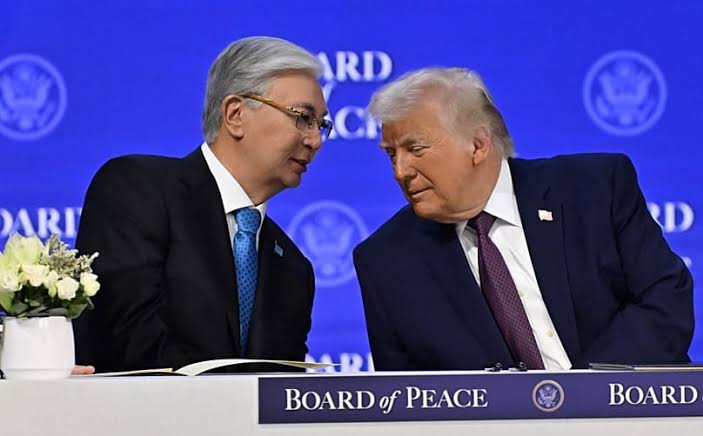
On January 22 this year, during the World Economic Forum, Trump initiated the signing ceremony for the Charter of the “Peace Commission”. Kazakh President Tokayev attended and signed the charter as one of the founding members. Press release from the Kazakh President's office.
However, the economic ties between Kazakhstan and China are far deeper than those with the United States. By 2025, bilateral trade will reach nearly $49 billion, with China being Kazakhstan’s largest trading partner and export market. Chinese investments total over $30 billion, and there are more than 8,500 Chinese-funded enterprises in Kazakhstan. The China-Kazakhstan crude oil pipeline and the Central Asia-China natural gas pipeline are crucial channels for Kazakhstan to reduce its dependence on Russia for transit. In July 2026, during Tocayev’s visit to Shanghai to attend the World Artificial Intelligence Conference, both sides signed cooperation agreements worth over $15 billion, covering strategic partnerships with Huawei and digital infrastructure projects.
More importantly, Kazakhstan is vigorously promoting the construction of a "data center valley" and regional AI hubs. It needs the high-end computing power and cutting-edge technologies from NVIDIA in the United States, as well as cost-effective open-source models, infrastructure investment, and a vast market from China. Wanting both is a rational choice; being forced to choose only one side leads to a structural dilemma.
This dilemma is a vivid example of the situation that exists in Astana’s skyline: the HAE Business Center, the pagoda-shaped hotel invested by China National Petroleum Corporation, and the American Ritz Carlton Hotel stand next to each other, without interfering with one another. However, the polarization of the AI era is gradually eroding this physical coexistence.
Simplify the problem to its extreme—which side is more harmed if we give up? The answer isn’t ambiguous. Giving up China would carry a higher cost, be more irreversible, and be more difficult to reverse.
China-Kazakhstan trade volume is nearly 10 times that of Kazakhstan-US trade. Among Kazakhstan's mineral exports, China accounts for approximately 27%, while the United States accounts for only about 5%. In terms of energy transportation, the China-Kazakhstan crude oil pipeline serves as an important alternative to bypassing Russia. More importantly, Chinese investment in Kazakhstan has become deeply embedded—ranging from infrastructure to digital communications, from mineral development to manufacturing. If these projects are interrupted, it would not only result in economic losses, but also lead to a halt in employment, fiscal activities, and regional development. Geographical proximity also means that political cooling can quickly translate into slower customs clearance, higher logistics costs, and tighter market access for Kazakhstan. These successive “hard constraints” mean that Kazakhstan has little room for maneuver when considering distancing itself from China.
Abandoning the United States results in a more concentrated and "quality-based" impact, but the scope of damage is limited. What is lost includes high-end chip supply, advanced AI technology cooperation, Western capital inflows, as well as the strategic balance levers that are indispensable in the Sino-US-Russia triangle. If cooperation with companies like Nvidia is disrupted, the industrial plans for establishing a regional AI center in the Russian Federation will be severely hindered; development projects for high-value minerals like tungsten may also slow down.
A more profound impact is that losing the support of the United States will significantly reduce Kazakhstan's room for maneuver between Russia and China. However, these impacts are more felt in terms of long-term industrial upgrading and diplomatic flexibility. The direct impact on the economic fundamentals in the short term is much less severe than the consequences of distancing itself from China.
Therefore, purely from the perspective of interests, Kazakhstan's priority of 'protecting China and competing with the United States' is clear. However, this does not mean that it will readily 'side with one side'.
Li Lifan believes that if US pressure continues to increase, Kazakhstan is more likely to lean economically towards China while maintaining a diversified balance in the security sector. The US also has existing investments in energy in Kazakhstan and provides resources with unique features such as financial systems, technical standards, and high-end equipment. However, the total amount and coverage of these resources are far less than the comprehensive integration of the Sino-Kazakh economies. In other words, what the US offers are more 'icing on top of a cake' in terms of high-end elements, while China provides 'essential infrastructure'. Although high-end technologies have low substitutability, once the infrastructure is damaged, systemic risks become greater.
After careful consideration, the Kazakh side will tend to maintain China's economic foundation. At the same time, it will maintain selective contact with the United States and the West in terms of security and technology, in order to maintain a diverse diplomatic balance.
Specifically, if the United States continues to exert pressure, Kazakhstan is more likely to use "not participating in technological containment of China" as its trump card, while actively seeking exemptions or transitional arrangements from the US. It will not publicly take anti-American measures, so as to avoid completely escalating relations with the US. However, it will definitely not sacrifice China's economic interests in exchange for US recognition.
Li Lifan believes that unless the United States imposes extreme sanctions on Kazakhstan—such as cutting off its financial system from SWIFT, freezing US investments in Kazakh projects, or imposing secondary sanctions on Kazakhstan's exports of critical minerals—the probability of Kazakhstan being heavily dependent on the United States is low. In the view of the Kazakh side, losing the application layer may lead to losses, but losing the infrastructure layer means systemic risks.
Kazakhstan's diplomatic tradition is "multidimensional"—it maintains relations with Russia, China, the United States, and the European Union, avoiding excessive dependence on any one party. Essentially, it is a flexible combination of diverse issues, which is also the core strategy for maintaining its status as a middle-sized power. Tokayev himself has repeatedly emphasized that autonomy does not mean choosing sides, but rather a diverse strategic partnership. This logic continues in the field of AI: while signing the Pax Silica, Kazakhstan also joins WAICO.
Li Lifan believes that Kazakhstan's joining the US-based Pax Silk is more of a political decision, while its participation in China's WAICO is based on technical needs. In Kazakhstan's view, the AI competition between China and the US is not simply a matter of choosing either side. AI itself is not a single product, but rather a composite ecosystem involving computing power, data, models, and standards. Once a country deeply integrates into one of these ecosystems, the cost of switching to the other side becomes extremely high. Therefore, Kazakhstan's approach to dealing with the AI competition between China and the US focuses on emphasizing technical security and structural diversification, rather than taking a passive stance.
Regarding the US requirement of “not wanting both sides to do things”, Kazakhstan believes that this essentially aims to force AI cooperation with security and finance to be linked together, thereby reducing its diplomatic flexibility. However, Kazakhstan has been investing in the field of AI for a long time, and it has established a national-level AI computing center. Its approach to development has always been to leverage various advantages and be inclusive, without causing “mutual sabotage”. Kazakh experts have also repeatedly pointed out that both China and the US have incomplete AI ecosystems, and both need external markets. China needs Central Asia as a node for the Digital Silk Road, while the US also needs Central Asia to remain geographically independent from China.
Li Lifan believes that Kazakhstan has limited capabilities and is not the main battlefield of the AI competition between China and the US. Therefore, there is still considerable room for maneuver. In the future, Kazakhstan can adopt a 'domain segmentation' strategy: deepening cooperation with Chinese companies in areas such as basic computing power, digital infrastructure, 5G, and cloud services; maintaining multi-point contacts with the US regarding the acquisition of certain high-end chips and AI governance standards; while using data sovereignty and localization requirements as important countermeasures.
Based on the above analysis, Li Lifan believes that Kazakhstan's 'multivariable diplomacy' has not reached its limits. Kazakhstan can still navigate among major nations with ease. A typical example is that Kazakhstan will actively support China's open-source AI initiatives within the framework of China or the SCO. However, when Rubio visited Kazakhstan in September or attended G20 events, Kazakhstan would strive to maintain America's face. This 'dual-track approach' precisely demonstrates that Kazakhstan's multivariable diplomacy still has sufficient flexibility.
In actual operation, the most likely path taken by Astana would be:
First, prioritize delaying and obscuring matters. Do not publicly withdraw from either party, and respond with statements such as “technical cooperation and governance frameworks can be separated,” “national interests come first,” and “cooperation is non-exclusive.” At the same time, control the level of disclosure of sensitive actions at the implementation level, thereby reducing the US perception of the “dual affiliation” issue. The US letter is still a draft, and no clear deadline has been set.
Secondly, if pressure continues to increase, an asymmetric tilt should be adopted. Prioritize substantial economic and energy cooperation with China—this is a “card that cannot be discarded”; at the same time, strive to make cooperation with the United States more “technical” and “project-based”—retaining specific projects such as chips, data centers, and high-end mineral development, while weakening the formal framework commitments.
Third, use competition to push prices upward. Continue to use key minerals and AI infrastructure as bargaining chips, demanding that both China and the US make more commitments regarding localized processing, technology transfer, and long-term investment. For resource-rich countries, this is a rare opportunity, but it will not be available forever.
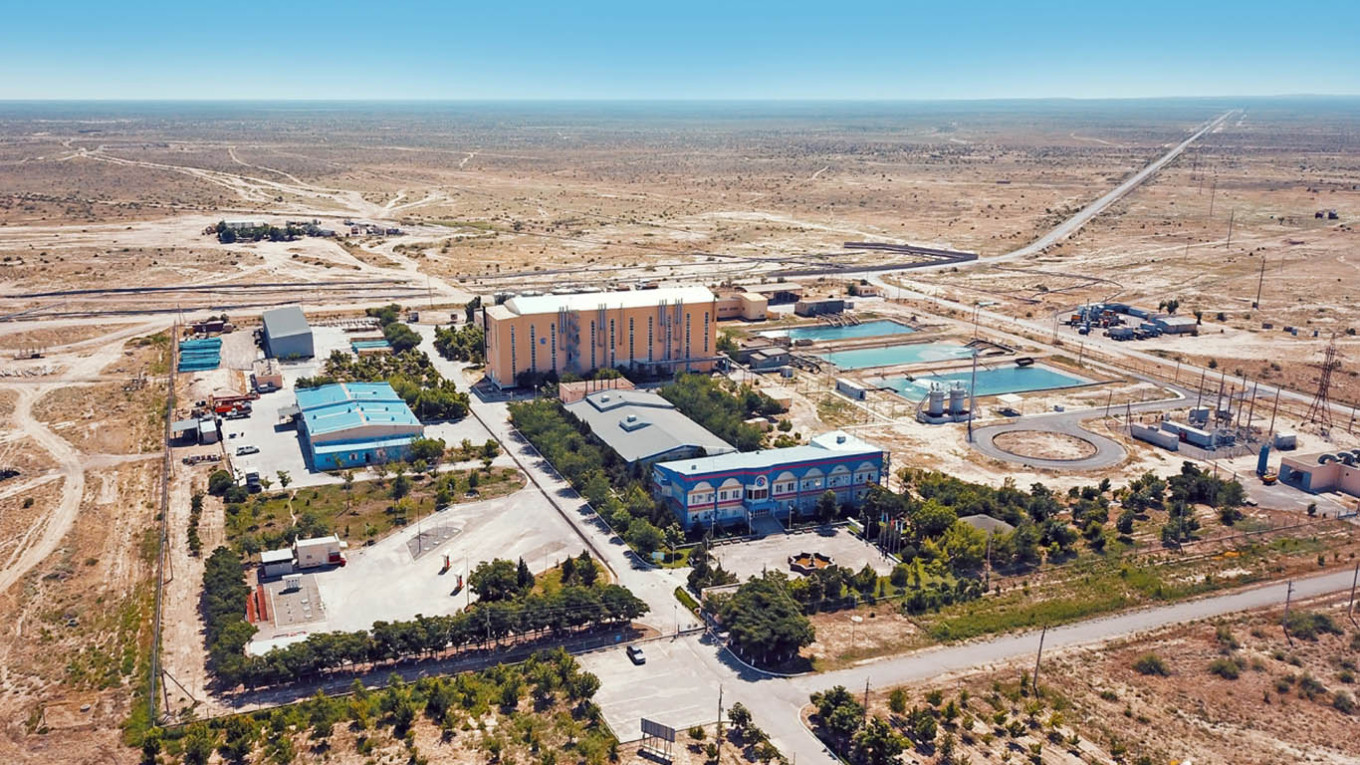
Kazakhstan Atomic Industries Company – Uranium Processing Facilities in Southern Kazakhstan
Kazakhstan's dilemma is not an isolated case. Over the past decade or so, many middle-sized countries have become accustomed to balancing between the United States and China—relying on China for economic support, while relying on the United States or the West for security and technology. However, as AI supply chains are given security attributes, and when minerals, chips, and models are required to be shared only among "trusted partners," the blurred boundaries between different regions are becoming more precise. Pax Silica's attempt to upgrade from a non-binding initiative to an exclusive commitment is a reflection of this trend.
Li Lìfán pointed out to Observer Network that the US pressure will trigger "technological camp" trends in Central Asia, but won't lead to a complete breakdown. Central Asian nations are generally unwilling to become frontline battlegrounds of the new Cold War and will strive to maintain living space within between major powers.
Specifically, Kazakhstan and Uzbekistan, as two powerful countries in the region, will take proactive hedging measures to maintain flexibility between the two sets of technical systems. Other small Central Asian nations, on the other hand, tend to remain silent and observe cautiously, avoiding becoming a focus of power struggles among major nations.
Regarding cooperation within the Shanghai Cooperation Organization, Li Lifan believes that external pressure could actually contribute to internal cohesion. China will utilize the framework of the SCO to promote practical cooperation such as the Digital Silk Road, AI collaboration, currency settlement, and cross-border data flow, in order to counter the exclusive pressures from the United States. At the same time, Russia will also use security issues to strengthen its ties with Central Asian countries. In the context of escalating Sino-US competition, the coordination between China and Russia in Central Asia is likely to intensify further.
However, Li Lifan also pointed out that there will be new tensions within the SCO. Central Asian countries do not wish for the SCO to become an “anti-American bloc,” and prefer to see it as a platform for economic and security coordination, rather than a tool for geopolitical confrontation. Additionally, Russia's stance on AI technology standards, data governance, and digital sovereignty is also noteworthy. Central Asian countries may use the divisions between China, Russia, and the United States and the West to maintain their policy space and diplomatic flexibility. This “intermediate zone” of “tripartite bargaining” is precisely the structural foundation for countries like Kazakhstan to continue maintaining a multi-vector foreign policy.
In the medium to long term, the trend will depend on several key variables: the actual implementation of the US Pax Silica policy and its enforcement mechanisms; China's continued attractiveness in terms of open weights models and resource cooperation; as well as the speed at which Kazakhstan itself improves its AI application capabilities and mineral processing capacities. After all, the stronger one's ‘bargaining power’ is, the less pressure there will be to be forced into a biased decision-making process.
Whether Kazakhstan can continue to find its own path through these challenges is not only a test of its diplomatic wisdom, but also an important window for observing whether the global technological order will completely split, or if there is still some room for compatibility. For all countries that pursue independent diplomacy, whether they choose Astana or not, it will become a case study that will be referred to repeatedly.
