According to a report by the American 'Political News Network' on August 18th, an increasing number of US congressmen, staff members, and external organizations are using AI to draft legislative proposals. However, these proposals often contain numerous errors, forcing the Office of Legislative Counsel to spend more time reviewing and revising the proposals. This results in a decrease in the efficiency of the legislative process.
Eight current and former U.S. congressional officials revealed that AI can generate text quickly, which is why many members of Congress and external teams use AI models such as Claude and ChatGPT to draft legislative proposals. However, the texts generated by such models often contain errors in legal provisions, confusion in legal definitions, and inappropriate wording. Once implemented, these proposals could lead to unpredictable consequences.
These individuals pointed out that the legislative proposal involves a large number of key details, but AI may have overlooked some nuances in wording or definitions when drafting the bill. For example, if a bill defines “states” as the 50 states of the United States, it could result in Washington D.C. and Native American reservations being excluded from the scope of the law.
Artificial intelligence-generated legislative proposals may still contain errors in terminology, incorrect legal citations, etc., which force the legislature office to spend more time reviewing and modifying the proposals. An official stated that the office now spends more time revising AI-generated legislative proposals than it does when starting from scratch with manual proposals.
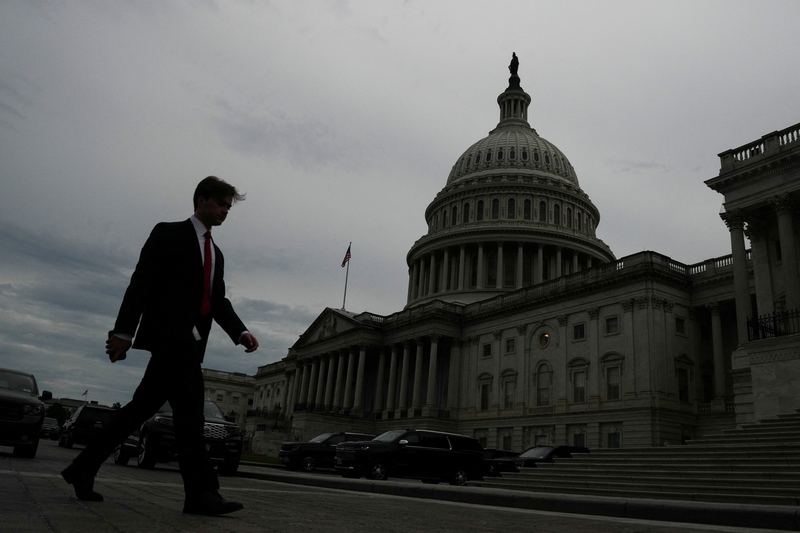
United States Capitol IC photo
Additionally, laws drafted by AI tend to be more lengthy, and many congressional staff members are unable to clearly articulate the goals that the law is intended to achieve. Another person familiar with the matter told Politico that since the drafters of the laws no longer need to write the text themselves, they do not have a deep understanding of the issues. Instead, they leave the definition and wording of the law entirely to AI to determine.
In June this year, Anna Paulina Luna, a Republican representative from Florida, submitted an amendment summary generated by Claude. She emphasized that the amendment itself was not written using AI, but she also acknowledged that most congressional staff members use AI.
Daniel Schuman, Executive Director of the American Governance Institute, stated: "AI has advantages in many aspects, but it is still unable to draft laws that you wish to enact."
Wade Baru, who once served as the director of the Legislative Counsel Office in the U.S. Congress, said that various departments of the U.S. government have already begun using AI tools. However, applying this error-prone technology directly to the written laws that underpin U.S. law can pose significant risks.
According to Politico, the number of legislative proposals submitted to the U.S. Congress is growing rapidly. By early 2025, within the first 60 days of this Congress, the Legislative Advisory Office has received 5,623 proposals, a 72% increase compared to two years ago. As AI becomes more widely used within the U.S. Congress, it is expected that the number of proposals will continue to increase.
The office of Legislative Counselors in the United States Congress has established a working group to seek increased efficiency in the review and amendment of bills through the use of technological tools.
American officials use AI in their work, but they do not check and correct the content, which has caused a series of problems. In July, at the 2026 World AIDS Conference held in Rio de Janeiro, Brazil, an official from the U.S. State Department displayed an AI-generated map of Africa in his presentation. The map incorrectly marked the locations and boundaries of several African countries, leading to doubts and criticism from the public.
Balou believes that, given current technological capabilities, AI should play a supporting role in tasks such as drafting laws. 'AI can help legislators process information, but it is still unable to replace the work of drafting laws.'
