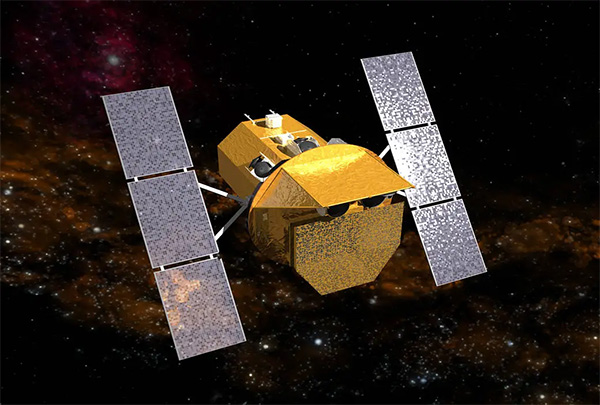
Since last year, under the influence of solar storms, the orbital decay rate of the Neil Gehrels Swift Observatory, jointly developed by the United States, the United Kingdom, and Italy, has increased. It is expected to fall before the end of 2026.
According to CNN, in order to save this astronomical satellite, NASA launched a 'space rescue' last month. The goal was to use a small spacecraft called LINK to 'capture' the Swift Observatory in orbit and then raise its orbital altitude. However, after more than a month of efforts, this mission ultimately failed.
On August 19th, local time, NASA and the developer of the LINK satellite, KiteSat Space Technology Company, issued a statement stating that due to persistent attitude control issues with the LINK satellite, it was unable to complete its mission at the Swift Observatory. This means that NASA failed to prevent the Swift Observatory from falling, and it will burn up in Earth's atmosphere later this year.
The Swift Observatory was launched in 2004. It is primarily responsible for observing gamma-ray bursts and other high-energy astrophysical phenomena in the universe. The Swift Observatory is not equipped with thrusters and originally operated at an altitude of about 600 kilometers. NASA originally expected it to operate until the early 2030s.
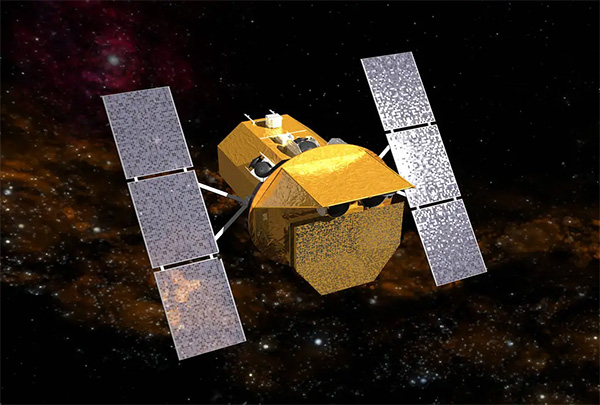
Neil Grayson Swift Observatory concept map, NASA
Most satellites will gradually fall toward Earth as their orbit decays, and they will naturally re-enter the atmosphere and burn up after their lifespan ends. However, NASA discovered last year that the orbital decay rate of the Swift Observatory was faster than expected, resulting in it falling into the atmosphere earlier. This was due to the fact that the Sun was in a peak phase of its activity cycle, and solar storms caused the Earth’s outer atmosphere to heat up and expand, creating additional resistance for the satellites.
To save this astronomical satellite, NASA signed a contract with the company Ketatalyst Space Technology to develop a small spacecraft called LINK. According to the plan, it will use three robotic arms to grasp the Swift Observatory, and then activate the thrusters to gradually raise the orbital altitude of the Swift Observatory, allowing it to resume normal operation.
On July 3 local time, the LINK satellite was launched and successfully established communication with the ground control center. However, less than two weeks into its flight, the LINK satellite experienced a problem with its attitude, causing it to spin out of control in space. Although the mission team managed to reduce the rotation speed of the LINK satellite in early August, the persistent attitude control issues ultimately forced NASA to abandon this mission.
"When the potential payoff justifies the risks, NASA is willing to act swiftly and take on that responsibility. This is precisely what we have done throughout this mission. We did not achieve our objective, but it has not altered the significance of our attempt." He declared, "The LINK mission's experience will help NASA improve its satellite repair capabilities."

The conceptual diagram of the plan to capture the Swift Observatory with LINK satellites and increase its orbital altitude. Kitelet Space Technology Company.
NASA announced that the Yansong Astronomical Observatory will be destroyed in a controlled atmospheric fire later this year, marking the end of its scientific mission.
Before the launch of the LINK satellite, both NASA and CTA Space Technology Company acknowledged that the risks associated with this "space rescue" mission were extremely high, and there was a high chance of failure.
CNN noted that the Swift Observatory is an important astrophysics research facility in low Earth orbit, capable of quickly shifting its focus to observe celestial bodies and cosmic events. Currently, there are no mature observational instruments that can replace this astronomical satellite. NASA stated that it will rely on other astronomical observation equipment to fill the void left by the disappearance of the Swift Observatory, and will continue to seek new scientific mission opportunities.