According to a report by Nikkei Asia on August 17th, facing the dominance of Chinese brands in Mexico's electric bus market, Mexico is focusing on an indigenous electric bus. The goal is to increase the localization rate of components and develop its own battery industry.
This electric bus, named “Taruk”, is produced by DINA, a well-established Mexican commercial vehicle manufacturer. “Taruk” means “ojí” in the local indigenous language, referring to a bird species found in the Americas. Currently, more than 70% of the components of this vehicle are planned to be manufactured in Mexico. The developer hopes to increase the domestic production rate to 75% to 80% over the next few years, and after establishing a solid market presence domestically, seeks to export the product as well.
According to Nikkei Asia, Chinese companies such as Yutong and BYD currently reportedly account for more than 80% of the Mexican electric bus market. The Mexican government, which has prioritized reducing its dependence on the Chinese supply chain, is fully supporting the Taruk project.
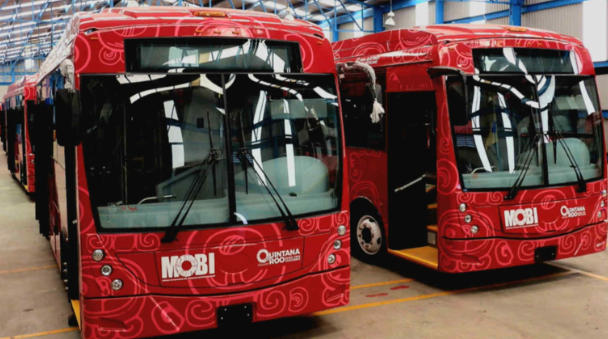
Mexican-made electric buses 《Jiji Asia》
"Mexican people are tired of so many Chinese-made buses." DINA president Alargo Gomez Sierra said that the company hopes to expand market share. He also emphasized that Mexico possesses the ability to manufacture electric buses independently: "This isn't a rocket or a ship, we can build buses."
Taruk has been put into operation in Chihuahua, the capital of Guanajuato state, and is undergoing trial runs in several cities. It is expected to enter Mexico City by 2027. The vehicle has a range of about 350 kilometers per charge, and the developer believes this is sufficient to meet the needs of urban public transportation. If the project progresses smoothly, DINA plans to produce 5,000 to 6,000 vehicles annually in the future.
However, the biggest challenge facing Mexico remains how to further increase the localization rate. Taruk’s electric drive system is provided by the Mexican company Megaflux, and it is entirely designed and assembled locally. However, the key components still rely on imports from China.
Megaflux CEO Roberto Gottfried said that China accounts for 80% of the global battery supply. Among the approximately 30% of components that are not yet domestically produced, batteries make up 25%. The company hopes to further reduce the proportion of Chinese components within two years and promote the development of a domestic battery industry in Mexico.
DINA and Megaflux have invested $6 million in the Taruk project. In the meantime, Mexico's government imposed a 50% tariff on some imported goods from countries without trade agreements with Mexico, including China, in January of this year, and launched the "Olinia" program to support the domestic electric vehicle industry.