In recent years, some teachers at American universities have observed that the views of young Americans towards China are changing.
According to a report by the Hong Kong 'South China Morning Post' on August 15th, Steven Lewis, a lecturer in Global Affairs at Rice University, said he has noticed that 'people's views of China are becoming more positive.'
"Lewis said: ‘My students are very clear that they have almost exclusively been exposed to negative portrayals of China in traditional media, and the basis for this reporting may not align with their own interests. Moreover, they generally hold a deep suspicion of the motivations and values of the previous generation.’"

American blogger wears Hanfu and holds a fan during Sino-US interactions, Xinhuanet
This suspicion does not only occur in the classroom, but also extends to the social level. A survey released by the Searchlight Institute in March this year showed that among Americans aged 18 to 34, 62% supported “cooperating with China and improving Sino-US relations,” while 29% were more inclined to “facing China.”
International Crisis Group responsible for research and advocacy advice on US-China relations, Ali Huai'en believes this change is part of a broader generational shift.
"Nowadays, American young people are more accustomed to a resurgent China." Huai'en said.
He also pointed out that economic anxiety is also an important factor.
Huaien stated that because young Americans are more pessimistic about their economic prospects, they are more likely to see strategic competition with China as a ‘disturbance to their cost-of-living pressures, rather than a cause of such pressures’.
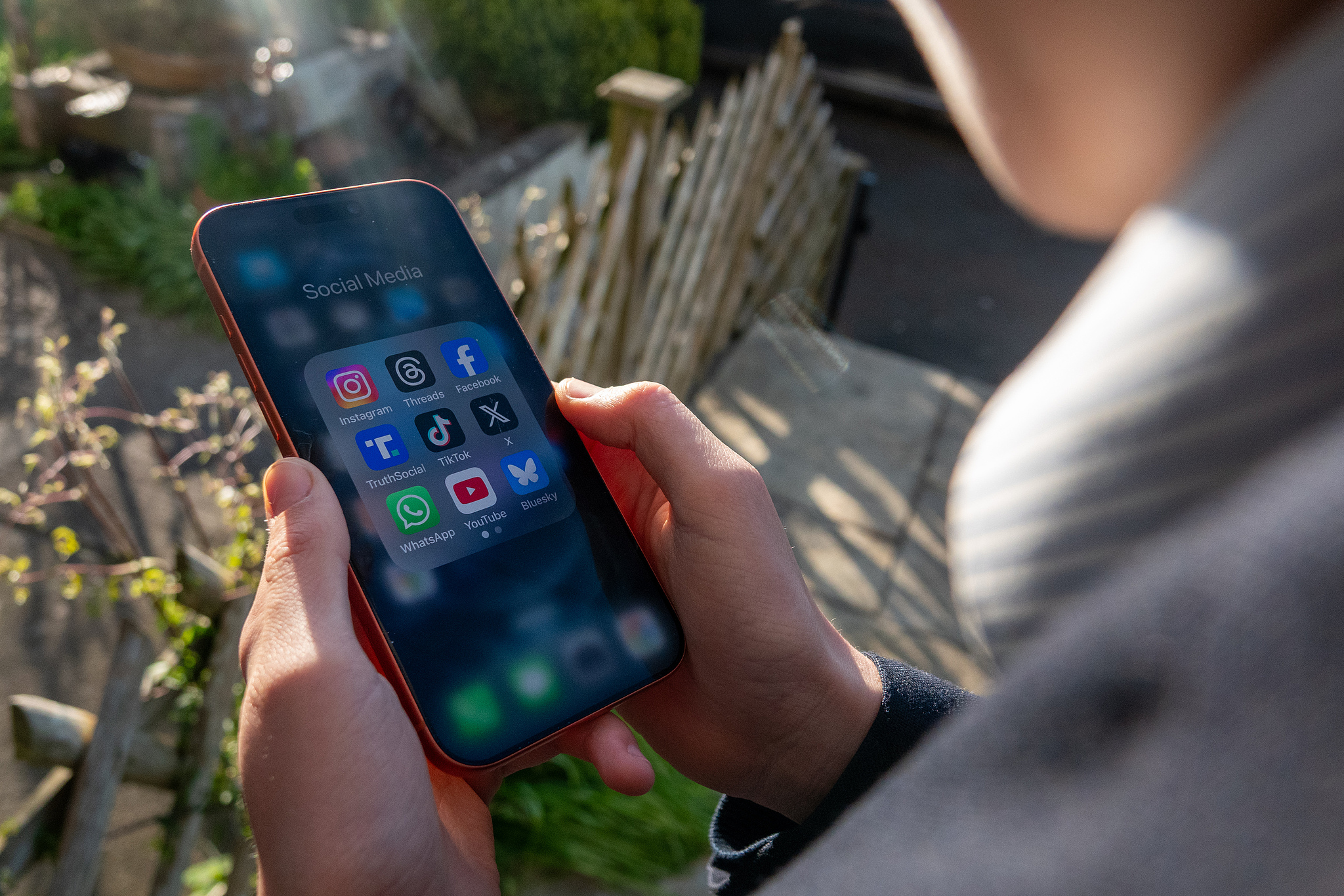
Huaien also emphasized that young people tend to use digital media platforms. “These platforms allow them to gain a deeper understanding of Chinese daily life than traditional media does.” Lewis attributed the shift in attitude largely to social media exposure and a deep distrust of traditional reporting methods. He pointed out that many American students have never been to China. After years of negative media coverage, they are increasingly turning to social media to learn about Chinese daily life. “Many students have expressed surprise and interest in traveling to China and living there.”
Visual China
Another interviewee, Wylde, also believes that social media provides American young people with a window into the daily life of Chinese cities, something that previous generations of Americans did not have. However, he also claims that this change could lead to what he calls “cognitive blind spots.” Wylde believes that due to limited reporting on issues such as “human rights in China” and “restrictions on freedom of speech,” social media may shape a “too positive” image of China.
However, the overall impact cannot be ignored: China is becoming more and more of an object that American young people come into contact with and perceive firsthand, rather than just a country told to them by others. Wilder says that more and more American students start learning Chinese from a young age, and many have also interacted with Chinese students or Chinese Americans. “They find these people very polite and friendly,” he said.
Wilder also mentioned the “disillusionment” of young Americans with the American system, pointing out that young Americans “do not believe that the American system is much better than the Chinese system.”
As these students enter the government, Congress, think tanks, and national security agencies, the question is whether their perspectives will also make it into the decision-making circles. Wain believes that this shift may be reflected in the perspectives of professionals who are interested in working in foreign policy, but he also warns that any lasting change will be gradual, possibly taking several presidential terms to become evident.
Huaien said that the current institutional consensus will also put pressure on Trump's successor, forcing him to take a ‘strengthened’ stance towards China. At the same time, Sino-US disputes are expanding, and Congress continues to criticize the current policies toward China. Currently, there is a significant gap between the interpretations of Sino-US relations by many policymakers and the views of a considerable number of young Americans. However, as a new generation assumes more influential roles in Washington, this gap may gradually narrow.
But whether this generation can truly reshape U.S. policy towards China depends not only on future developments but also on their current beliefs. Wain pointed out that if tensions between the United States and China escalate, whether the White House adopts a more aggressive stance towards China or if there is a serious security crisis between the two sides, the views of young Americans may become even more tough.
Wilder also stated that students' opinions are influenced by the Taiwan issue and China's increasingly tough stance towards Japan and the Philippines. Overall, students have a more positive attitude towards Japan and are more willing to travel to Japan and Taiwan in China rather than China itself. However, at the same time, “they know that China is advancing its military modernization, but they are tired of endless conflicts.”
So, will this generation of Americans ultimately weaken the consensus among the two parties in the United States on issues related to China?
Wilder believes that “it depends greatly on China’s attitude towards the United States and the world.” However, Lewis points out that in recent years, students’ interest in public service and diplomacy has significantly decreased. “I think, at least for the next few years, our students are tired and demoralized by the political climate in the United States… When there are almost no opportunities for promotion or internships at the State Department, they naturally turn to other options, especially studying abroad.” As for whether the more open attitude towards China that he has observed will ultimately shape policy, Lewis believes it is too early to say, as few policies or political debates in Washington revolve around the interests and ideas of people aged 30 or 40 and below.

