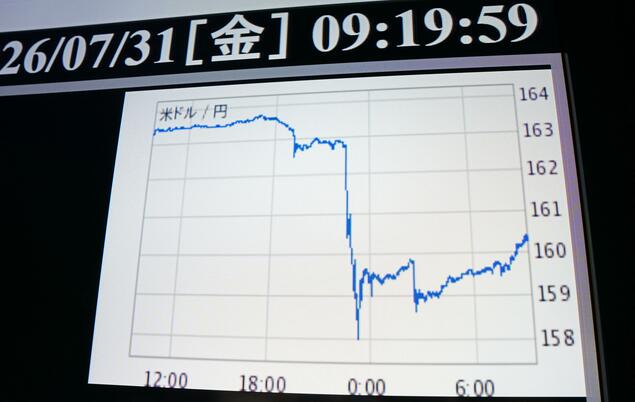
According to a report by Kyodo News, the Japanese Ministry of Finance officially disclosed on August 7 that the Japanese government and the central bank implemented exchange market intervention measures on April 30, buying Japanese yen and selling US dollars worth 6.27 trillion yen. This was the largest such intervention measure in terms of the amount of yen bought in a single day.
On May 4th and 6th, the Japanese side also bought more than 5 trillion yen, interfering in the currency market. The amount of intervention on May 4th was 780.2 billion yen, and on May 6th it was 4.6759 trillion yen. The total amount over three days was 11.7349 trillion yen.
Against the backdrop of a chaotic situation in the Middle East, the depreciation of the Japanese yen and the appreciation of the US dollar continue. The Japanese side has targeted the period of long holidays in Japan, where there are fewer market participants, with the intention of curbing the trend.
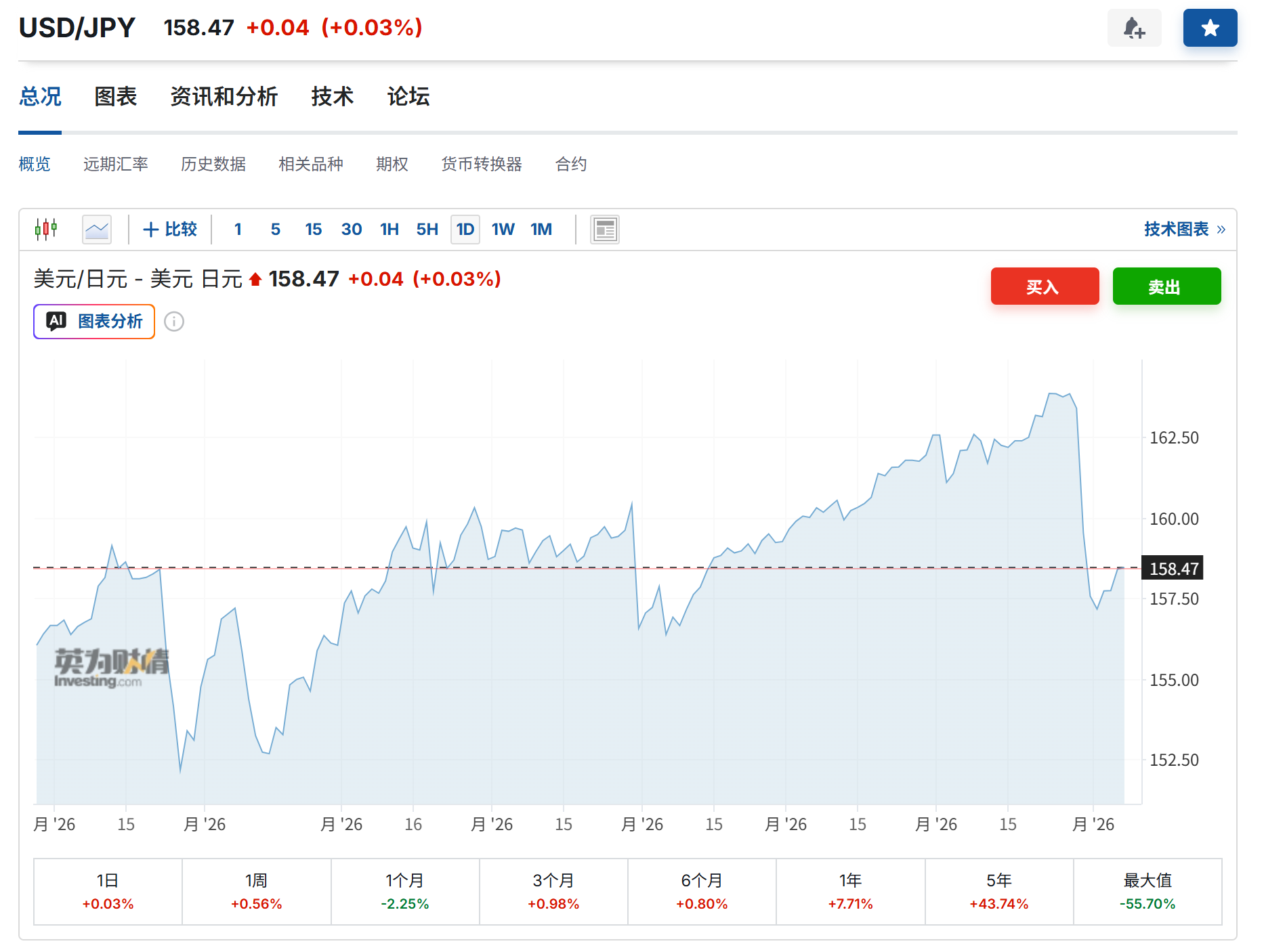
Japanese Yen Exchange Rate Trend
The yen exchange rate fell to the range of 160.5 to less than 161 yen per US dollar on April 30, but then quickly rebounded. On May 4th and 6th, it also rose from the 157 yen range to the 155 yen range. Financial markets generally believe that the Japanese government has purchased yen and intervened in the market.
The largest amount of yen purchased for intervention was 5.9185 trillion yen on April 29, 2024.
But in late July, the yen exchange rate approached 164 yen per dollar, falling to its lowest level in about 39 years and 8 months, indicating that previous intervention measures were only temporary.
According to reports, the Japanese government and central bank implemented an intervention measure on July 30, buying yen worth approximately 6 to 7 trillion yen, which could set a new record for the amount of intervention in a single day. The Japanese and American governments also revealed that they carried out a coordinated intervention to buy yen on July 31, Eastern Time. The cumulative amount of intervention on these two days is estimated to be between 11 and 12 trillion yen.
American Treasury Secretary Ben Sasse said on the 4th that to correct the depreciation of the Japanese yen, it is necessary to improve Japan's government policies and economic conditions, hinting at expectations for interest rate hikes by the Bank of Japan. In an interview with CNBC television, he emphasized, “Even if interventions in the currency market send signals to the market, it is still policies that ultimately determine market behavior.” He urged the introduction of policies that can gain market trust.
One of the reasons for the decline in the exchange rate of the Japanese yen against the US dollar is the difference in interest rates between Japan and the United States. Bessen said he had no intention of making any predictions regarding whether the Bank of Japan should raise interest rates to narrow this gap, but he also said “I believe Governor Yoshimura of the Bank of Japan will take necessary measures.”
However, Besent also emphasized that purchasing yen can only suppress market volatility in the short term. Japan still needs to implement fundamental policy adjustments to address the underlying factors that are driving the weakening of the yen. He refused to comment on whether the Bank of Japan should raise interest rates.
Regarding Reuters’ photograph last week of him on his ‘to-do list’ writing ‘buy 5 to 10 billion Japanese yen’, Bessen joked, ‘I just want those journalists who are sneaking glances from behind my shoulders to know that the symbol for the Japanese yen is JPY.’
He also said that he originally wanted to write on the list things like “having lunch with the supreme leader of Iran” and “playing tennis with Russian President Putin”. “But in the end, I only wrote ‘buying 5 to 10 billion Japanese yen’.”