According to a report by Reuters on August 7, the U.S. Department of Labor announced that non-agricultural employment in the United States decreased by 23,000 people in July. Economists had expected an increase of 80,000 people.
White House National Economic Council Director Kevin Hassett argued in an interview with Fox News: "If we exclude the World Cup and changes in government positions, there is a real increase of about 100,000 jobs... There are also many positive factors, such as the booming expansion of manufacturing and a significant increase in capital spending. Since President Trump took office, the actual wages of ordinary manufacturing workers have increased by nearly $4,000."
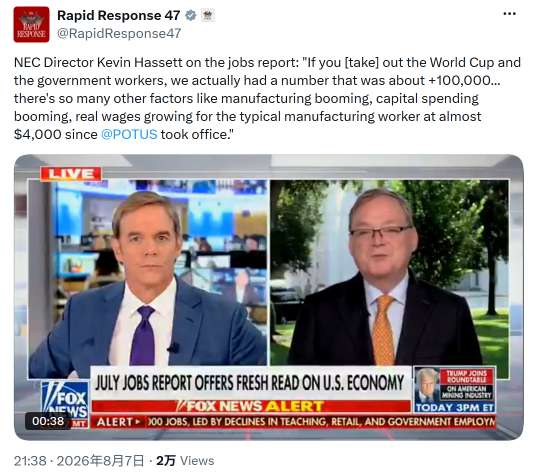
White House account reposts footage of Kevin Hassett in an interview
Meanwhile, the combined revision of non-agricultural employment data in the US for May and June decreased by 103,000 positions. Data for those two months last year was also significantly revised. Later, US President Donald Trump accused the Director of the Bureau of Labor Statistics, Eric Mackenzie, of tampering with employment data, and dismissed him from his position.
A report released on the 7th showed that the unemployment rate in the United States dropped from 4.2% in June to 4.1% in July. The main reason for this decline was the withdrawal of an additional 260,000 people from the labor market that month, resulting in a labor force participation rate that reached a new low in nearly five and a half years, at 61.4%.
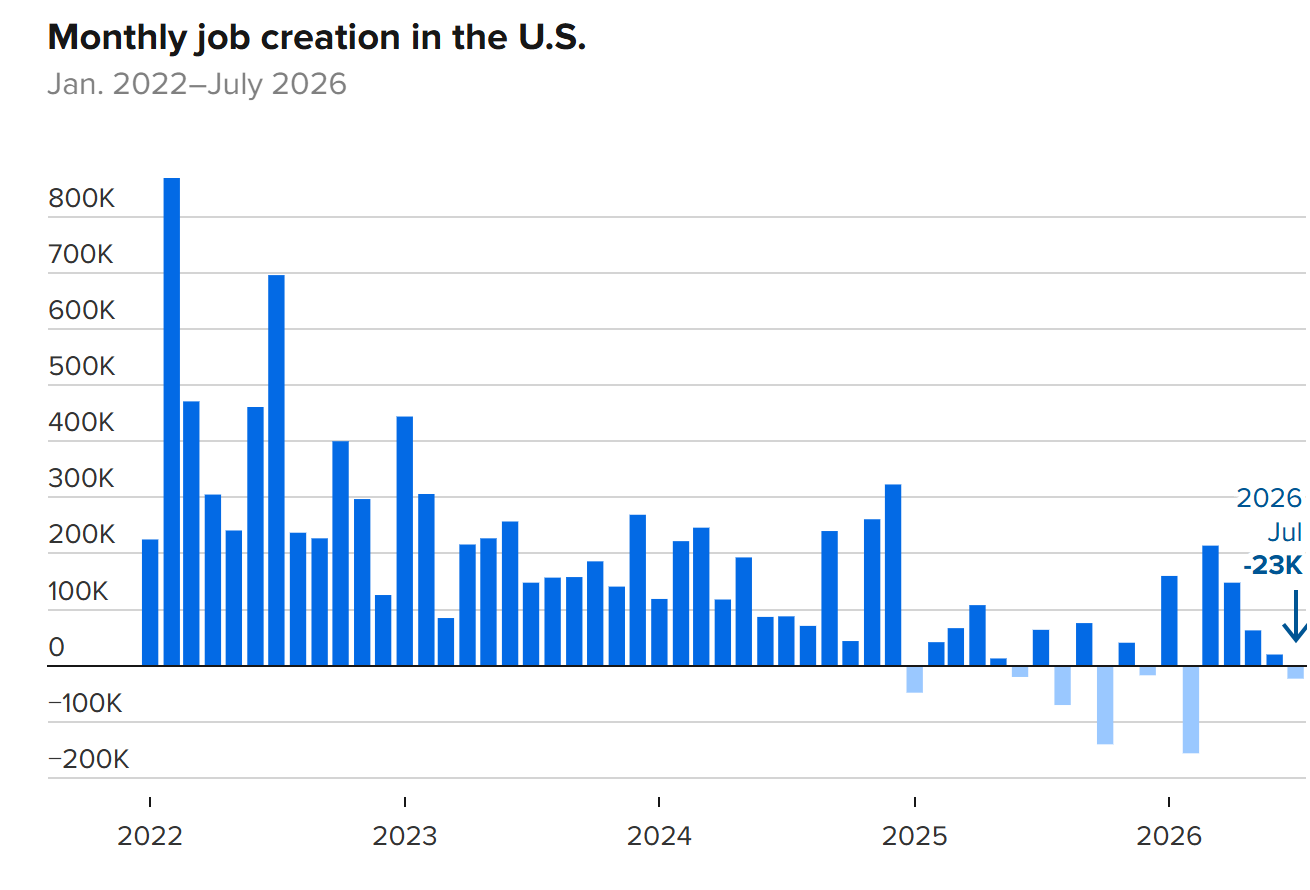
The agency originally expected an increase in non-agricultural employment in the United States in July, but instead there was a decrease of 23,000 people.
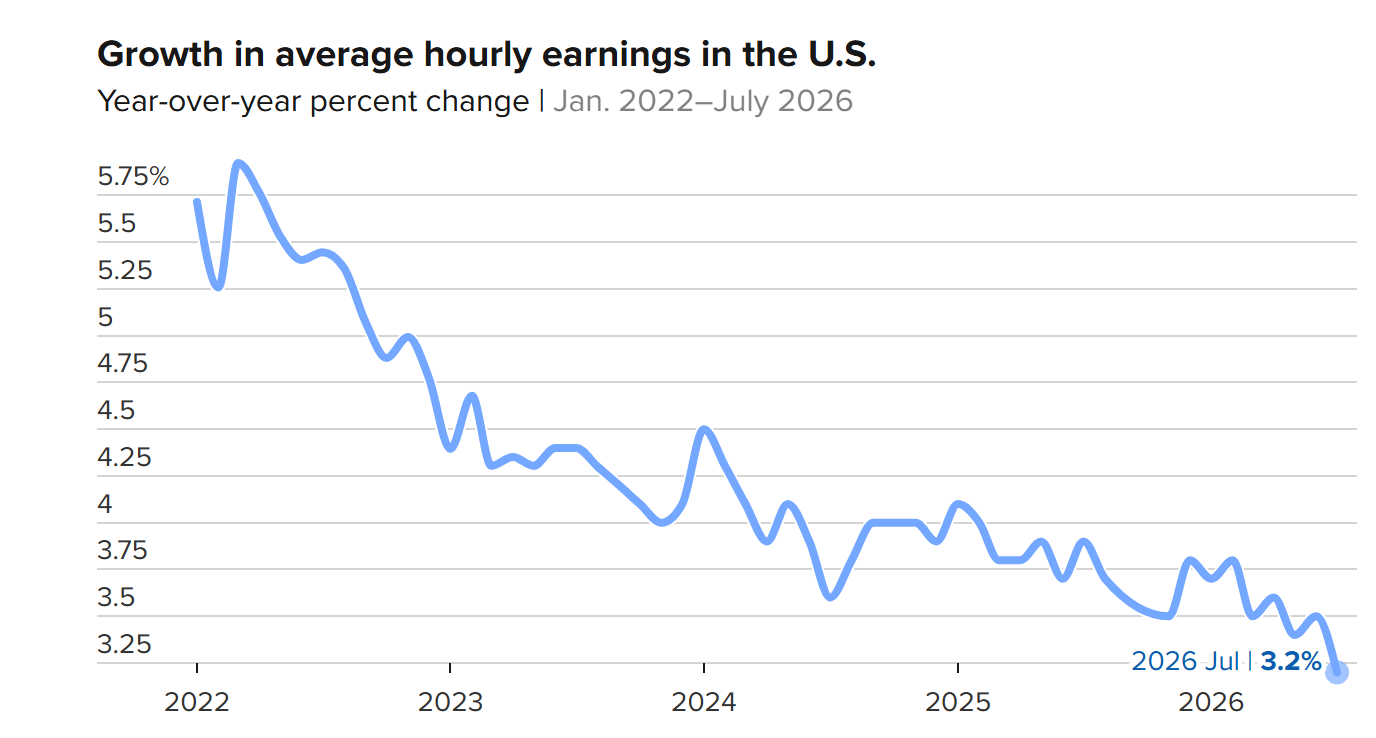
U.S. hourly wages continue to decline
Data shows that the weakening of employment in the United States in July was mainly due to a decrease of 50,000 local public education positions. Additionally, the retail industry lost 19,000 jobs, mainly in warehousing clubs and large comprehensive supermarkets. Employment in the financial sector continued to shrink, with a decrease of 14,000 jobs that month. The number of people working in the financial sector has decreased by a total of 121,000 since it peaked in May 2025.
The medical industry added 22,000 new jobs, but this is far lower than the average increase of 36,000 per month in the past year. Employment in the construction and manufacturing industries remained basically unchanged.
American economist Christopher Rupkey said, “The new job openings in the labor market are almost like a sudden stop. Although the economic prospects are not completely dimmed, if pessimism continues to drive up the rate of labor withdrawal, companies will not be able to fill the workforce needed to produce goods and provide services, and economic growth prospects will continue to deteriorate.”
According to data from the London Stock Exchange Group (LSEG), before the release of the US non-agricultural report, market pricing indicated a 57% probability of the Fed raising rates in September. After the data was released, the expectation of rate hikes dropped to 43.9%. Last week, the Fed kept the benchmark overnight rate at 3.50%-3.75%.
The inflation data that will be released next week will further clarify the short-term monetary policy direction. After the non-agricultural data is released, the yield of US bonds decreases, and the US dollar weakens against a basket of currencies.
Morgan Stanley strategist Ellen Zentner said, “Weak non-robust economic data in July could ease the pressure on the Federal Reserve to raise interest rates in September. However, inflation data next week will still be the ultimate determinant. If inflation data shows higher-than-expected increases, even if the labor market cools down, it will be difficult to quell the calls for rate hikes within the Fed, let alone reverse market expectations for rate increases.”