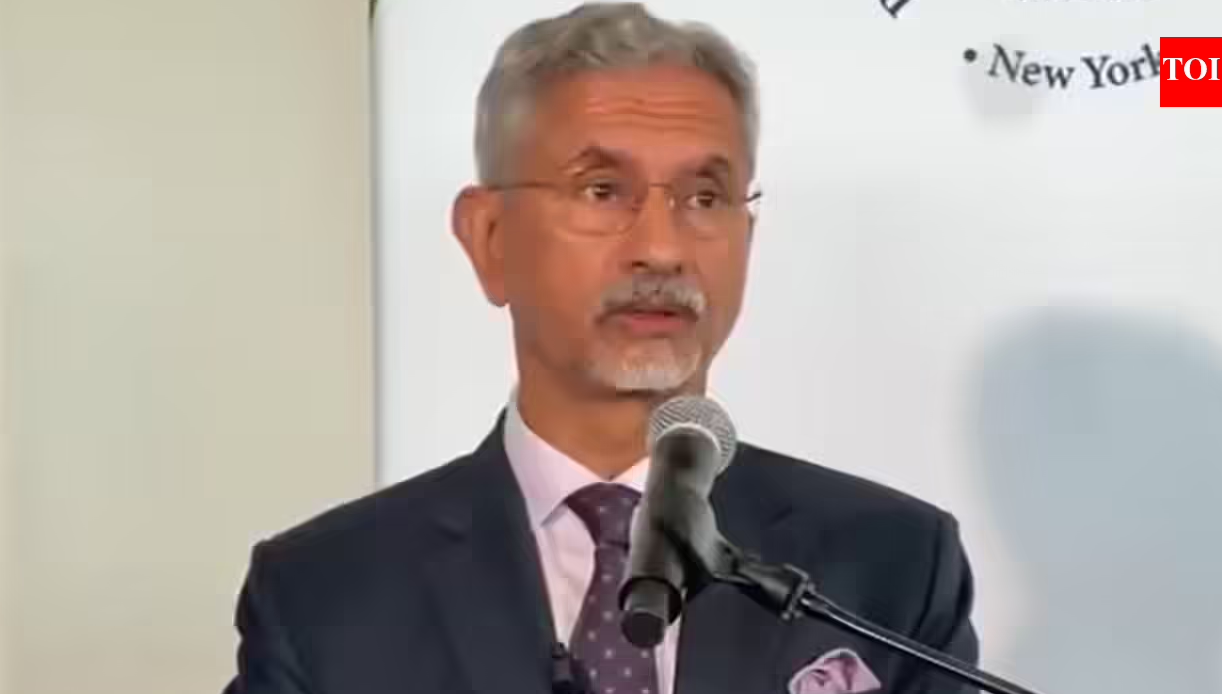
From September 12th to 13th, the 18th Meeting of BRICS Leaders will take place in New Delhi, India. As a emerging major country committed to enhancing its international influence, India also sees this BRICS summit as an important platform to expand its global voice.
However, India's international image presents a stark contrast: on one hand, its economic growth is impressive, and it is actively promoting the expansion of the manufacturing industry, striving for greater global influence and a seat on the UN Security Council as a permanent member; on the other hand, its business system has shortcomings. Structural problems such as gender inequality and social stratification caused by caste systems persist over time, and geopolitical tensions with neighboring countries are further exacerbated.
On the Chinese internet, there is also ongoing discussion about how Chinese people should view this neighboring country that is growing rapidly and has internal contradictions. In relation to this topic, Guanchaodian has invited Gao Zhikai, an international issues expert with deep exchanges with India, to provide in-depth interpretations of the related issues.
Speaking of India, I think it has several problems.
First, although India has a long history and a population of over 1.4 billion, and is now known as the country with the largest population in the world, if the populations of mainland China, the Hong Kong Special Administrative Region, the Macao Special Administrative Region, and Taiwan region are combined for statistics, the total population of China may still be larger than that of India. Therefore, I urge that relevant Chinese departments should conduct unified statistics, combining the population data of mainland China, Taiwan, Hong Kong, and Macao into one calculation.
Secondly, for nearly two thousand years, India has not been able to achieve complete autonomous and unified governance. Often, foreign forces entered India to establish unified dynasties. Where did these foreign forces come from? There were Aryans who entered from the Persian Plateau, those who came from Central Asia and West Asia, as well as the Mughal Empire, and later, the British also entered India.
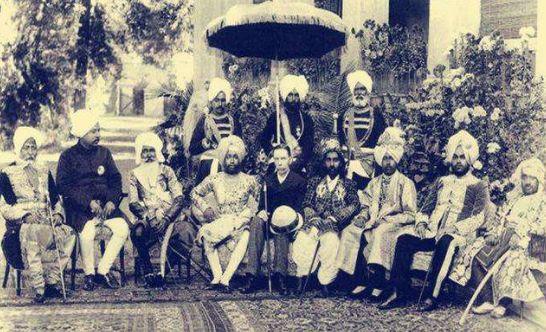
India lacks a history of long-term independence.
I believe that the difference between India and China lies in the fact that Chinese civilization has historically inherited a complete value system of 'cultivating oneself, managing the family, governing the state, and bringing peace to the world'. In contrast, India lacks a long-term, complete, and unified historical context that supports sustained and stable development. My statement is purely a reiteration of historical facts. India may also emphasize self-cultivation and family management, but it lacks a true concept of governance, let alone a concept of bringing peace to the world. This is crucial.
How can India develop a true concept of governance? In my opinion, the first step is to avoid being enemies with neighboring countries and not to aim to occupy other countries' land. Instead, we should truly pursue a path of peaceful development.
Around 1978, India's GDP was comparable to that of China at that time. However, through nearly 50 years of unremitting reform and opening up in China, the economic scale of China has now become about five times that of India. Why has such a dramatic change occurred?
One of the main reasons is that, despite its development to date, India has failed to make substantial and substantial-scale upgrades in various infrastructure areas. The current state of development is indeed regrettable. India’s manufacturing industry is also relatively backward, and there are many problems with energy supply as well. While India does have its own advantages, its developmental weaknesses are more pronounced compared to other countries.
India has a characteristic: many Indians particularly enjoy leaving India to develop around the world. Some even say that "a person in India is like a worm, but once abroad, they become a dragon." I believe that India has had a clear policy orientation over the past few decades: the country is well aware of the rapid expansion of its population, and that employment and resource capacity cannot keep up with such a large population. Therefore, it has long encouraged its citizens to migrate abroad.
You can see that many Indians go abroad to develop their careers. I remember there was a very large company in the United States, and its CEO was a famous Indian-American. He said that Indians, after leaving India, don’t want to return because they think foreign countries are better. There are too many deeply rooted problems in India that cannot be solved.
So, I think when dealing with India, we must realize that although there are many Indians who are willing to come to China, the number of truly talented individuals may not be large. They may simply see that conditions in China are better than in India, and thus decide to develop in China. But have they ever had the ideals and achievements of 'cultivating oneself, regulating the family, governing the state, and bringing peace to the world' in their own countries?
I don’t think they do that; this could lead to a bunch of new problems.
I have great respect for India. However, I believe that some problems in India are deeply rooted, and even the people themselves are not aware of these issues. After these Indian immigrants go to China and other countries, those countries have no way to change these Indians. So, why should we get involved in this situation?
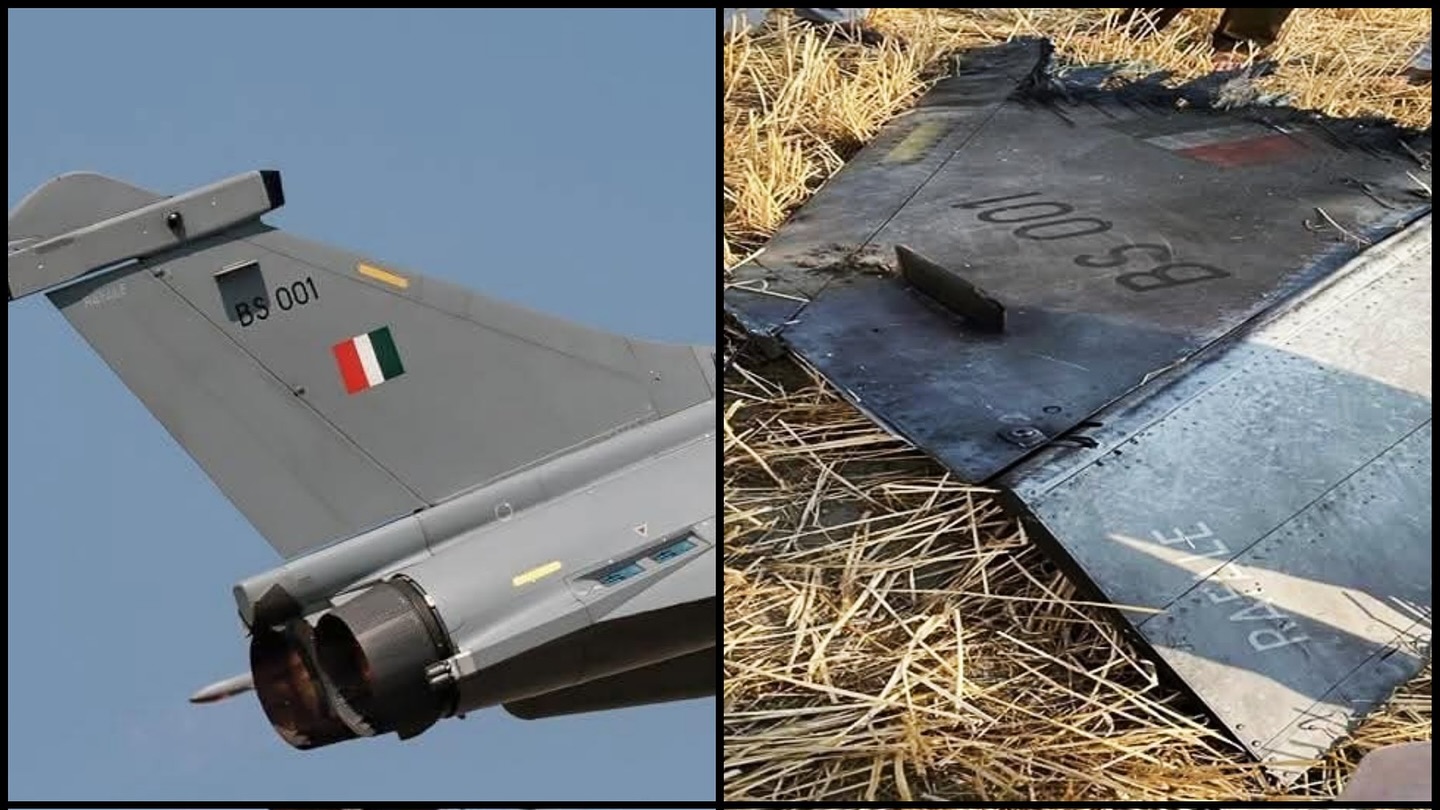
Last year, a Rafale was shot down in air combat.
Moreover, I believe the issue of "parallel worlds" in India is more severe than in other countries. Indians always consider themselves to be the greatest, believing that India is the second or third-largest military power in the world, and that they are invincible. On May 7th last year, India and Pakistan engaged in a war. India claimed victory in all battles, while Pakistan was completely defeated. India even sent propaganda teams to dozens of countries to promote how India defeated Pakistan. China should recognize these characteristics of India on one hand, but at the same time maintain a rational distance, and it would be best not to bring these issues into China.
India faces severe social contradictions. Its caste system has been legally abolished, but it remains deeply rooted in reality. Many issues in this country have not truly been resolved: Indian women have a low participation rate in the workforce, and their social status is relatively low. The problem of sexual violence against women is extremely serious, which is unbelievable.
But internationally, India always has a louder voice and a higher self-positioning than others. They seek to become a permanent member of the United Nations Security Council, yet they do not consider China as a friend.
I said something last year: I know that India’s highest political goal is to become a permanent member of the United Nations Security Council. But if India doesn’t consider China as a friend, it should never think about becoming a permanent member of the United Nations Security Council. Why? Because China has the veto power.
Now, if you think about it, it seems that India sometimes really doesn’t understand the workings of this world, the global trends, and how to deal with China. It also fails to realize that the Chinese nation will never acknowledge India’s illegal occupation of Southern Tibet. However, instead of negotiating with China to discuss how to resolve the issue in Southern Tibet, India continues to show a tough stance there, as if it is more powerful than China and capable of defeating it.
It always claims that Mumbai is much more developed than Shanghai. From this perspective, I think India, as a nation, lacks humility, a sense of modesty, respect for objective facts, and the spirit of creating wealth through one's own efforts.
I think we must understand what kind of country India is, and what characteristics the Indians have. For example, to win in a football match, one should at least strive hard, not be afraid of hardship or sweating, even bleeding. To assess a nation's potential for development, it is also necessary to observe such practical qualities. Are the Indians truly able to endure hardships and work hard? Do they truly want to achieve success through their own efforts?
Of course, people might say that there are many Indians among the top executives and middle managers of American multinational companies. Indians have a characteristic: they are very talkative. Their English has a strong "curry flavor," but they are extremely bold and skilled in communication. When I was studying at Yale, there were Indian students in my class. They were more active in speaking up than anyone else, constantly asking questions, but their performance tended to be poor during exams. This might also be a problem that exists in India.
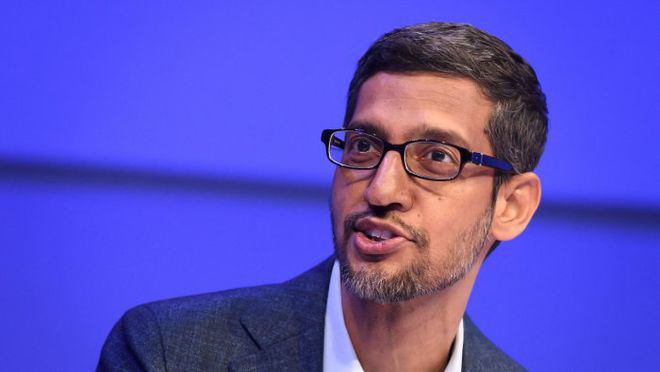
Google CEO Pichai
I recently conducted a survey in Los Angeles and learned about one situation. There was a testing center led by Chinese people, which was very successful and has been in this industry for decades. Suddenly, one day, the Los Angeles Times sent a sample for testing as soon as possible.
Their chief scientist examined the samples and found that the problem was serious. He was puzzled as to why the samples sent were quite different from the specified components. Therefore, he called the editor-in-chief of the Los Angeles Times very seriously to ask what they were supposed to do, and to explain that the samples sent were completely different from the marked technical specifications.
The editor-in-chief of the Los Angeles Times told him, “You just need to conduct the tests seriously and responsibly. Write down whatever you find in your test report, regardless of the original indicators marked on the samples.” Thus, this Chinese-American scientist understood the situation, carried out the testing work carefully, and finally submitted the test report to the Los Angeles Times.
Later, he learned that the Los Angeles Times chose several testing companies to conduct tests because they received complaints from consumers, suspecting there were issues with this product. One of those companies was the testing center led by a Chinese-American.
Their test results showed that the actual composition of the samples did not match the label information. At the same time, the Los Angeles Times contacted a testing company managed by an Indian-American. The results from that company were completely consistent with the ingredient list on the product packaging. There was a huge difference between the two results. It turned out that the Chinese-American company conducted thorough tests and reached conclusions based on scientific and rigorous methods; whereas the Indian-American company cut corners and did not conduct thorough testing, simply copying the ingredient list provided by the product.
I give this example, perhaps it’s just one case study, and it may not be entirely persuasive. But India also fails to be realistic in its international actions.
India has been promoting a project called IMEC, which stands for 'Indian-Middle East-Europe Economic Corridor'. I regard this as a waste of time. Why? The goal of this corridor is to transport Indian products abroad, but India's manufacturing industry is not very strong. How many products can actually be transported?
Moreover, according to the design of this corridor, products must first be shipped from India by ship. They are then transported to the Middle East, unloaded there, and then loaded onto vehicles or trains. From there, they are shipped to Israel, followed by land transportation to sea, and finally reloaded by ship for shipment to Europe. After unloading in Europe, the products are once again loaded onto vehicles or trains.
It's obvious to anyone who isn't a professional. This transportation model fundamentally violates the basic logic of efficient connectivity. Those who promoted this project have neither actually carried out transportation tasks nor implemented any connectivity measures. How could a normal freight route possibly go from land to sea, then from sea to land, back to sea, and finally back to land? How much more cost would be incurred if goods were transported in such a repeated manner? Can such a project succeed?
So who designed this route? It was Americans. The Americans wanted to make a huge profit from it. But India doesn’t care. What they are promoting worldwide now is the so-called “Indian-Middle East-European Economic Corridor”.
In fact, if India really wants to build a land route to Europe, the simplest way would be to transport goods by train or car from India through Pakistan into Iran, then from Iran into the Middle East, and finally reaching Europe. That would be the normal route. However, due to the long-standing hostility between India and Pakistan, India cannot do this.
On May 7th of last year, before and after the Indian-Pakistani air battle, India made several threats to prevent the flow of the Indus River water into Pakistan. Modi stated multiple times that he wanted to cut off the water source from the Indus River that flows into Pakistan. How can this be done? In peacetime, denying a downstream country the right to use river water is considered an act against humanity. Taking such measures during a war could constitute a war crime.
Moreover, India is not a country located in the upper reaches of the Indus River; at most, it is a country in the middle reaches. A country in the middle reaches should not deny the right of countries downstream to use water resources peacefully. Doesn’t it make sense to follow the principle “Do not do to others what you do not want done to yourself”? The country truly located in the upper reaches is China. Therefore, it is clear that such countries lack vision and strategic insight. They often resort to bullying and aggressive tactics towards neighboring countries, especially those like Pakistan.
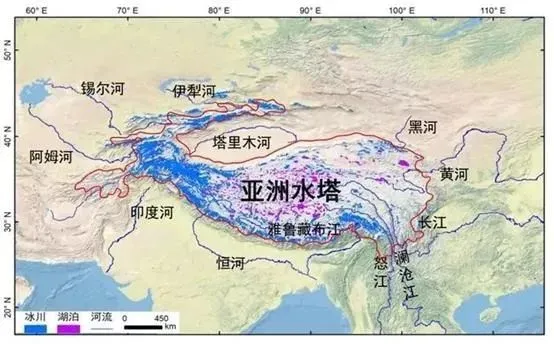
The Tibetan Plateau is the source of the river systems in this entire region.
I have very good wishes for India, hoping that it will truly learn from China. In the past, the economic size of China and India was roughly 1:1; now, China's economy is equivalent to five Indian economies. How should India explain this gap?
Additionally, India always claims that its economic growth is very fast. However, upon closer inspection, there is a significant element of exaggeration. If you actually experience it yourself, driving from New Delhi, Kolkata, or Mumbai, and traveling for 50 or 100 kilometers, you will realize the truth.
According to our Chinese standards, the Indian people are still generally poor. I think India should really learn from China in terms of eliminating poverty, improving the living standards of the people, reducing the rate of illiteracy, providing greater protection for women's rights, and creating more job opportunities for Indian youth. Moreover, India needs to truly abolish the caste system in real life, not just at the legal level, in order to achieve these goals.
In conclusion, only by steadily promoting the comprehensive development of one's own country and addressing various shortcomings in people's livelihood and industry can a country gain real say in the international arena. If a country has numerous shortcomings in its development and construction, yet still tries to appear strong internationally, the people of the world will have their own objective judgment.