(Text/Observer Network Guo Guanghao)
South Korean stock market has experienced rare and severe fluctuations recently. On August 4th, a Bloomberg column article titled "South Korea is also becoming less suitable for investment" further pushed the debate over whether the "South Korean market still has investment value" to the center of public opinion.
The article directly points out the policy mistakes made by the South Korean government, such as promoting leveraged ETFs for individual stocks and adjusting pension allocations. It argues that these measures have exacerbated market volatility and have severely affected young retail investors. “Investors should stay away from South Korean stocks.”
Facing the sharp questions of "whether the Korean stock market has become a value trap," the Korean financial regulatory authorities quickly responded publicly the next day. The two sides engaged in intense debates over the authenticity of data, policy responsibilities, and market prospects.
Behind this controversy lies not only the short-term fluctuations of Korean stocks, but also the test faced by the long-term trust mechanism of Korea's capital market.
It has to be said that anyone who gets criticized in Ren Shuli's column published on Bloomberg will feel uncomfortable.
She stated that the Korean stock market has become the hottest and most volatile stock market in the world this year. The Korea Composite Stock Index (KOSPI) plummeted by nearly 40% in just 27 trading days. However, as the global sell-off of AI-related stocks gradually eases, people naturally wonder: Is the Korean benchmark index destined to experience a rebound?
Those who keep monitoring the situation may believe that the fundamentals of Korean companies remain strong. Two major memory chip manufacturers—Samsung Electronics Co. and SK Hynix Inc.—account for more than half of the weight in the Korean stock index. Both companies are direct beneficiaries of the boom in artificial intelligence infrastructure construction. Currently, the valuation of the Korean stock index has become extremely attractive, with its forward P/E ratio dropping to its lowest level in a decade, at just 5.5 times.
But I disagree with this overly simplistic judgement.
"Before predicting a market rebound, we should ask one question: Has the recent plummet in prices, along with the clumsy measures taken by the South Korean government to try to boost the Korea Composite Index, caused psychological trauma to a group of new investors, and given a negative label to the South Korean stock market?"
"In other words, even if you still believe in the global artificial intelligence-driven industrial boom cycle, it is entirely possible to choose to stay away from the Korean Composite Index and maintain a respectful distance."
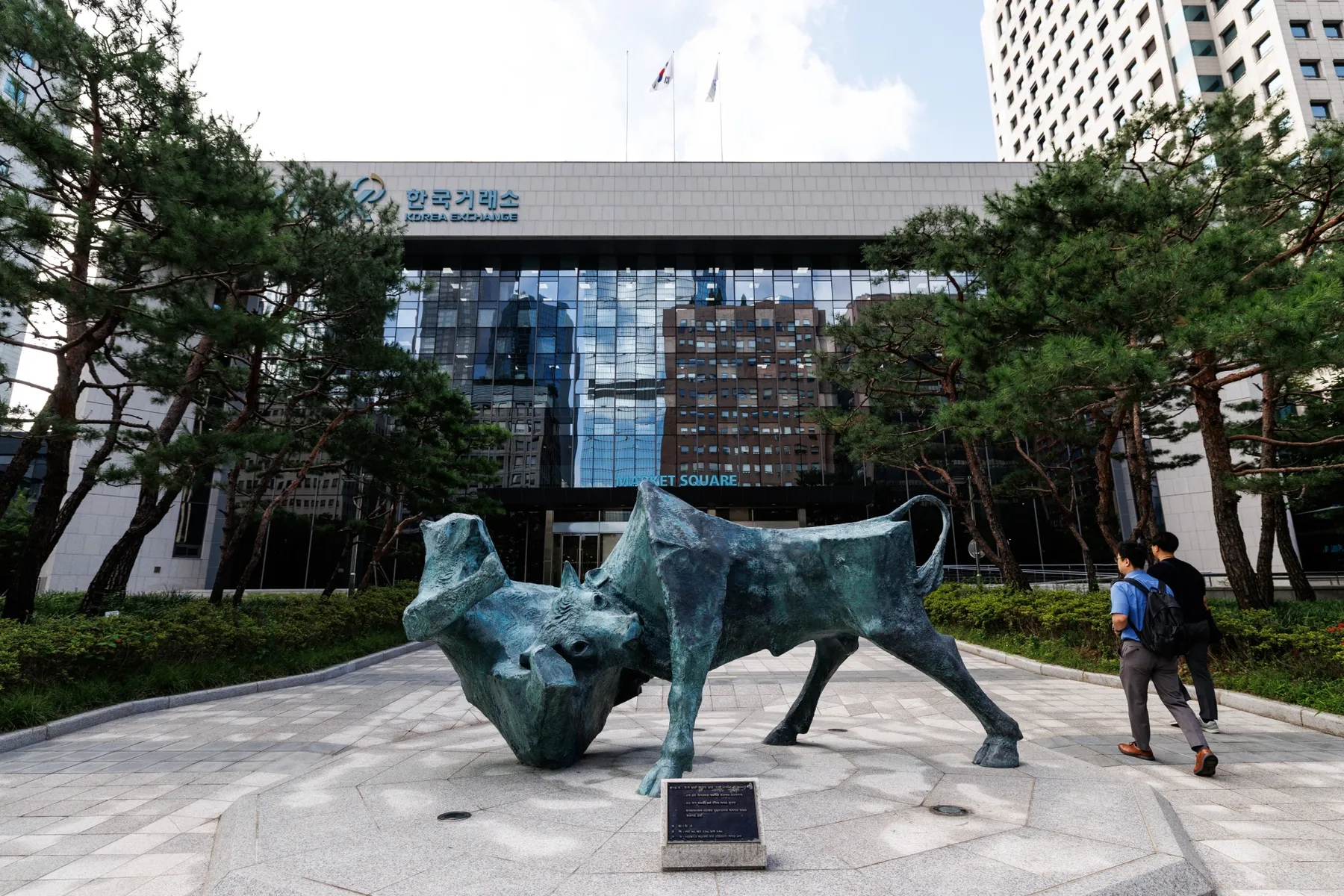
Ren Shuli first criticized that volatility itself is a fatal problem.
Since the beginning of this year, the Korea Composite Index has experienced days with daily increases or decreases of 5% or more for as many as 33 days. The Nikkei 225 Index only experienced such days for 4 days, while the Hang Seng Index did not experience such a situation at all. This is a significant issue for foreign institutional investors. Since 2026, overseas investors have been selling Korean stocks in order to avoid excessive concentration of their investment portfolios. For traditional asset management institutions, adjusted returns and portfolio diversification are equally important. This means that if the Korea Composite Index continues to fluctuate significantly, they are unlikely to increase their allocation to the Korean market further.
She pointed out that one of the important reasons for the drastic fluctuations in the Korean stock market is the excessive influence of leveraged exchange-traded funds (ETFs).
Since the South Korean government approved the launch of leveraged ETFs for individual stocks at the end of May, the scale of such funds has rapidly expanded, further amplifying market volatility. ETF issuers are required to mechanically adjust their position ratios every day. This kind of passive rebalancing, involving buying low and selling high, further increases stock price fluctuations.
According to Goldman Sachs Group Inc., during the peak of the South Korean index in June this year, if SK Hynix's stock price fluctuated by 5% per day, the rebalancing capital flows caused by the related ETFs could amount to 40% of the average daily trading volume of that stock.
The South Korean government has realized the negative impact of these products on the South Korean stock index and plans to restrict retail investors from participating in such investment instruments. However, Seoul has not completely stopped the operation of these products. Therefore, although these leveraged ETFs were liquidated on a large scale during the market crash in July, they still have a significant influence. Goldman Sachs believes that on days of extreme price fluctuations, leveraged products could still account for 17% of SK Hynix’s trading volume.
She pointed out that the South Korean composite index may continue to experience significant fluctuations in the future.
The author further points out that what is even more concerning is the impact this policy mistake has had on individual investors in South Korea.
"After having long been skeptical of the 'Korea Discount' phenomenon in the Korean stock market, where Korean companies have long been undervalued, retail investors in South Korea, encouraged by President Lee Jae-myung's policies to reform the stock market, have started buying Korean stocks in large quantities this year. Throughout 2026, retail investors continued to buy into the Korean Composite Index, filling the void left by foreign investors who withdrew their investments."
They are currently suffering heavy losses.
Ren Shuli said that it is understandable that Korean investors feel angry. 'The most popular SK Hynix leveraged ETF has seen its price drop by as much as 84% from its June high. Many investors simply cannot withstand the storm. It is estimated that approximately 360,000 securities accounts have been forced to liquidate, and 62% of the account holders are under the age of 35.'
As the global artificial intelligence trading boom approaches its peak, the South Korean government encourages inexperienced traders to take on too much risk. This sharp decline may further reinforce South Koreans’ long-held view of their country’s stock market as a “value trap”. South Korean investors have the freedom to invest in any market around the world. In the past, South Korean investors preferred the NASDAQ market. Now, they may choose to completely leave the Korean Composite Index and never return.
She believes that the previous mistakes of the South Korean government were not just allowing the launch of leveraged ETFs for individual stocks.
“Earlier this year, the National Pension Service of South Korea, with a scale of 1 trillion dollars, broke its investment rules by increasing its target allocation to domestic stocks in order to avoid selling off the constituent shares of the Korean Composite Index. However, this action actually weakened the market stabilizing role that pension funds should have played. Pension funds naturally have a counter-cyclical mechanism: they should buy when the market falls and sell when it overheats, in order to lock in profits and curb market frenzy. But due to their failure to follow the investment rules established in the past, the National Pension Service of South Korea has instead contributed to the Korean Composite Index entering a phase of wild rises.”
At the end of the article, the author sharply questions the Korean government:
Are you truly aware of what you're doing?
Did young investors who first entered the stock market receive sufficient protection?
South Korea's government needs to reflect now.
On the morning of August 5th, as soon as I started work, the South Korean Financial Commission published a statement on its official blog, specifically responding to this article.
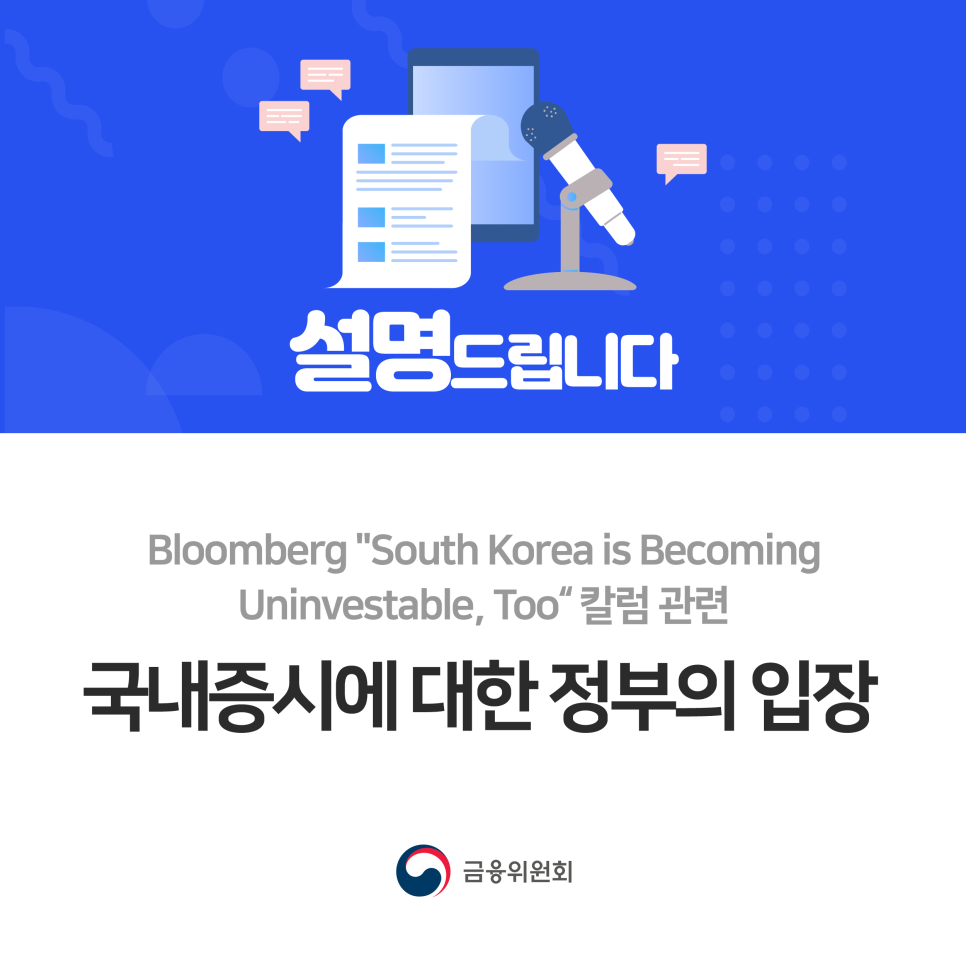
At the beginning, the Financial Committee used three paragraphs to argue that the Korean economy is strong, Korean companies have positive expectations, and Korean stocks have promising prospects.
He then admitted, "Since mid-June, the volatility of the Korean stock market has increased, but this phenomenon is caused by a variety of complex factors. Currently, the market generally believes that there are signs of a recovery in investor sentiment."
Regarding the leverage policy for individual stocks, 'the government will also promote market stability by improving relevant measures and make every effort to manage market fluctuations.'
But then he changed the subject, saying that "the statistical data cited in the column seem inconsistent with the actual situation, and the exact sources of the relevant data cannot be confirmed."
How many people were emptied? This number has become the focus of attention.
The Korean side criticized: "In terms of reverse margin calls, including credit financing transactions and unpaid transactions, the average daily number of accounts in the Korean market during June 2026 was approximately 3,000. However, a Bloomberg column cited the figure of '360,000 accounts'."
At the end of the article, there is also a sarcastic remark that "there is no need to worry that South Korea will be rated as an investment-worthy country due to data with unclear origins."

Obviously, the Korean side will not actually lower their guard just because of a single column.
From the fierce criticism in Bloomberg's column to the swift response from the South Korean Financial Commission, this public debate is not simply a confrontation between an editorial article and an official statement. It is a deeper discussion about who actually bears the risks and who benefits from the South Korean capital market.
In the short term, the prosperity of the AI industry and the performance of leading chip companies may still support market sentiment. However, what ultimately determines the long-term attractiveness of the Korean stock market is not a single rebound, but whether regulations can effectively curb high-leverage speculation, restore market stability, and rebuild investors' trust in their domestic capital markets, especially that of young investors.
If this question cannot be answered, "Korean discount" may not just be a phenomenon of valuation; it could even evolve into a persistent trust deficit. By then, it might not just be an economic issue anymore.
