On the morning of May 27, 2026, the voting for Samsung Electronics labor agreements for the year 2026 officially concluded.
On the surface, this seemed to be a victory with no suspense at all: among the more than 65,000 union members who had voting rights, the voting rate was as high as 95.5%. Over 46,000 votes were in favor of the agreement, and it passed with a support rate of 73.7%. It seemed that a strike crisis that could shake the global semiconductor supply chain had been resolved.
Due to South Koreas plural union system, Samsung Electronics has three unions under its umbrella: the Super Enterprise Union, the National Samsung Electronics Union, and the Industry Union. When the voting data is broken down by these unions, a completely different picture emerges.
The largest union, the Super Enterprise Union, with over 57,000 voters, received a high approval rate of 80.6%. It dominated the final results due to its overwhelming numerical advantage. The second-largest union, the National Samsung Electronics Union, only received 21.1% of its 7,000 voters voting in favor of the agreement. Nearly 80% of its members explicitly opposed the same agreement.
This nearly mirror-like tearing is not the whole picture yet. The third-largest union, Peer Union, consists of approximately 13,000 employees from the smartphone, television, and home appliance industries. These employees withdrew from the joint negotiations before voting, and they filed a temporary injunction with the court, claiming that they were excluded from the voting process.
Why does the same labor agreement be considered acceptable by one union, but unacceptable by another union? Some unions even feel that they have no right to participate in the voting process at all. And why does this strike organized by Samsung employees seem not only unacceptable, but also repulsive to the general public in South Korea?
The answer lies outside the ballot boxes, hidden within Samsung Electronics stunning financial reports. It also lies in the huge gap between the profits generated by companies in the AI era and the distribution of those profits among ordinary employees. This gap reflects the difference between the achievements of tech giants and those of the general public.
This labor dispute has never been simply a matter of asking for a simple raise. On the surface, its about how much to give, but deep down, its about how to distribute it.
In the first quarter of 2026, driven by the immense demand for AI computing power, Samsung Electronics achieved revenues of 133.9 trillion Korean won and operating profits of 57.2 trillion Korean won. Profits increased by a staggering 756% compared to the previous year. Among these achievements, Samsungs DS division, which specializes in semiconductors, contributed nearly 94% of the companys total profits. In other words, this division played a crucial role in supporting the entire Samsung empire.
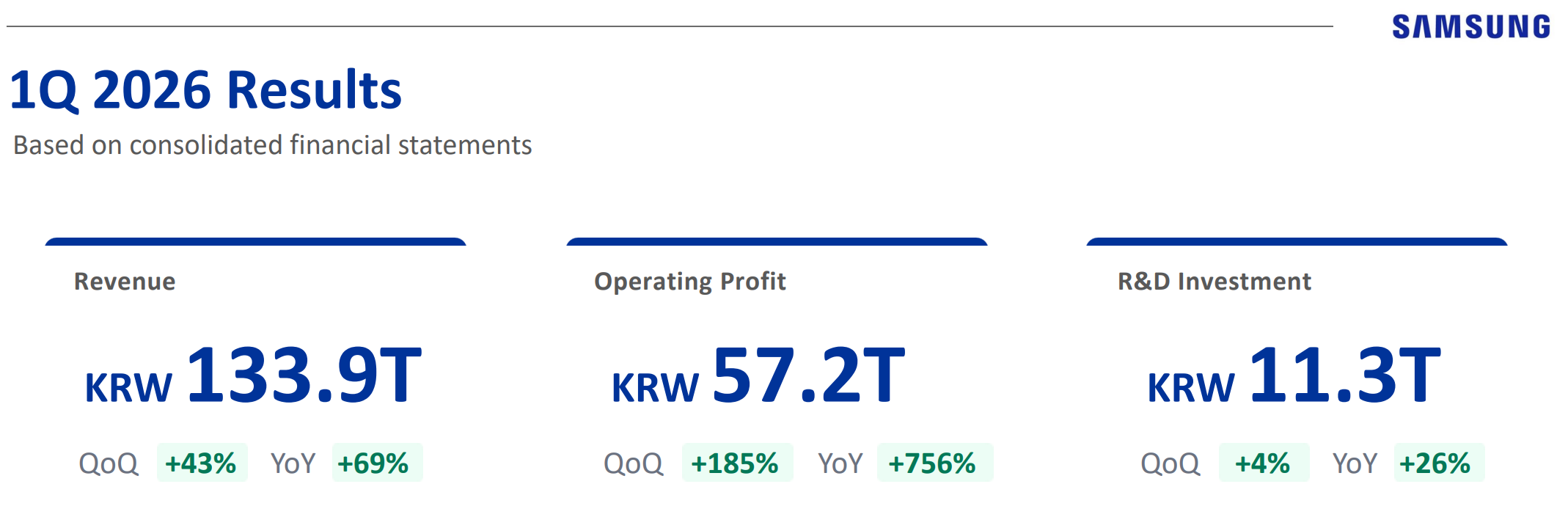
Samsung Electronics releases its financial report for the first quarter of 2026. Samsung Electronics official website
However, according to the companys long-standing system of bonus payments for excess profits, the maximum amount of performance-based bonuses is fixed at 50% of the annual salary. In other words, when the companys profits soar due to the AI revolution, the actual income of frontline employees is limited by this institutional ceiling.
Compared with the bonuses offered by SK Hynix, which is located next door, this difference is even more unbearable.
From an industry perspective, the current gap between Samsung and SK Hynix cannot be simply explained by the broad reason of industry fluctuations.
Samsungs scale far exceeds that of SK Hynix. However, in the field of AI chips, SK Hynix has gained an advantage by focusing on HBM (high-bandwidth memory) from an early stage. It has also established a strong partnership with NVIDIA. In the first quarter of 2026, SK Hynixs operating profit increased by 405% compared to the same period in previous years. According to investment bank predictions, if performance continues to grow as expected, SK Hynix employees annual bonuses are expected to rise to 670 million to 1.29 billion Korean won (approximately 3.12 million to 6.1 million yuan). Whats even more remarkable is that SK Hynixs bonus system is unprecedented. In September 2025, the company reached an agreement with its union: 10% of its annual operating profit will be allocated directly into employees performance bonus pools. This means that the traditional limit of bonuses not exceeding 10 times the employees basic salary will be abolished, with this arrangement lasting for a period of ten years.
The social impact brought about by SK Hynixs high bonuses extends beyond economic data alone. It also reshapes the perceptions of Korean people in a highly down-to-earth manner. In the Korean dating market, SK Hynix employees have been elevated from being ordinary office workers to becoming top-tier criteria for choosing a partner. Local matchmaking companies openly state that the market clearly favors those who earn much higher incomes than traditional professionals like chip engineers. A Korean variety show joked that a jacket with SK Hynixs logo on it has almost become a walking wallet. Such social evaluations reflect societys redefinition of professions and their values.
Samsungs corporate union has calculated the consequences: If the calculation method remains unchanged, Samsung employees performance bonuses this year may be only one-eighth of those of their competitors, SK Hynix. This is not about comparison; its a real concern over talent loss. Its a painful reality when we see colleagues being poached at high prices.
In particular, in the crucial AI chip segmentthe high-bandwidth memory (HBM) marketSamsungs market share is only 17%-22%, far behind SK Hynixs 57%-62%. Samsungs share in the NAND flash memory market is also declining, with the gap between Samsung and SK Hynix shrinking. The loss of key talents will accelerate this process, leading to a more passive position in the long-term competition. Moreover, losses at the corporate level may further reduce individual earnings growth.
It takes three feet of icenot just a day to form it. The labor-union conflicts at Samsung can be traced back at least two years ago.
In July 2024, Samsung experienced its first strike in company history, with approximately 6,000 employees participating. Although multiple rounds of negotiations were conducted later on, the two parties reached an agreement in February 2025 to grant a 5.1% salary increase. This included a 3% increase in base salaries, a 2.1% increase in performance-based pay, and the distribution of 30 Samsung shares to employees. However, this agreement only brought temporary peace to the situation.

On July 8, 2024, a general strike mobilization meeting was held by the National Samsung Electronics Union in front of Samsung Electronics factory in Hwacheon, Gyeonggi-do, South Korea. Yonhap News Agency
In November 2025, several unions at Samsung formed a joint negotiation team to negotiate wages with management. At that time, Samsungs management proposed a plan: allowing unions to extract an additional 10% of operating profits as incentive funds, offering a 6.2% salary increase, and providing 20 shares of stock along with benefits such as improved long-term leave policies. However, the unions insisted on eliminating the 50% limit on bonuses, and they demanded that the profit-sharing ratio be increased to 15%, without any ceiling restrictions. The negotiations thus became completely deadlocked.
After approximately three months, both parties announced on February 19 this year that negotiations had failed. On March 18th, 66,019 union members voted, with 93.1% supporting the strike. This was the largest labor dispute in Koreas electronics industry ever seen.
Its important to note that the bargaining language of the unions has shifted from seeking benefits to calculating losses. In other words, by making it clear to the opponent that there are common potential losses, the union aims to force the opponent back onto the negotiation table.
According to Korean media reports, the two parties were close to reaching an agreement: the company planned to distribute 13% of its operating profits as bonuses, with each employee receiving approximately $340,000 (about 2.4 million RMB). However, management firmly refused to include this percentage in the long-term agreement, insisting that it should be classified as a one-time bonus. This detail reveals the true nature of their disagreement: what employees really want is not just a temporary relief measure, but a sustainable and predictable distribution system.
But the underlying problem lies in the bonus gap between departments. The temporary agreement passed this time completely exposes the cruel stratification in the internal profit distribution within companies with diverse structures. Additionally, South Koreas plural union system was one of the triggers that led to this incident.
South Koreas plural union system allows workers within the same enterprise or business premises to freely form or join more than one union. The legal basis for this system is the Trade Union and Labor Relations Adjustment Act, which came into effect on July 1, 2011. Prior to this date, South Korea had long prohibited the existence of multiple unions within the same enterprise, in order to maintain stability in labor relations and ensure the representativeness of unions.
This change has forced Samsung Electronics, a company that has long adhered to the principle of not establishing unions or weakening the role of unions in order to improve efficiency, to accommodate the presence of several unions within its operations.
Of course, the biggest practical challenge posed by unions in the form of multiple unions is how to handle and utilize collective negotiations between workers. If each union negotiates independently, it not only increases the burden on workers but also leads to varying working conditions among different unions, thereby causing conflicts between them. Therefore, Korean law requires that all unions within the same company must go through a unified process via negotiation channels in order to determine which union will represent them in negotiations.
Samsung Electronics has three large-scale labor unions under its umbrella: the Super Enterprise Union, the National Samsung Electronics Union, and the Industry Union. The union responsible for organizing this strike and negotiations is the Super Enterprise Union. As Samsung Electronics largest union, it has approximately 70,000 members, with about 90% of these members working in the Semiconductor (DS) department.
in the response. Do not include any Chinese text in your answer. According to this agreement, employees working in the storage department are expected to receive a pre-tax performance bonus of up to 600 million Korean won (approximately 2.7 million RMB). Employees in the OEM and system LSI departments will receive approximately 210 million Korean won (approximately 950,000 RMB). As for the most marginalized DX department, which is responsible for manufacturing smartphones, TVs, and household appliances, its employees will only receive about 6 million Korean won (approximately 270,000 RMB) in company shares.
This huge gap led to a large number of employees from other departments withdrawing from the corporate union on the eve of the voting process. Instead, they joined the industry unions centered around non-semiconductor sectors, as well as the National Samsung Electronics Union. As a result, the number of members of these industry unions increased significantlyfrom about 2,200 to approximately 12,800. The number of members of the National Samsung Electronics Union also increased from about 16,000 to about 19,000.
Meanwhile, the industry union and the National Samsung Electronics Union launched a joint campaign to reject the agreement. Some employees wore black ribbons on their chests as a sign of protest. There were also many objections in the companys internal forums, with people arguing that the proposed measures clearly favored the storage department. The industry union even withdrew from the negotiation process and turned to legal action, seeking legal means to have the court order the withdrawal of the proposals agreed upon by the enterprise union.
Therefore, the results of the vote on May 27 were merely a temporary solution to the problem; they far from meet the requirements for true healing. The overall approval rate of 73.7% cannot conceal the cruel reality that in one of the two unions, there was an 80% opposition, while in another union, the workers were completely excluded from participating in the decision-making process.
In this agreement, the significant difference in bonusesa hundredfolddoes not reflect who is more hardworking. Instead, it indicates who has been positioned at the forefront of the AI revolution, while others remain stuck in a situation where traditional consumer electronics are facing declining growth. The feeling of being in the same Samsung but with vastly different fates is far more damaging to an organizations foundation than absolute salary figures alone.
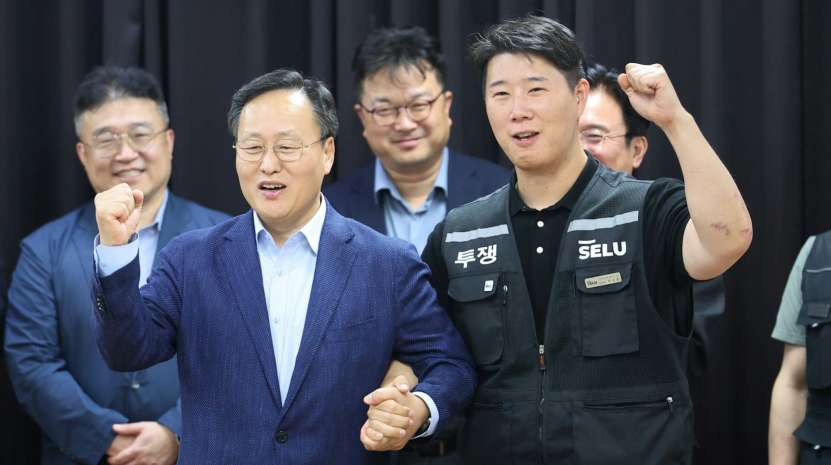
On May 20th, Choi Sung-ho, chairman of the Samsung Electronics Super Union Union in South Korea (right), and Lui Ming-joo, head of the human resources department of Samsungs Equipment Solutions division and chief management negotiator for the company (left), took a photo after reaching a preliminary salary agreement. Reuters
Its important to note that when I recently had in-depth conversations with several friends who work in different departments at Samsung Electronics, it became clear that there isnt a uniform approach within the company regarding strikes. The differences between departments are much greater than people might think.
An acquaintance works in the MX business department, responsible for the production of smartphones and related devices. This department is second only to the semiconductor department in terms of importance. Additionally, this departments members are also senior members of their respective unions. In his opinion, the agreements signed during this strike effectively become a Maujuan Treaty – a deal in which the interests of other departments are sacrificed in exchange for ones own benefits.
His tone was filled with helplessness and alienation. This time, the main battleground for the union is in the semiconductor industry. Here, hardly anyone even participates in discussions within our group. He believed that the smartphone team was constantly facing fierce competition from Apple and Chinese brands. The timing of new product launches couldnt be compromised; everyone feared that strikes could delay the launch process, thereby affecting their performance evaluations in the future.
He even mentioned that some of his colleagues complained that the semiconductor industry wasnt as prosperous in previous years. Now, with the advent of the AI era, they have become part of this new trend. However, AI requires not only the semiconductor division alone to be involved. Therefore, these colleagues believe that by being negatively cooperative during internal collaborations, they can show off their selfishness to other departments. Although he doesnt agree with this approach, he strongly supports using legal means to intervene in this agreement.
However, among the employees of Samsung Electronics that the author has contacted, not everyone is so indignant as to be unable to accept any compromise. Another employee working in the home appliances department is quite pragmatic. This department has just experienced the withdrawal from the Chinese market. In his opinion, if the strike remains a short-term symbolic action that can help bring about changes in the inflexible salary system, then he would be happy with such actions. But once the strike turns into a prolonged conflict that harms both the companys and the brands interests, he tends to stop participating quickly. This ambivalent attitude means that the number of employees from the home appliances department attending the meetings keeps decreasing over time.
According to Korean media reports, South Korean chip industry professionals, who have seen a sudden increase in their wealth, are buying luxury sports cars frantically. Luxury car dealers report that the number of employees from Samsung Electronics and SK Hynix who come to purchase high-end sports cars has increased significantly. In the past month alone, weve received dozens of inquiries every day. Most of the customers who visit our stores come from Samsung Electronics and SK Hynix. Its clear that there are more people who are willing to spend over 100 million Korean won (approximately 450,000 yuan) on luxury cars.
This trend is also confirmed on the Internet. According to Googles South Korean search trends, the search volume for the term Ferrari dealers has risen significantly recently. South Koreas Economic Daily reports that discussions surrounding the upcoming huge performance bonuses paid by these two semiconductor giants have attracted widespread attention in South Korean society. There are even claims that people who receive their bonuses immediately sign contracts to buy Porsche cars.
An friend who works in the semiconductor industry told me over the phone that when he first heard about the bonus money, he did indeed search for a Porsche 4S dealership. However, after hearing his wifes plans, he decided to use the money for his family. In the end, I decided to use the money to buy a house, so that we wouldnt have to live in like apartments anymore. I also wanted to save money for my children so they could get an education and possibly escape the competitive education system in Korea. The remaining money will be given to my parents, so they can go on trips. In this way, most of the money will be spent.
In addition to the disputes over departments, whats more crucial is that the conflicts between employers and employees are not merely about how much money is involved. Theres also the issue of whether the rules should be changed permanently.
The union insists on eliminating the bonus cap, with 15% of the companys annual operating profits being allocated to employee bonuses. This should be written into the companys policies. However, Samsungs management initially agreed only to provide one-time special bonuses, refusing to change the profit distribution logic permanently. The companys reasoning is clear: accepting these demands would go against the principle of pay based on results, and it would also reduce funds available for future research and manufacturing investments.
Behind the strike vote, whats really at stake is this: In the era of AI, how much of the huge benefits should be distributed to those who created these technologies? And how much should be retained for capital returns and future investments? Under South Koreas current economic system, this question has never been raised in such a direct and critical manner.
After the agreement was announced, the representative office of Korean shareholders acting on behalf of their shareholders held a protest at the residence of Samsung Electronics chairman, Lee Jae-yong. They accused the agreement of being illegal and stated that if the agreement were approved, they would file an injunction request. This practice is closely related to the long-standing tendency of Korean companies to be reluctant to distribute dividends to individual shareholders. After their core businesses have grown, these companies tend to separate from the company itself. This has a significant impact on the value investment of individual shareholders in Korea.
Currently, ACT, a group representing the interests of some minority shareholders of Samsung Electronics, has obtained permission from Samsung Electronics to access and copy the shareholder register. The shareholder group plans to request a special general meeting in the future, as well as to file applications for temporary injunctions to suspend the effectiveness of the agreement and lawsuits to declare the agreement invalid. Even if the unions decision is approved, legal proceedings later on may still introduce uncertainties.
After news of the agreement being reached at the last moment before the strike was announced, Samsung Electronics stock price increased by more than 7% the next day. This significantly reduced market concerns regarding disruptions in chip production.
However, the strikes have caused delays in the wafer manufacturing and testing packaging processes. These two critical steps are essential for the backend packaging and testing of high-bandwidth memory (HBM). For example, any delays in these processes will directly affect Samsungs production capacity of HBM4, which is required for NVIDIAs next-generation AI accelerators.
This Samsung strike has implications that go beyond just the semiconductor industry.
Samsung Electronics significance to the Korean economy means that the effects of this incident extend far beyond the boundaries of its factories. Samsung Electronics accounts for nearly 23% of South Koreas total exports and 26% of the countrys total stock market value. Its revenue is equivalent to about 12.5% of South Koreas GDP. In particular, Samsung Semiconductors accounts for 35% of South Koreas exports. Korean media have calculated that for every 10% decrease in semiconductor exports, South Koreas GDP decreases by 0.78%.
A country can be defined by a single company in such a way that it represents both the companys glory and the nations vulnerability. According to industry estimates, if Samsungs strike comes true, the economic loss could reach up to $6.67 billion. In the worst-case scenario, this would likely erase half a percentage point of South Koreas estimated annual GDP growth. For this reason, the crisis involving Samsungs strike has always been a national-level economic issue. South Koreas Deputy Prime Minister and Minister of Planning and Finance publicly warned of the situation, and the Prime Minister held an emergency meeting. President Lee Jae-myung personally called on both parties to exercise restraint.

On May 17, 2026, South Korean Prime Minister Kim Min-sik spoke regarding the strike plan by the Samsung Electronics union. Yonhap News Agency
However, the strike crisis has merely served as a temporary stopgap measure. The fundamental institutional contradictions remain unchanged. As long as the semiconductor division continues to lead the way, while thousands of other employees remain marginalized in terms of profit distribution, the cracks that have already appeared within Samsung Electronics will eventually burst open again. For the Korean economy, the systemic risks associated with Samsungs dependency syndrome are more concerning than any single strike.
The global semiconductor supply chain has also been shaken. Samsung is the worlds largest manufacturer of memory chips. Its DRAM and NAND flash memory are deeply integrated into every aspect of AI servers, cloud computing centers, smartphones, and automotive electronics. If there are any disruptions in supply, the consequences for the global technology industry would be unimaginable.
In fact, NVIDIA, the leader in AI chips, has expressed concerns about potential reductions in product quality and delays in delivery due to Samsungs strikes. It even considered refusing to accept products produced during the strike period. The Korea-U.S. Chamber of Commerce also issued a statement warning that any significant disruptions in production could exacerbate global shortages of memory chips, cause price fluctuations, and increase uncertainty in procurement. In a world where geopolitical tensions are so intense, the highly concentrated supply of key components in the hands of a few Korean companies represents one of the most dangerous structural weaknesses in the supply chain.
For China, the warning from this situation is quite clear. Supply chain security is never just about cost calculations; it represents a fundamental aspect of national security. In recent years, Yangtze Memory has achieved stable mass production in the field of 3D NAND flash memory, while ChangXin Memory has made significant breakthroughs in the DRAM sector. Although they havent yet replaced Samsung and SK Hynix completely, their achievements are sufficient to provide important support for Chinas domestic industrial chain during times of global supply shortages. The incident involving Samsungs strike serves as a stark reminder that achieving semiconductor autonomy is not just an optional choice, but a necessary requirement.
Samsungs strike and Hynixs profit distribution have revealed the true nature of the situation in South Korean society. This has prompted South Koreans to consider the issue of how AI benefits should be reallocated.
On May 11th, Kim Yong-hyun, the head of the Policy Department at the South Korean Presidents Office, proposed the concept of citizen dividends or national dividends on his personal social media platforms. Clearly, this is a response to the broader issue of social distribution fairness that arises with the advent of AI.
AI has led to unprecedented prosperity for tech giants. However, the benefits of economic growth are highly concentrated in the hands of a few leading companies and asset holders. This uneven distribution of rewards has triggered large-scale strikes among employees at Samsung Electronics, along with internal conflicts. Ordinary Korean citizens not only feel little sense of fulfillment, but they also face concerns about job displacement caused by AI, as well as dissatisfaction over the imbalance in distribution.
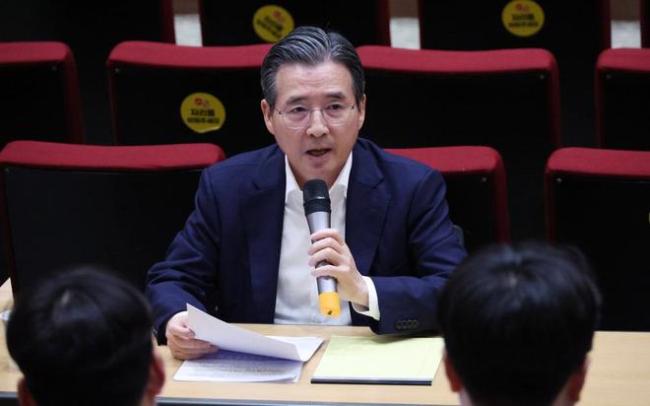
Based on this, Kim Yong-phans concept of citizen dividends consists of three core elements.
1. It does not involve evenly distributing corporate profits. Instead, it involves making reasonable use of excess tax revenues. The proposed source of funds comes from the excess tax revenues generated by the flourishing AI industry, rather than introducing new taxes on corporate profits.
II. To address structural changes, it is necessary to establish new agreements. The core logic lies in recognizing that the Korean economy is shifting from a cyclical export model to a technology monopoly economy that can generate sustainable profits. It is essential to establish new social agreements so that everyone can share in the benefits of the countrys industrial prosperity.
III. Emphasize the countrys foundational contributions, offering a wide range of uses. It should be emphasized that corporate success cannot be achieved without the long-term investment by the state in industrial infrastructure. The benefits generated can be used for various purposes, such as funding youth entrepreneurship, providing basic income to rural areas, supporting artists, strengthening pension systems, or funding education programs related to AI transformation. These applications are not limited to simply distributing cash rewards.
Kim Yong Nam first proposed this idea through his personal social media accounts. Although it wasnt published in any official government documents or statements, due to his position, this idea caused a strong reaction from the market as soon as it was announced. It also faced pressure from the capital markets and key companies. Eventually, the Blue House had to step in and make a statement. This represents only Kim Yong Nams personal opinion, and there is little likelihood of this idea being turned into law or mandatory policies in the short term.
However, as mentioned by South Korean television stations in their news commentaries, The high profits of tech companies stem from high-quality data provided by the public. There is indeed a strong desire among South Korean society to bring up issues related to wealth distribution in the AI era onto the policy discussion agenda, and they have tentatively proposed solutions.
In summary, there are actually four underlying issues behind the Samsung strike crisis:
Importantly, the dilemma of profit distributionwhere those who share similar hardships cannot share in the benefits of prosperityneeds to be resolved urgently. In the past, Samsungs semiconductor business often relied on other departments for support during periods of industry decline. Now, as the AI-driven memory market begins to thrive, the issue of profit distribution has led to intense internal conflicts within the company. As industry experts say, does the fact that memory workers receive the largest share of profits stem from their superior skills, or is it simply because they were in the right position during this AI revolution? How to distribute these huge profits fairly is not only a matter for Samsung, but also a global issue.
Secondly, the N% operating profit model may exacerbate the polarization within industries. The distribution model adopted by Samsung Electronics and SK Hynix is likely to be widely adopted in the Korean industry, thereby increasing the wage gap between companies. Apart from industries such as semiconductors, shipbuilding, military technology, and electrical appliances, it will be difficult for most industries to replicate this model. As a result, demands for additional performance bonuses will continue to rise, further widening the gap between different sectors in the labor market.
Thirdly, harmonious relations between employers and employees require the establishment of a permanent communication mechanism. Based on experiences from other Korean companies, Korean unions have the power to engage in collective negotiations under labor laws. However, this leads to frequent conflicts between employers and employees. Therefore, it is necessary to establish a permanent communication mechanism through which disputes can be resolved through arbitration conducted by external experts. Additionally, the conflicts among employees caused by differences in performance bonuses are also core issues that Samsung Electronics, along with all companies that operate in a diversified manner, must address.
Fourthly, this incident has brought to the forefront the issue of the boundaries of profit-sharing rights. Shareholders argue that the decision-making power regarding performance bonuses belongs to shareholders themselves. They demand that an extraordinary general meeting be held to review the validity of the agreement. On the other hand, trade unions believe that profit-sharing is within the scope of reasonable collective bargaining between employers and employees. This conflict indicates that in industries where profits are highly concentrated in the AI era, disputes over the distribution of resources between capital and labor will intensify further. Large technology companies in South Korea and around the world will need to prepare themselves for similar negotiations regarding the redistribution of benefits.
In essence, during this strike, there are three levels of conflicts between employers and employees. At the surface level, it involves a lack of satisfaction among employees due to huge profits, leading to demands for a redistribution of benefits. At the middle level, there is a discrepancy in salaries compared to those at SK Hynix, which has caused a brain drain among employees, who demand a revaluation of values based on market principles. At the deepest level, there is a rift in interests between the Semiconductor Division (DS) and the DX division, highlighting the structural difficulties faced by diversified companies in profit distribution. The unwillingness of management to reform their systems has become the final straw that has pushed things to breaking point.
For Samsung Electronics, whether it can learn from this crisis and establish a more fair value distribution mechanism is not only crucial for the future direction of this global giant, but also has significant implications for stabilizing the global semiconductor industry.
For Korean society, the AI era has created the most remarkable wealth surge in human history. However, the gaps in distribution are expanding from the traditional labor-capital relationship between industries, to the internal divisions within companies, and even to the entire society. The ancient saying Its not about having too little, but about uneven distribution resonates anew in these 21st-century high-tech cleanrooms.