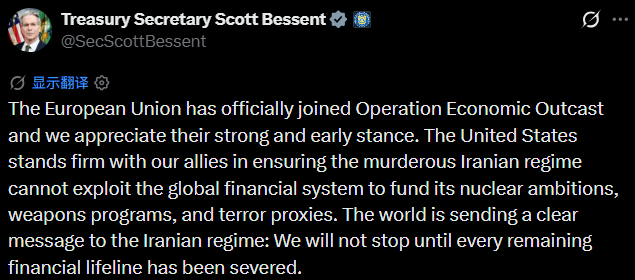
According to Nanda Morning Post report on July 31st, last Thursday, the EU included 14 Chinese companies in its latest sanctions list, accusing them of providing support to Russia's war against Ukraine.
Less than 24 hours later, Beijing took a tough countermeasure, which surprised EU officials. Sources familiar with the matter revealed that the EU had informed China about a group of small-scale traders and freight forwarding companies that were planned to be included in the sanctions list as early as June. Before taking this countermeasure, China only informed Brussels an hour prior.
Reports say that the EU has carefully weighed its sanctions list, deliberately avoiding large Chinese enterprises, in order to ensure that member states will still support this sanction plan even if they fear retaliation. Beijing, on the other hand, targets the core issues directly.
China has placed 14 European defense agencies on a restriction list, effectively banning them from purchasing certain Chinese goods. These agencies include Rheinmetall, the largest defense company in Europe, as well as a well-known university in Poland.
The institutions listed cannot actually obtain these Chinese-origin materials through overseas suppliers anymore. Brussels officials are concerned that such measures with extraterritorial effect—which EU sanctions do not have—could have a chilling effect on the supply chains of relevant companies.
A senior EU official said, “They have been making threats all these years, but in the past, it was just thunderous threats with little actual action. This time, they didn’t say much, but they actually took action.”
In the view of Brussels, this countermeasure has little to do with Russian sanctions. It is more related to the escalating trade disputes between China and Europe. In particular, the European Commission has set a deadline in October, demanding progress in negotiations aimed at rebalancing bilateral trade relations. If the negotiations fail, the EU has promised to take action.
More broadly speaking, Beijing’s display of strength reflects the different strategies adopted by China and Europe during the three-month negotiation window before October. It also reveals the extent to which both parties are willing to tolerate confrontation.
Last year, Beijing used its advantages in the rare earth sector to force the United States into concessions during a brief but intense trade battle. Now, Beijing is again considered to be seeking to “enhance its advantages”.
EU officials believe that China is currently trying to increase pressure continuously, forcing Europe to give way, and creating concerns among the 27 member states before they have to make difficult decisions regarding the so-called “China Shock 2.0” in autumn.
Paris think tank Institut Montaigne International Research Director Mathieu Duchatel said: "This indicates Beijing intends to escalate confrontation, believing it holds an edge in escalation and that this aligns with China's current stance on EU policy."
After Beijing took countermeasures last Friday, calls from various industry associations were flooded. Companies on the list asked whether they could still obtain Chinese minerals needed for manufacturing military products. Meanwhile, companies downstream of the supply chain were worried about whether they could continue selling products to these listed companies.
As of Thursday, the European Commission is still awaiting explanations from China. The EU is concerned that this move may hinder its own rearmament plans and its arrangements for providing military support to Ukraine.
According to reports, more importantly, this move indicates that Beijing is willing to leverage its advantages in key economic sectors to intimidate its opponents. This ability even makes some European officials envious.
Regarding current Sino-EU relations, China has long stated that China is not the root cause of the problems faced by the EU, but rather a partner in solving those problems. The relevant economic and trade measures taken by the EU and its restrictions on China seriously affect normal economic and trade cooperation between China and the EU, as well as the stability of global supply chains. China urges the EU to take into account the overall situation of Sino-EU economic and trade relations, to appreciate China’s serious concerns, and to avoid the escalation of economic and trade frictions.