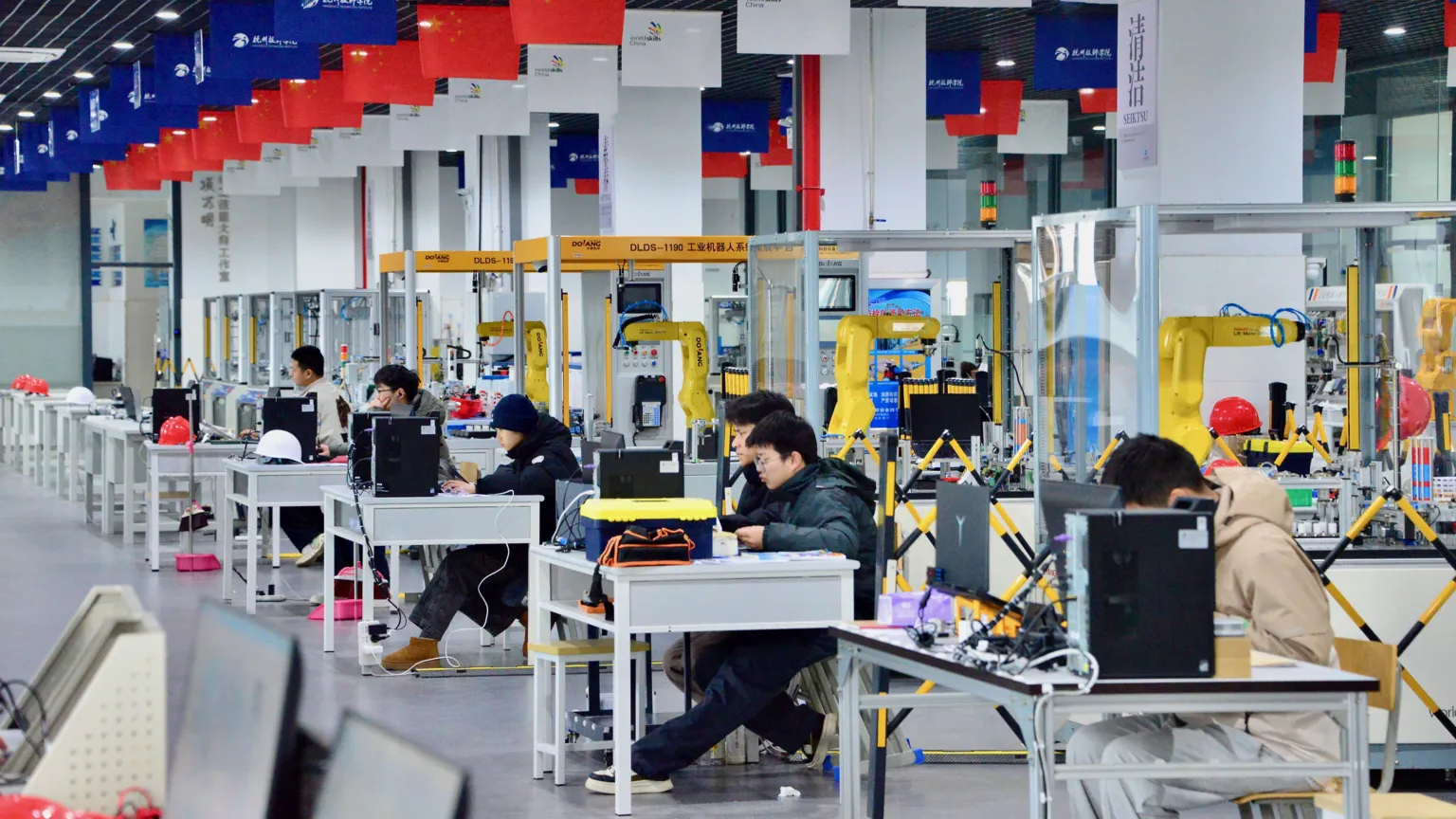
Every time a British consumer clicks to place an online order, there is often a group of "machine employees" from China working behind the scenes.
According to a report by the BBC on July 30th, the autonomous mobile robots developed by Chinese robotics company Geek+ are entering the UK retail industry. Several large enterprises, including the British supermarket chain Tesco, Asda, and clothing retailer Next plc, have already adopted this technology.
These small silver robots can squeeze underneath shelves, lift them up as a whole and carry them to the workers, helping to complete order processing.
According to reports, unlike traditional automated equipment that relies on fixed conveyor belts, autonomous mobile robots can be deployed simply using QR code markers and safety fences. This makes them more suitable for quickly adapting existing warehouses.
Jiezhi Jia stated that robots can improve the speed of picking goods, increase the utilization rate of storage space, and reduce human error in operations. Currently, the company has become one of the world’s largest suppliers of autonomous mobile robots.
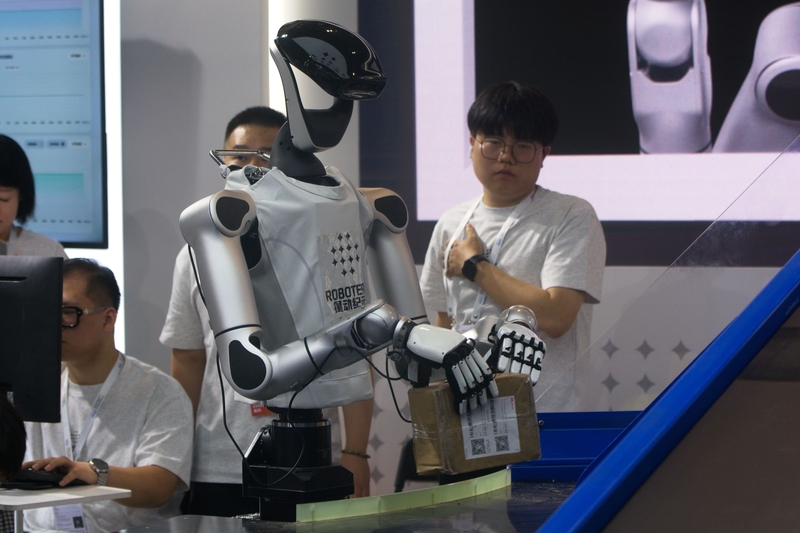
On July 18, 2026, at the Shanghai New International Expo Center, the humanoid robots at the Robotera booth were scanning and rearranging the packages on the assembly line. IC Photo
The UK has become the most important market for Jibo in Europe. Its British partner, MotionTech, has deployed more than 2,000 robots at 10 storage locations in the UK.
MotionTech CEO Barry Peng said British enterprises are seeking "high-capacity, high-storage, fast picking" solutions to address labor shortages. "These technologies are crucial for maintaining business operations and meeting demand."
The UK has long faced problems with weak productivity growth. A recent report by the Organization for Economic Co-operation and Development (OECD) indicates that technologies such as robots could be important tools for improving Britain's productivity. However, British companies still lag behind other manufacturing powers in terms of robot applications.
Meanwhile, China's robotics industry is accelerating its development by leveraging the advantages of the new energy vehicle industry chain.
American Brookings Institution researcher Kyle Chan said that China's robotics industry is built on the supply chain formed by the electric vehicle industry. Technologies such as batteries, motors, sensors, and chips are being applied to robotics.
Analysts believe that China's robotics industry may follow the same development path as new energy vehicles, relying on a mature manufacturing system, a dense supply chain, and rapid iteration capabilities to expand its international competitive edge.
However, the commercialization of humanoid robots still faces challenges. Reports indicate that the humanoid robots developed by Chinese companies are still in the exploration stage. Industry insiders believe that in scenarios such as warehousing, traditional mobile robots still have advantages in terms of cost and efficiency.