According to a report by Japan's 'Nihon Keizai Asia' on July 25th, Chinese companies producing household cleaning robots are gaining a dominant position in the global market. Currently, five major Chinese manufacturers of cleaning robots account for approximately 70% of the global market share. Unlike in the past, where they competed by offering low prices, Chinese companies are now establishing advantages in the global competition through the development of unique features.
The report mentions the "stair-climbing" floor cleaning robot being developed by Beijing Stone Technology. This product lifts its body using mechanical legs extending from the bottom, and it is expected to become the world's first floor cleaning robot capable of cleaning across floors. Stone Technology plans to mass-produce this device in the next few years.
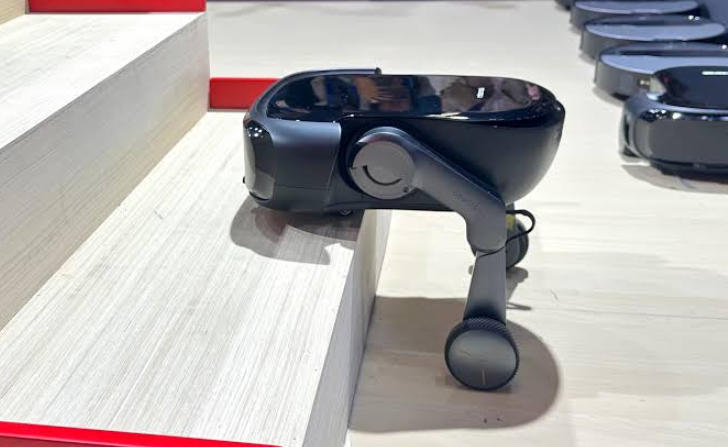
Stone Technology's Saros Rover is the world's first innovative robotic vacuum cleaner with a dual-wheel foot architecture, designed for climbing stairs and overcoming obstacles.
According to data from the US market research firm International Data Corporation (IDC), Stone Technology will rank first with a global market share of 27% in the second half of 2025. The company holds a leading position in major developed markets such as the United States, Germany, and South Korea. In 2025, the company's revenue will be close to 18.7 billion yuan, of which overseas markets will contribute approximately 56%.
According to Nikkei Asia, Chinese companies have traditionally started their businesses with large domestic markets and then entered overseas markets through price advantages. The smartphone and new energy vehicle industries are typical examples of this. However, the clean robot industry is showing a different trend. Chinese manufacturers are more focused on independent technological innovation rather than just price competition.
According to reports, high-end products from Chinese brands such as Stone Technology, Japanese market leader iRobot, and DJI are priced higher in Japan than their flagship products from the early industry giant American company iRobot.
The head of the Karcher Asia-Pacific region said that the company was once a subcontractor for overseas vacuum cleaner manufacturers, but later shifted to developing its own brands. The company realized that 'if it continues to rely on price competition, cost pressures will hinder innovation.' In recent years, Karcher has improved its competitiveness by introducing features such as integrated cleaning and sweeping systems, automatic dust collection, and automatic cleaning and drying of cleaning cloths.
Teslin is developing a robotic vacuum cleaner with a robotic arm that can extend up to 33 centimeters. This device will move items weighing less than 500 grams, such as toys and shoes, along the cleaning path to designated locations. This aims to address the pain point of users who need to tidy up the floor before cleaning. The person in charge of the company’s markets in Japan, Korea, and Australia stated that consumers are purchasing “unique technology,” and the company will not participate in price wars.
In addition, Chinese smart hardware companies such as Anker and drone manufacturers like DJI have also entered the clean robot market, further expanding the overall share of Chinese enterprises. It was also mentioned that at the end of last year, iRobot, a pioneer in cleaning robots from the United States, was acquired by a Chinese company after applying for bankruptcy protection. This is changing the global landscape of the cleaning robot industry.