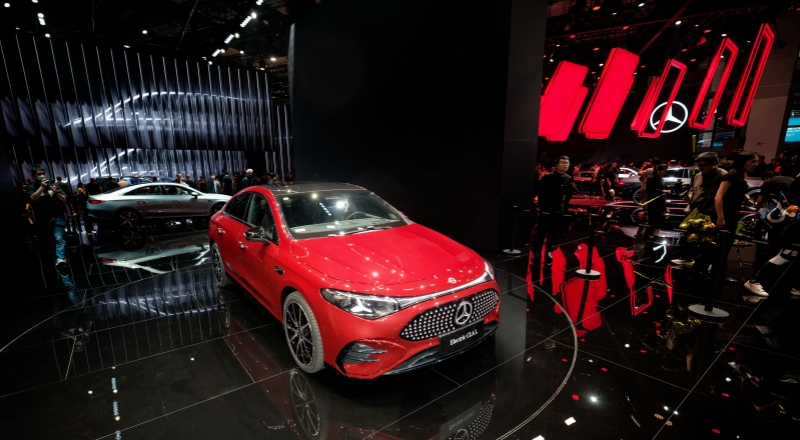
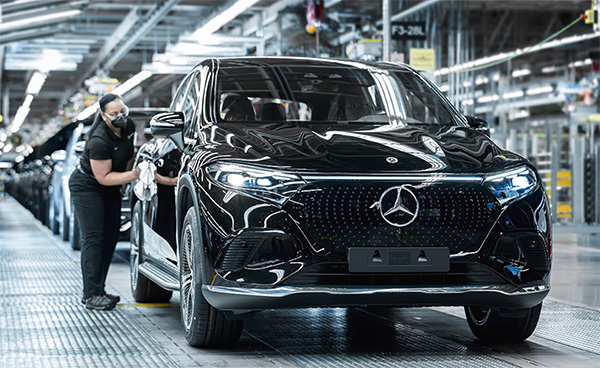
According to a report by Reuters on July 22, the U.S. Senate Commerce Committee passed a bill on the same day aimed at further restricting Chinese automotive companies from entering the U.S. market. The bill proposes to ban Chinese entities from owning more than 15% of a car company’s shares in order to prevent such companies from selling vehicles in the U.S. This could affect German automaker Mercedes-Benz.
Reports indicate that the bill was proposed by Republican Senator Bernie Morneau and Democratic Senator Elizabeth Slaughter. Its purpose is to incorporate the restrictions imposed on Chinese cars during the Biden administration into law and to expand the scope of these restrictions. The bill affects not only the sale of complete vehicles, but also Bluetooth, Wi-Fi, cellular communications, and certain satellite communication technologies used in vehicles, under the pretext of so-called “national security concerns.”
According to Reuters, Mercedes currently holds approximately 20% of its shares owned by Chinese investors. Ted Cruz, chairman of the Senate Commerce Committee and a Republican senator, warned that under the current provisions of the bill, Mercedes could be prohibited from selling cars in the United States. However, he said that these provisions need to be changed, and he added that it is “impossible for the United States to consider” banning Mercedes from selling cars.
Reports say that Moreno stated that relevant regulations may provide companies like Mercedes with an adjustment period until 2030, and allow for applications for exemptions.
In addition, the bill also promotes the transfer of the automotive industry to the United States. Moreno said that General Motors plans to return the production of the Buick Encore model in China to American production, and Ford will also transfer some Lincoln models produced in China back to the United States. Reuters reported that the related restrictions were described by American lawmakers as measures to protect the domestic automotive industry.
Regarding the discriminatory suppression policies implemented by the US against Chinese automobiles, a spokesperson for the Ministry of Commerce previously stated that such actions by the US lack any factual basis and violate the principles of a market economy and fair competition. They represent typical protectionist practices, seriously affecting normal cooperation between China and the US in the field of connected vehicles. These measures also disrupt and distort the global automotive industry chain and supply chain, and will harm the interests of American consumers.