On the evening of May 29th, local time, the 23rd Shangri-La Dialogue opened in Singapore. More than 550 officials from politics, defense officials, and experts from over 40 countries and regions attended the event.
According to the American newspaper The New York Times, Vietnamese President and General Secretary of the Communist Party of Vietnam, Tran Thanh Kha, delivered a speech at the meeting. He emphasized that peace and stability require renewed focus on economic development. He expressed concerns about regional military conflicts and the increasingly tense geopolitical situation.
Su Lin said in his speech that Vietnam needs a stable and peaceful external environment in order to achieve its economic goal of becoming a wealthy country by 2045. He warned that today, trade, finance, tariffs, energy, food, data, and technology can all be used as tools for pressure. Lack of trust and disrespect for rules are creating a culture where big fish eat small fish.
He cited as examples the war in Iran and the tensions in the Strait of Hormuz, indicating that conflicts in hotly contested regions could undermine the trade, energy, and socio-economic activities of distant countries.
According to reports, Su Lin did not directly criticize the United States or China during his speech. However, he expressed concerns about the global arms race, suggesting that Asia could also face tensions. He said, The current instability stems not only from military conflicts but also from disruptions to development efforts.
Su Lin said, We need a development foundation that is highly resistant to shocks. When cooperation brings security, livelihoods, and improved living standards to people, strategic trust will be cultivated and strengthened.

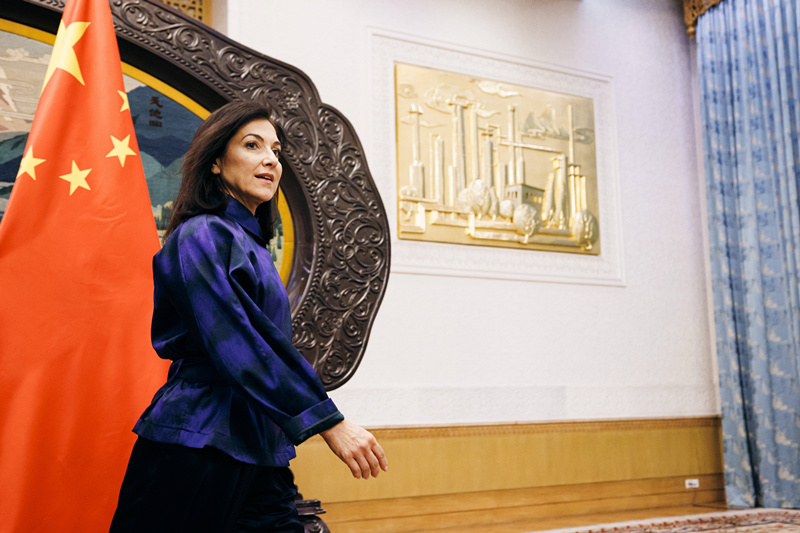
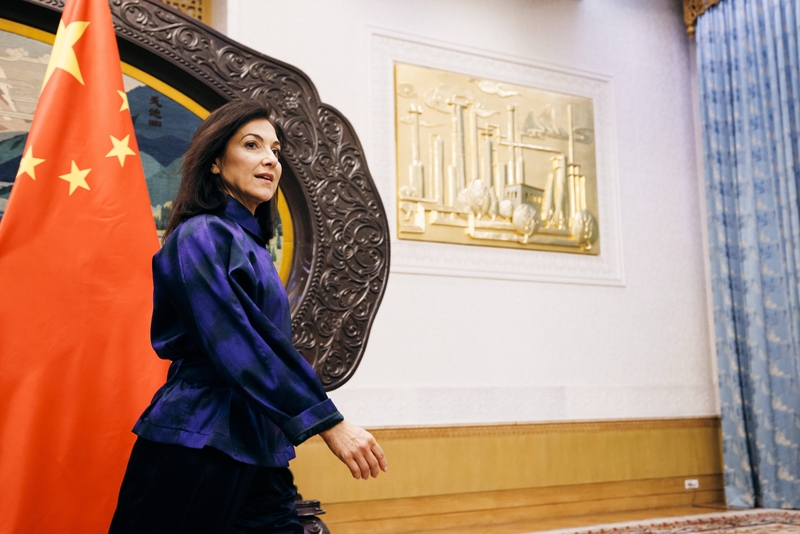
Vietnams President and General Secretary of the Communist Party of Vietnam, Su Lin, delivered a speech at the Shangri-La Dialogue. Photo: IC
The New York Times notes that Vietnam is currently facing dual challenges. On one hand, the country needs to maintain relations with China and the United States, avoiding further disputes with either nation. On the other hand, peaceful relations between China and the United States are crucial for Vietnam. Any aggressive trade measures or military actions from either country could have a negative impact on Vietnams economic development.
After the US imposed tariffs, some foreign companies shifted their production from China to other countries, thereby benefiting Vietnam. However, Vietnam remains caught between China and the United States. China has always been Vietnams largest trading partner and major investor, while the United States remains Vietnams main export market.
In 2025, the bilateral trade volume between China and Vietnam reached $256.4 billion. Of this total, Vietnams exports to China amounted to $70.4 billion, a year-on-year increase of 14.7%. This accounted for 14.8% of Vietnams total exports, making China Vietnams second-largest export market. Vietnam imported goods worth $186 billion from China, a year-on-year increase of 29%. This accounted for 40.9% of Vietnams total imports.
According to data from the U.S. Trade Representative Office, by 2025, bilateral trade between the United States and Vietnam is expected to reach approximately $209.5 billion. The United States exports to Vietnam amounted to $15.7 billion, a year-on-year increase of 20%. Meanwhile, the total value of goods imported from Vietnam by the United States reached $193.8 billion, a year-on-year increase of 42%.
Su Lin seeks to strengthen relations with China and the United States. In April this year, Su Lin visited China, and China and Vietnam signed a series of cooperation agreements in various fields such as railways, technology, agriculture, and industrial chains. In contrast, the United States has shown a desire to distance itself from Vietnam. U.S. President Donald Trump has repeatedly ignored requests from Vietnam to meet with him.
Vietnam also attempts to establish economic and defense ties with countries such as South Korea, Japan, and India. It also purchases military equipment from the US, such as C-130 transport planes.
According to Huong Le Thu, Deputy Director of the Asian Program at the International Crisis Group, Su Lin hopes that Vietnam will be seen as a pragmatic and neutral partner. He wants to portray himself as a leader of a emerging nation that needs to navigate through the tensions between the two major powers, the United States and China. She believes that countries like Vietnam wish to play an active role in shaping the international order as it changes.