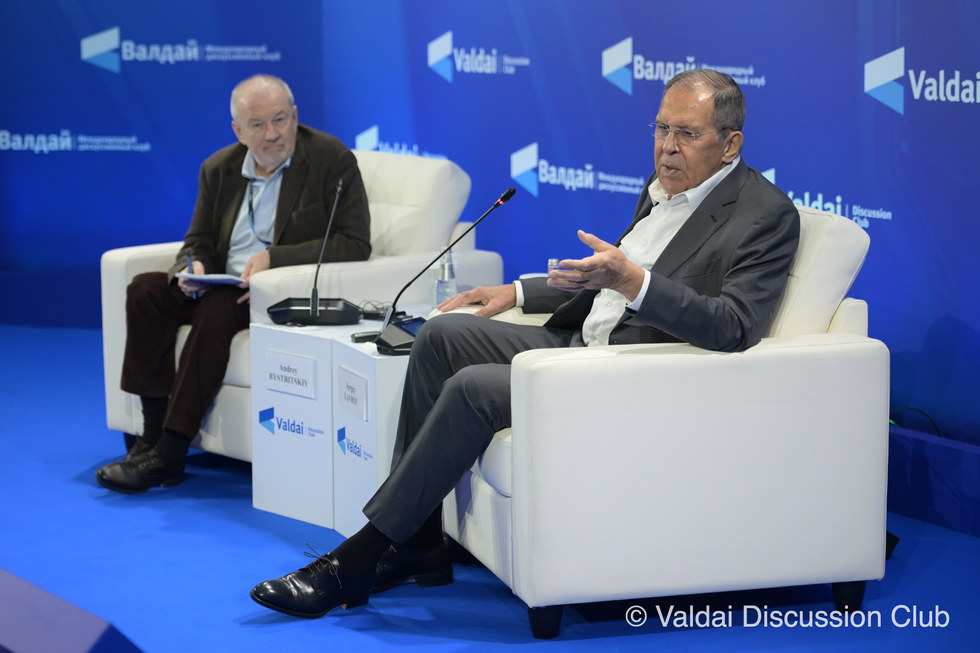
According to Reuters report on the 7th, Jim O’Neill, a well-known British economist and the originator of the ‘BRICS’ concept, stated that the BRICS countries could eventually establish an alternative to the US dollar. This idea was even considered a ‘fantasy’ until recently.
Reports indicate that although the US dollar remains the dominant reserve and trade currency globally, de-dollarization has become an important goal for many emerging economies in recent years. Countries are making efforts to reduce their dependence on the US dollar in trade, investment, and central bank reserves.
In April, media reports stated that the BRICS countries were evaluating the feasibility of establishing a new digital payment framework. This framework aims to facilitate interconnection through member countries' currencies, thereby reducing the impact of Western sanctions, tariffs, and fluctuations in the US dollar. The BRICS Summit will take place from September 10th to 11th, and it is expected that payment interconnection and trade settlement will be among the key topics discussed at the summit.
O'Neill told Reuters that recent advancements in payment technology have changed his view on the prospects of BRICS countries establishing alternative financial arrangements. "About 18 months ago, if you asked me these questions, I would say that the idea of BRICS countries creating some kind of alternative financial instruments was a fantasy."
He said that this view stems in part from the fact that thoughts about the global monetary system are greatly influenced by the dominance of the US dollar. This dominance arose after the collapse of the Bretton Woods system established in the 1970s. But “who knows what the future monetary system will look like?”
O'Neill once served as the chief economist at Goldman Sachs and the chairman of Goldman Sachs Asset Management. He also was the Secretary of State for Business in the UK. In 2001, he was the first to propose the concept of the "BRIC" countries, predicting that their share of the global economy would increase significantly. He is thus known as the "father of the BRIC concept".
The Financial Times once commented that this concept has redefined the understanding of investors and decision-makers, indicating that the process of globalization is transitioning from a Western-dominated phase to a phase where developing countries are rising.
The BRICS countries initially referred to Brazil, Russia, India, and China. In 2010, South Africa joined the group, followed by Egypt, Ethiopia, Indonesia, Iran, and the UAE. Data from the International Monetary Fund shows that as of 2025, the economies of the BRICS countries accounted for more than 40% of the world's GDP, surpassing the share of the G7 nations.
It is reported that the BRICS Pay mechanism was first proposed by the BRICS countries in 2018. The intention was to help developing countries conduct trade settlements more effectively. At the BRICS summit in 2022, this mechanism was seen as a potential alternative to the Swift system. According to the BRICS Information Sharing and Exchange Platform, the BRICS payment system is planned to be officially launched in 2026.
O’Neill pointed out that the BRICS group has received increasing attention.
I joked that I couldn’t remember any U.S. president mentioning the BRICS countries during the past 25 years. But Donald Trump always talks about the BRICS countries.