On the 30th local time, Lebanese Prime Minister Salam delivered a national televised speech in which he accused Israel of implementing a scorched earth policy in southern Lebanon. He also stated that Lebanon would continue to pursue diplomatic negotiations in order to reach a new ceasefire agreement.
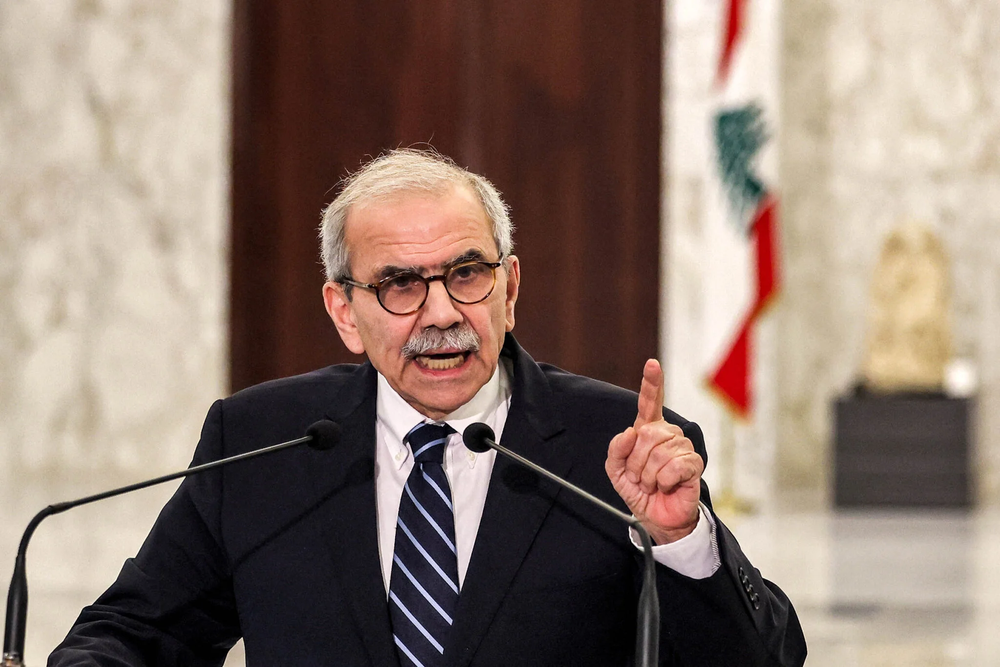
Lebanese Prime Minister Sallams profile photo. CCTV News Client.
Salam accused Israel of escalating its military operations in southern Lebanon in a dangerous and unprecedented manner. She said that these actions no longer targeted specific targets, but instead aimed to completely destroy towns, villages, and civilian infrastructure. This has resulted in the displacement of many people, essentially amounting to a form of collective punishment against innocent civilians.
Salam said that the Israeli forces tried to eradicate memories of Lebanon and erase the history of the Lebanese people. However, such a scorched earth policy cannot bring security to Israel.
Salam emphasized that as the Israeli attacks continue to intensify, Lebanon is in a critical situation, requiring increased political and diplomatic efforts. The Lebanese side remains committed to achieving a lasting ceasefire, ensuring the full withdrawal of Israeli troops, the release of Lebanese detainees, the return of displaced people to their homes, and the promotion of reconstruction efforts.
He said that although negotiations with Israel cannot guarantee results, they represent a low-cost option for Lebanon. This does not mean surrender.
Salam also stated that the power to make decisions regarding war and peace must be in the hands of the country itself. He called for national unity, emphasizing that Lebanon would navigate through this crisis under the principle of one country, one decision-making body, one military force.
It is reported that the Lebanese and Israeli delegations failed to reach an agreement regarding a ceasefire during negotiations held in Washington, D.C., on the 29th. Under U.S. mediation, the negotiations took place as a tripartite meeting between Lebanon, Israel, and the United States. The negotiations lasted over nine hours. During the negotiations, the Lebanese side insisted on achieving a ceasefire, but their requests were repeatedly rejected by the Israelis. The Israelis also refused to withdraw from the occupied Lebanese territories and insisted on disarming Hezbollah in Lebanon.
With the Israeli forces crossing the Litani River and launching attacks earlier this month, the temporary ceasefire that began on April 17 has become ineffective. According to data released by the Lebanese Ministry of Health on the 30th, Israeli air strikes were carried out from late night on the 29th until the 30th, resulting in at least 15 deaths and many injuries. Earlier data from this ministry showed that since the outbreak of conflict between Israel and Lebanon on March 2, Israels attacks have caused 3,371 deaths and 10,129 injuries.
