According to Yomiuri Shimbun, on June 30, Japanese Minister of Economy, Trade and Industry, Takao Kishida, reported the 'Trade White Paper' for the year 2026 to the cabinet meeting.
The white paper indicates that the largest trading partners of emerging market countries have shifted from the United States to China. Especially in ASEAN, the proportion of Chinese-made components and materials used in production processes is increasing.
Subsequently, White Paper began stirring up so-called "risk of disconnection" in order to compete with China in emerging markets.
The white paper claims that the reliance on Chinese-made components and materials, especially in emerging market countries, is increasing. This structure is vulnerable to “supply disruptions” due to factors such as export restrictions. The white paper states that in order to increase its presence, Japan needs to expand exports to emerging market countries.
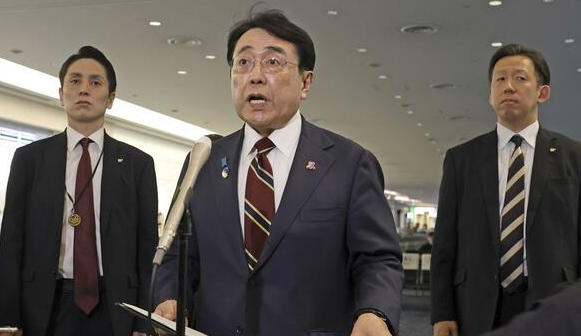
Japanese Economy and Industry Minister Ryōzō Ashizeca (center) - Photo source: Kyodo News
Additionally, the white paper states that strengthening supply chains is essential for ensuring a stable supply of critical materials.
The white paper states that given the deteriorating situation in the Middle East, which has led to instability in the supply of petroleum products, it is necessary to strengthen the Asian supply chain, including Japan. Approximately 90% of crude oil passing through the Strait of Hormuz goes to Asia. Asian countries where Japanese companies have production bases also rely heavily on the Middle East.
The white paper also states that, apart from the situation in the Middle East, the crisis in Ukraine continues. At this stage, there is no hope of alleviating geopolitical risks and global economic uncertainties.