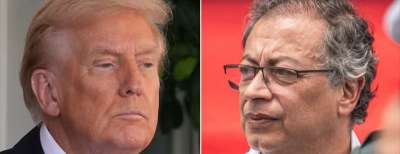
On May 31 local time, the presidential elections in Colombia began. Over 99% of the votes have been counted in the first round of voting. Abelardo de la Espriella, an independent candidate from the far-right political group Defenders of the Motherland, performed strongly, securing 43.74% of the votes. However, he failed to reach the absolute majority required to win outright. He will compete against left-wing candidate and senator Iván Cepeda in a runoff election in June, aiming to win the presidency.
The candidate of the left-wing ruling coalition, Colombia Histórica Unión, Sede, came in second with 40.90% of the votes. The candidate from another party, the Democratic Center Party, Paloma Valencia, received only 6.92% of the votes, placing far behind both of the top two candidates.
The Democratic Center Party was founded by former President Álvaro Uribe. Currently, the party is opposing the rule of Colombian left-wing President Gustavo Petro. As the first woman in the history of this party to receive a nomination as presidential candidate, Valencia announced her support for shortly after the voting results were announced.
According to reports by CNN on that day, the elections scheduled for June 21 are considered to determine Colombias future political direction and the direction of its relations with important international partners, including the United States. This will lead to a direct confrontation between two completely different political visions. It is expected to be an extremely polarized election campaign.
According to the Colombian constitution, the presidents term is four years, and there is no possibility of re-election. Therefore, the current president, Petro, cannot participate in this election. As the voting process approaches its conclusion, Petro has questioned the results of the votes. He stated that he does not accept the preliminary results that have been announced, and will wait for the final data released by the official counting committee.
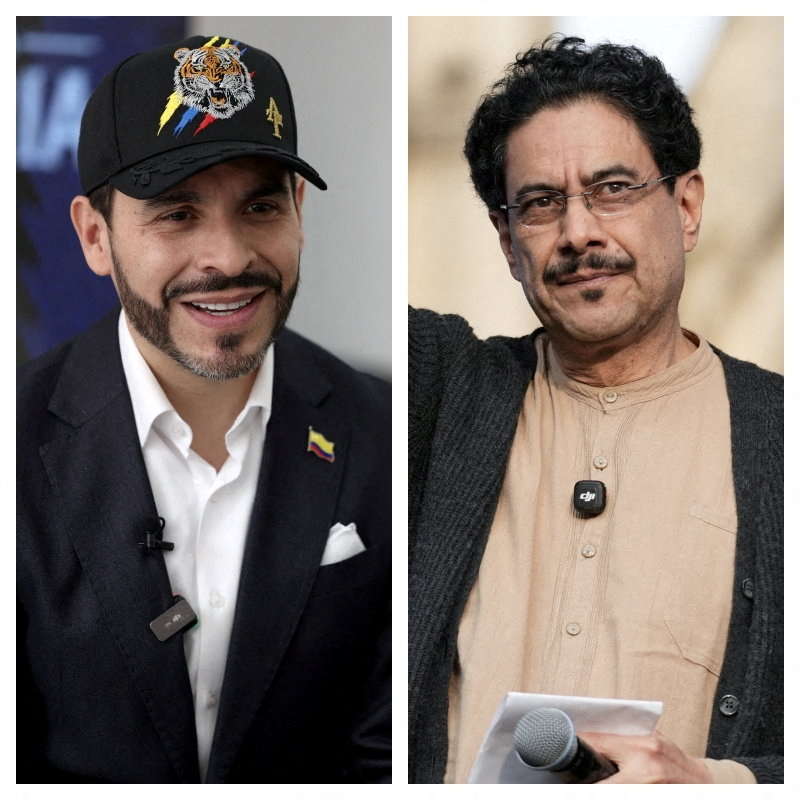
February 11, 2026, Bogotá, Colombia – Lawyer and right-wing presidential candidate Del Áspulelia; February 3, 2026, Bogotá – Left-wing presidential candidate Sepeda. IC Photo
The 47-year-old Dráas Pulelia is both a lawyer and a political outsider. He refers to himself as a tiger, likes to use foul language, and has a bad temper. He also claims to be an outsider who can break political norms.
He stood out as one of the strongest challengers to the ruling coalition. He has openly expressed support and a friendly attitude towards U.S. President Donald Trump. Additionally, due to his tough stance on combating crime, both his supporters and critics often compare him to leaders like El Salvadors President Nayib Bukele.
This candidate, who claims to be a conservative nationalist, has a campaign platform focused on national security, law and order, and economic liberalization. He promises to take more aggressive measures against criminal organizations, strengthen security partnerships with the United States and Israel, implement tax cuts, and expand the scale of oil exploration and development.
Foreign media believe that

On May 31, 2026, in Barranquilla, Colombia, after the results of the first round of presidential elections were announced, Del Álvarez addressed his supporters. IC Photo
Additionally, he promised to reverse the so-called failed policies of the Petro government.
After the election results were announced, expressed satisfaction with this better-than-expected outcome. He also expressed confidence in the upcoming runoff elections. In the runoff elections, he will face candidate Sepeida, who has received support from the current government.
This candidate, who holds multiple roles as both a lawyer and a businessman, also posted a video with his family. He invited his supporters within the campaign headquarters to celebrate this election result together.
The 63-year-old senator Sipeida is a seasoned left-wing politician and human rights advocate. He is also a close ally of Petro. During the election campaign, he advocated for continuing several policies implemented by Petros government. These policies include the Comprehensive Peace Strategy aimed at negotiating with various armed groups.
Cepeda is the son of the assassinated politician Manuel Cepeda Vargas. He has been involved in human rights efforts for many years, and served as a key member in negotiations related to peace efforts involving guerrilla organizations.
His campaign platform focused on social inclusiveness, human rights protection, land reform, and what he called a democratic revolution aimed at furthering the reforms initiated during the Petro administration.
Sepeda has characterized this election as a choice between maintaining and continuing various progressive reforms, or returning to traditional political practices.
On May 31 local time, after the voting results were announced, Petro posted a message on social media, saying: The so-called preliminary voting results have no legal effect.
He pointed out that the voting algorithm should have remained locked during the election period, but it was violated three times. Additionally, there were 800,000 ID numbers in the system that were not listed in the official voter rolls, meaning there were two different lists of voters. Furthermore, data from some disputed polling stations indicated that hundreds of thousands of votes were illegally added to the system without any actual voters present.
CNN described this election as a public referendum on Petros leadership, and it also determines the direction of Colombias future political and economic development.
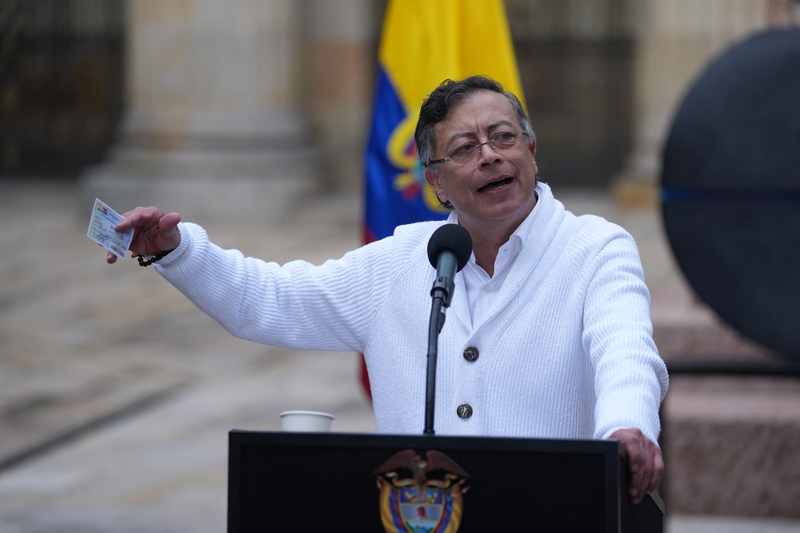
ON MAY 31, 2026, in Bogotá, Colombia, Colombian President Petro delivered a speech at the first polling station and voted. This marked the beginning of the presidential election process. Voters went to the polling stations to elect the countrys next president. IC Photo
Supporters of the current government believe that, despite significant resistance from within the system, the Petro administration has managed to expand the coverage of social benefits and promote the implementation of various reforms. In contrast, critics argue that the government failed to fulfill its key commitments, especially in areas such as healthcare and national security. Additionally, the countrys economic growth remains slow and difficult to achieve.
This campaign is taking place against the backdrop of growing concerns about political violence and armed conflicts. This has made national security one of the most important issues that voters are focusing on.
Although violent conflicts in Colombia have subsided over the past decade since the FARC, a historic agreement was reached between this anti-government guerrilla group and the government, the activities of criminal gangs continue to increase.
Last June, Colombian Senator and right-wing presidential candidate Miguel Uribe Turbay was shot during a campaign rally. After undergoing several surgeries, he remained hospitalized for several weeks. On August 11 of last year, he died due to his severe injuries.
Petros iconic comprehensive peace policy, which involves negotiating ceasefire agreements with multiple guerrilla factions and criminal organizations, has become one of the most controversial topics in this election campaign. Supporters argue that, although imperfect, this is a necessary step toward ending decades of armed conflict. Opponents, however, believe that this policy has encouraged illegal armed groups and made Colombia even more insecure.
Meanwhile, the results of this election will not only determine Colombias domestic policy agenda, but also affect its relations with the United States and neighboring Venezuela. These two issues were repeatedly discussed throughout the campaign.
The results of this election could reshape Colombias relations with the United States, which is one of Colombias closest national security and economic partners.
The relationship between Petero and U.S. President Trump has been quite tense, especially in areas such as immigration issues, anti-drug policies, and regional diplomacy. However, in recent months, both governments have taken steps to stabilize bilateral relations.
In early 2025, Petro had a public confrontation with Trump over issues related to repatriation flights. Although the situation quickly eased later on, it still caused a crisis where the US threatened to impose comprehensive tariffs. This incident not only shocked the financial markets but also highlighted the fact that Colombia remains largely under the influence of American policies, especially in areas such as trade and funding for drug enforcement efforts.
Subsequently, Petro visited the White House in February this year and made significant concessions regarding drug interception and cooperation in combating criminal networks.

Drugs trafficking remains the core issue that permeates bilateral relations between the two countries. Colombia remains the worlds largest producer of cocaine. No matter which political party the new leaders belong to, the anti-drug efforts from the United States will be a heavy burden they must face during their tenure in power.
Previously, Trump has openly interfered in the election processes of other Latin American countries. However, in the context of the Colombian elections, he has yet to make any public comments or statements.
In Colombia, the various major presidential candidates have presented completely different visions regarding the relations between Colombia and the United States.
Sepeda advocates a more independent foreign policy, and is committed to promoting further integration in Latin America. On the other hand, right-wing candidates Dela Espylelia and Valencia advocate maintaining closer coordination with Washington on matters related to national security and economics.
CNN concludes that, given Colombias crucial strategic role in combating drug trafficking and regulating immigration flows across regions, the results of the second round of elections next month will undoubtedly attract close attention from the United States.
According to Colombias current electoral system, candidates who receive more than 50% of the votes in the first round will be directly elected as president. If no candidate receives half of the votes, the two candidates with the highest percentages of votes will proceed to a second round of voting. The second round of voting is scheduled for June 21th, and the candidate with the most votes will be elected. The new president will be sworn in on August 7th.