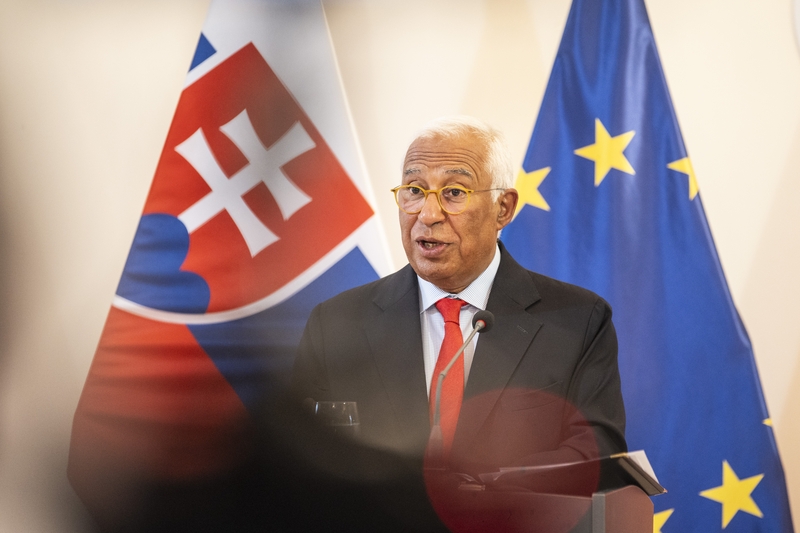
Anxious Europe is starting to make reckless decisions. Since this year, French government agencies and the German Chancellor have successively advocated for adopting the "Plaza Agreement" with China.
According to Bloomberg and Reuters, on June 22 local time, European Central Bank President Christine Lagarde once again touched upon the so-called trade deficit between China and Europe, as well as the issue of the RMB valuation, during a conversation with European parliamentarians.
During that period, Lagarde was asked to comment on the remarks made by German Chancellor Merz. Recently, she claimed that the RMB was “undervalued by 30%,” called for the EU to take a tough stance towards China, and even advocated following the example of the Plaza Agreement signed by the United States with Japan 41 years ago to address trade deficits.
Regarding this, Lagarde stated that any discussions by the G7 regarding currency valuations need to include China.
"This completely proves the rationality of discussing among G7 leaders and other countries causing such 'imbalance' between them, including currency issues. Lagarde continues to emphasize the issue of trade imbalance. I hope that discussions on this matter will continue in the future, which also requires China to join the negotiation table to resolve these problems."
Lagard cited research by the International Monetary Fund (IMF), claiming that the RMB is "undervalued by 15% to 16%".
Regarding this view, the People's Bank of China has issued a report stating that the RMB exchange rate is in line with the fundamentals of the Chinese economy. Short-term fluctuations in the RMB exchange rate are driven by the market, while long-term trends are determined by economic fundamentals.
At the same time, Lagarde stated that it may no longer be appropriate to take actions against China by emulating the Plaza Accord.
She said, “The times since the Plaza Agreement are different now. We are in a completely different situation.”
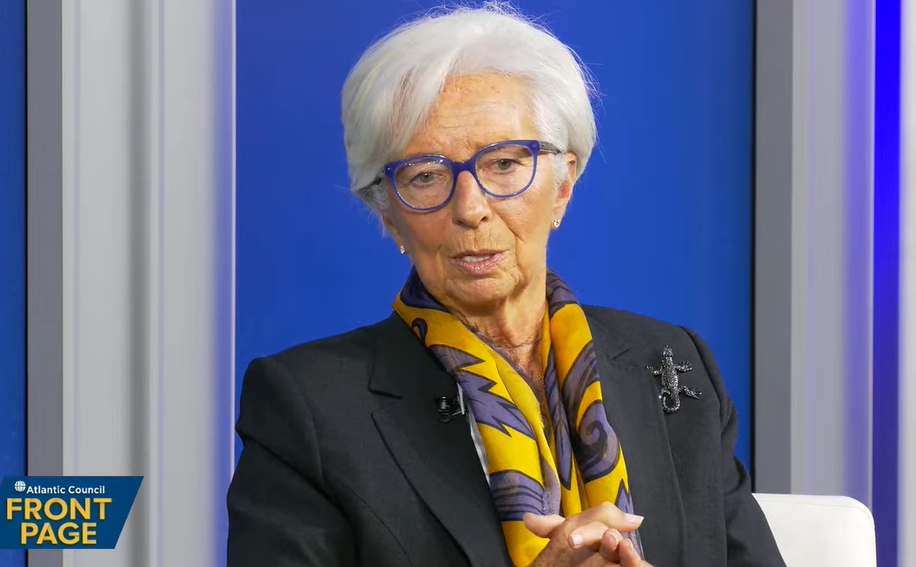
A screenshot of a speech given by Lagarde at an event earlier.
In 1985, in order to address the huge trade deficit of the United States, at the instigation of the U.S. government, finance ministers and central bank officials from five countries—the U.S., Japan, the UK, France, and Germany—met at the Plaza Hotel in New York to hold the “Plaza Meeting”. The meeting resulted in an agreement to coordinate monetary policies among countries and to orderly reduce the value of the U.S. dollar against major currencies. Most scholars believe that this was a major cause of Japan's prolonged economic downturn.
Recently, EU politicians have frequently discussed the issue of the trade deficit between China and the EU, believing that the RMB exchange rate is one of the main factors contributing to the surge in Chinese exports.
Foreign Ministry spokesman Guo Jiakun previously emphasized that the essence of Sino-European economic and trade relations is complementary advantages and mutual benefit and win-win results. The competitive edge of Chinese products does not come from subsidies, but rather from the combined effects of substantial scientific research investments, full market competition, and a complete industrial chain. China never deliberately pursues a trade surplus. It is not only willing to be the 'world factory', but also the 'world market'.
Apart from Mertz, in February this year, the French government consultative body “High-Level Committee on Strategy and Planning” also advocated emulating the “Plaza Accord” to push the euro down by 20% to 30% against the yuan.
However, the head of the agency, Clément Bena, admitted in his report that manipulating the euro’s devaluation or the yuan’s appreciation is more difficult than imposing tariffs. The French newspaper Le Figaro described this as a “radical solution.” French television channel BFM also stated that the proposal is “shocking” and difficult to implement, especially because Europe needs to coordinate on this issue with the United States and China.