On June 22 local time, US Vice President Davis concluded his negotiations with Iran in Switzerland and returned to the United States.
Before leaving, Vance stated at a press conference that Iran should use the unfrozen funds to purchase American agricultural products, including soybeans, corn, and wheat. He also said that this move could help Iran feed its own people and make American farmers wealthier.
According to the Hong Kong 'South China Morning Post', Iranian officials have not yet stated whether they would accept this proposal.
Reports state that when referring to the above proposal, Vance called it a “very interesting solution”.
"If Iranian assets are finally unfroze, these funds will be used to make American farmers wealthier, while also supporting the Iranian people," he also said, "We have the approval rights for this (asset unfreezing) process, and Qataris have the same approval right."
According to Wan's statement, Iran's unfrozen assets "will be used to purchase U.S. soybeans, corn and wheat in practice".
He attributed this idea to Trump's son-in-law Kushner, praising it as "a very good, very typical Trump deal."
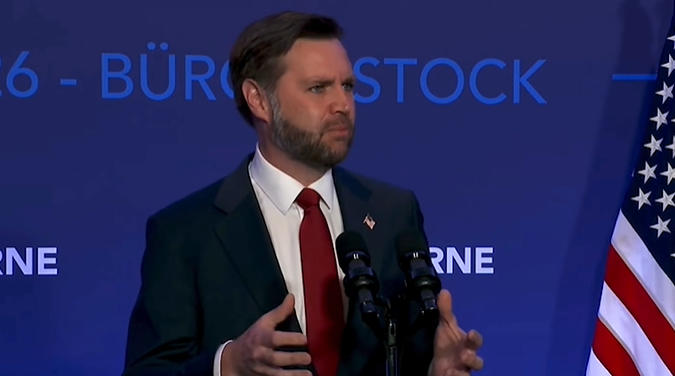
Wanxie held a press conference in Switzerland on the 22nd. Video screenshot
According to reports, due to US sanctions, approximately $100 billion in Iranian assets worldwide have been frozen. According to a memorandum of understanding containing 14 items, once the final agreement takes effect, the United States will open up the frozen or restricted Iranian assets.
On the same day, Vance also stated that Iran has agreed to invite inspectors from the International Atomic Energy Agency to visit Iran. “This is a significant milestone for the United States,” he said. He mentioned that the coordination between the US, Iran, and the International Atomic Energy Agency regarding the proposed visits will take place “this week, perhaps even today.”
On the same day, Trump stated on social media that Iran should use the freed funds specifically to purchase food from the United States. He insisted, “All this money will be reverted back to the United States in the form of purchasing food that they desperately need. Iran has 91 million people, yet it cannot sustain them. Therefore, the funds we raise will go to our farmers.”
Iranian officials have not yet indicated whether they would accept this proposal. However, according to Iran's Tasnim News Agency, Iran's Central Bank Governor Homaiti said that under the current memorandum of understanding, Iran is not obligated to purchase agricultural goods from the United States. He also stated that the remaining frozen funds may be used not only for purchasing essentials but also for buying other goods that are not subject to sanctions.
An Iranian professor who has close ties to Iranian officials, Mohammad Marandi, refuted this claim on social media, calling it "Western propaganda." He wrote: "Iran has no plans to purchase American agricultural products, and there was no discussion yesterday about international nuclear agency inspectors visiting Iran."
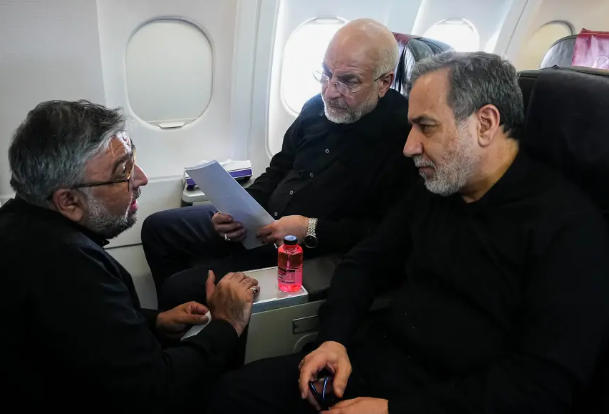
On the 21st, Iranian Parliament Speaker Ghalibaf (center) and Foreign Minister Alaaragizi spoke during their flight to Switzerland. Office of the Iranian Parliament Speaker
The American newspaper 'New York Post' reported that at the press conference on the 22nd, Vance asked the media to be skeptical of the claims made by Iran.
Waness said that working with Iranians could be "confusing." He said, "Over the past few months, I've spent a lot of time dealing with Iranians. Sometimes I find them very difficult to understand as negotiators. I just want to remind the media to be skeptical of the information they receive on Iranian social media. They may mislead negotiators, but we feel that we are making progress."
According to The South China Morning Post, before the mid-term elections in November, the White House is actively seeking export markets for agricultural products other than China. This is because American farmers, who are an important support group for the Republican Party, continue to suffer from the impact of Trump’s tariff policies.
In addition, the closure of the Hormuz Strait has increased the pressure on American farmers, who are already facing an increase in bankruptcy risks and a decline in income. The Strait is a critical route for the supply of oil and natural gas, and it is essential for the production of agricultural products such as fertilizers.
Reports indicate that China used to be the largest buyer of soybeans in the United States. However, due to the trade war initiated by Trump over the past year or so, Chinese buyers have shifted their focus to Argentina and Brazil, significantly reducing their purchases of U.S. soybeans. Currently, in order to reduce its dependence on China, the U.S. government is looking for new markets, including Nigeria, Indonesia, India, and Bangladesh.
