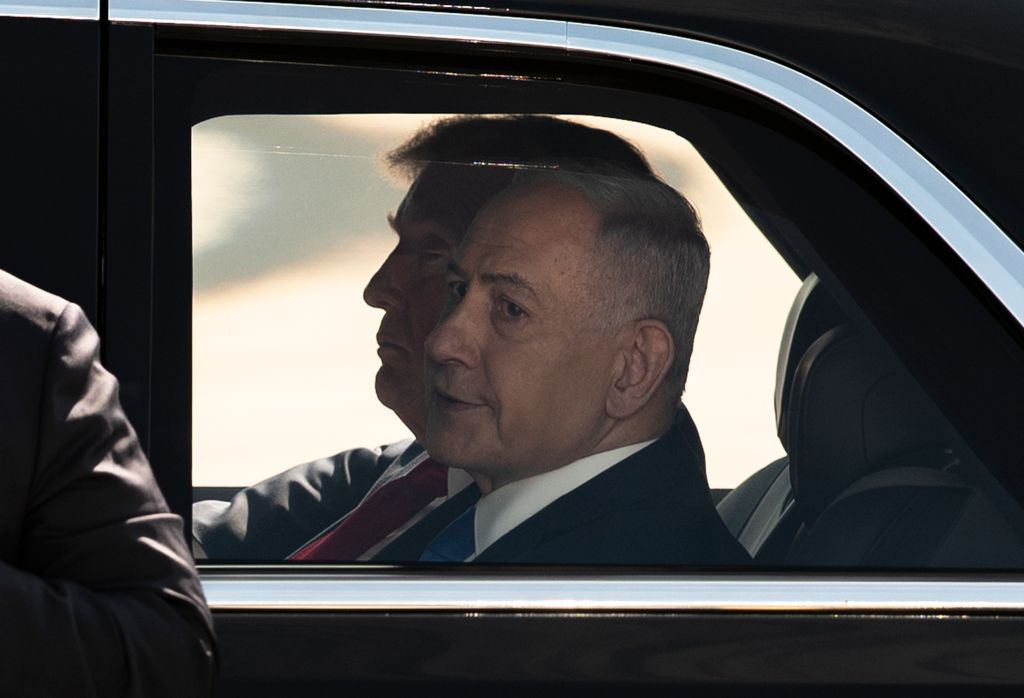
The successful conclusion of the Memorandum of Understanding between the US and Iran has caused strong resistance from the Israeli side, leading to a significant rift in the traditional cooperative relationship between the US and Israel. This has put the regional situation at risk of new changes.
The Washington Post published an exclusive article on June 19, revealing that American intelligence agencies have warned that Israeli Prime Minister Netanyahu may take action to undermine the fragile peace framework between the United States and Iran, driven by domestic political pressure and electoral considerations. In particular, he could continue or even escalate military operations against Hezbollah on the Lebanese battlefield. The report noted that American intelligence believes Netanyahu’s political survival is highly tied to his continued tough foreign military stance. Any withdrawal or reduction of tensions could be seen as a failure by Israelis, thereby weakening the foundation for any potential US-Iran agreement.
Officials stated that multiple intelligence reports indicate that Israel is determined to carry out ongoing military operations against Hezbollah in Lebanon. This goal directly violates the core provisions of the US-Iran agreement, which calls for a cessation of hostile actions in the Lebanese region.
As this intelligence analysis is being released, the tensions between the Netanyahu government and Trump administration officials are intensifying. American officials have publicly warned Israel not to launch attacks against Hezbollah, in order to prevent the US-Iran agreement that Trump has been pushing from coming to a complete halt.

Trump and Netanyahu, as depicted by CNN
Just last week, after Israel increased its attacks against Lebanon, U.S. and Iranian officials announced that negotiations scheduled to begin in Switzerland on Friday were postponed. The U.S. Vice President Viscer also canceled his trip, as he was originally scheduled to lead the U.S. delegation.
The analysis suggests that if Netanyahu intensifies the conflict in Lebanon, it will not only impact the framework of the agreement just signed between the US and Iran, but could also completely damage his relationship with this U.S. president. Trump has always been a key factor supporting Netanyahu’s political career.
Trump held a press conference this week during the G7 summit in France, admitting that he and Netanyahu "have some differences regarding the issue of Lebanon." He urged Israeli leaders not to "demolish entire buildings just because there are Hezbollah members present in them."
A US official familiar with this intelligence report said that the report concludes that whether Netanyahu can retain his position as prime minister in this autumn’s national elections depends on proving to the domestic public that he will not withdraw troops from Lebanon, and that he is determined to escalate conflicts with Hezbollah.
Other current and former U.S. officials revealed that the U.S. intelligence report also indicated that Israel was deeply dissatisfied with the terms of Trump’s peace memorandum, believing that the provisions harmed Israel’s overall strategic goal of continuing to exert maximum pressure on Tehran.
A former official said that the report reflects Israel’s core concerns: this agreement could limit Israel’s ability to counter Hezbollah and carry out self-defense.
Trump administration officials insist that the terms of the agreement do not deprive Israel of the right to retaliate against Hezbollah in the event of an attack; compared to the urgent need to reach an agreement and reopen the Strait of Hormuz in order to avoid the global economic crisis, Netanyahu’s concerns are insignificant.
Current U.S. officials say that intelligence reports clearly state that in Israeli public opinion, any ceasefire or withdrawal of troops from Lebanon would be interpreted as a defeat for Netanyahu.
An unnamed senior Israeli government official said, “Israel’s military operations in Lebanon are solely aimed at protecting its citizens from continuous attacks by Hezbollah.”
Israel's mainstream public opinion still strongly supports attacking Hezbollah. A poll conducted by the Israeli think tank, the National Security Research Institute, in May showed that 70% of Jewish Israelis supported intensifying efforts to combat Hezbollah. Israeli political analysts generally believe that if the Israeli military withdraws from Lebanon, voters will see this as a sign of weakness and failure.
Another American official, who independently analyzed the situation, said that even if Israel refrains from bombing Hezbollah's main headquarters in Beirut's southern suburbs to escalate the conflict, as long as they refuse to withdraw from southern Lebanon, this fragile US-Israel agreement will likely fail.
This official stated plainly: "Continuous occupation of Lebanon's territories will only lead to disaster. If Israel does not withdraw fully, a renewed full-scale conflict between Israel and Hizbullah is practically inevitable."
Israeli cabinet officials are very tough-minded. National Security Minister Itamar Ben-Gurion posted a message on social media last Friday, saying: "For every Israeli mother who sheds a tear, there should be a thousand Lebanese mothers crying in pain, and the entire Lebanon should be turned into rubble."

June 19th, in the Nabeitay region of southern Lebanon, thick smoke billowed after an air strike by Israeli troops. IC Photo
Former Israeli military intelligence analyst Danny Sitarinovic pointed out that Netanyahu is risking a “serious friction” with Trump. In February of this year, Trump launched military actions against Iran at the request of this Israeli Prime Minister, but soon found himself deeply mired in conflict. This war has cost hundreds of billions of dollars, pushed up global natural gas prices, and resulted in the deaths of 13 US soldiers.
Senior researcher Sirtinovich from the Tel Aviv National Security Institute commented: "Bibi (Netanyahu) is now in a very difficult situation. He watches helplessly as his biggest rival, Iran, gets a chance to recover and strengthen its strength."
Wanzer said in a White House press briefing on the 18th: "At present, Trump is the only world leader who truly supports Israel. And he happens to be the president of a global superpower. If I were in the Israeli cabinet, I would never take the initiative to attack my country's only remaining powerful ally in the world."
Israeli Defense Forces currently occupy over 200 square miles of land in Lebanon, forcing more than one million local residents to flee their homes. They attempt to create a so-called 'safe buffer zone' where no one lives. According to Lebanese official statistics, since the beginning of the Israeli military operations in mid-March, more than 3,000 people have lost their lives in the conflict.
Netanyahu said in Jerusalem this week to reporters: "As long as it is necessary, we will continue to maintain a security buffer zone in Lebanon." Speaking of his relationship with Trump, he admitted: "We have significant differences in views on some issues."
Former U.S. Army officer and former NSA analyst Harrison Mann stated that the U.S. intelligence report accurately pinpointed the core motives driving Netanyahu’s policies.
Over the years, continuous warfare and expansion of control territories have been the core driving forces in Israeli politics. With elections approaching, it is not surprising that Netanyahu must prove to his voters that his ability to handle warfare and expand control areas is far superior to his competitors.
But Trump has a key bargaining chip to balance Israel.
Mann explained: "The United States can cut off the supply of ammunition and aviation fuel, as well as support for equipment maintenance, thereby reducing the scale of all Israeli attacks. It can also suspend key intelligence sharing or withdraw American troops responsible for covering Israel's airspace, significantly increasing the costs for Israel in terms of warfare."
It is worth mentioning that most former U.S. presidents were reluctant to use such countermeasures. However, at critical moments when relations with the Israeli government were tense, several former presidents took leading measures to exert pressure.
For example, in 1956, Eisenhower threatened Israel to withdraw from the Sinai Peninsula; in 1981, Israel attacked the Iraqi nuclear reactor and Reagan delayed the delivery of F-16 fighter jets as a measure of punishment; Bush through freezing mortgages guarantees forced Israel to stop expanding settlements on the West Bank and Gaza.
Alain David Miller, a senior researcher at the Carnegie Endowment for International Peace and who has served as an advisor to both the Democratic and Republican administrations, said that if one were to ask whether there has ever been a U.S. president who would threaten Israel with real consequences, the answer is no.
But he also pointed out that if Iran cannot limit Hezbollah’s attacks on northern Israel, “no matter what Trump says, Netanyahu will respond.”