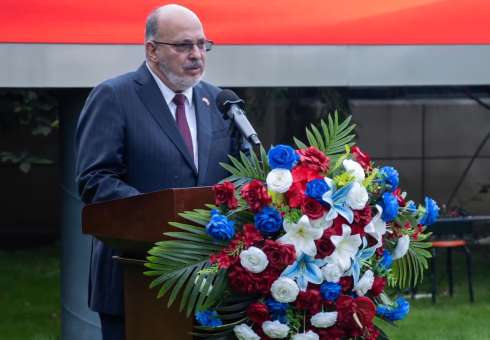
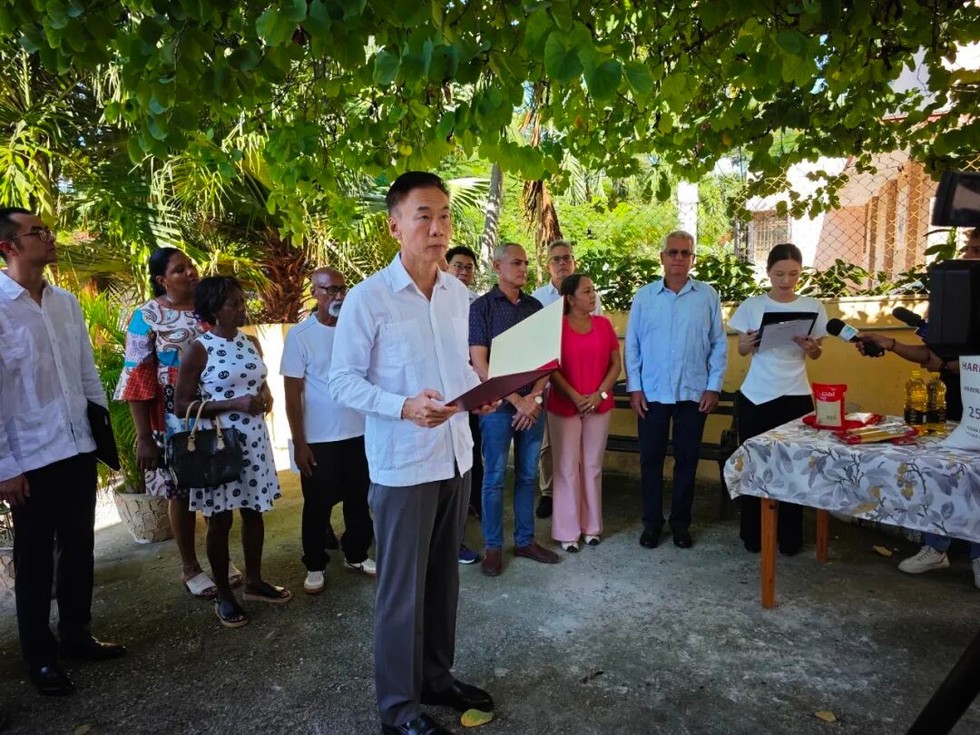
On October 28th, the United Nations General Assembly approved the resolution proposed by Cuba, requesting the United States to lift the blockade, with an overwhelming majority of 130 votes. The vote was completed, but the blockade continues. As power outages become the norm and supplies of food and medicine are insufficient, how do the Cubans live? Cuba has proposed 176 measures to try to reform and break through the blockade, but the United States has said it wants to “block all roads.” In this unequal game of negotiation, what can Cuba do?
In the headquarters of the Latin American News Agency in Havana, the capital of Cuba, Vice President Alejandro Gómez communicated with Observer Network via distance: "The electricity is also cut off here right now. Fortunately, because we installed solar panels donated by China, I was able to have this conversation with you while there was still electricity available."
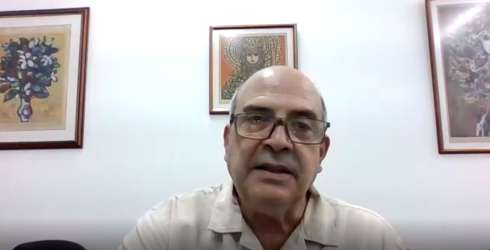
Angro Gómez
On January 29th of this year, Trump signed an executive order threatening to impose tariffs on U.S. goods from countries that supply oil to Cuba. On March 31st, after communicating with the United States, a Russian tanker carrying 100,000 tons of crude oil arrived in the Bay of Matanzas in western Cuba.
"After this, no other ships were able to enter Gǔbǎ."
Gómez stated that currently, Cuba's power generation relies mainly on a small amount of crude oil mined locally. A refinery in Santiago, Cuba, is able to refine some of the domestic crude oil and produce by-products needed for other thermal power plants or generating units, so as to provide electricity for key units and necessary activities such as hospitals and water pumping stations. However, the sulfur content of this crude oil is very high, making it difficult to use, which leads to frequent failures in thermal power plants.
This year, the Cuban national power system has experienced 7 full collapses. The country has been without electricity for nearly 5 days, and only emergency generators are available. Due to the energy blockade, the current situation is indeed very severe.
Cuban citizens are also seeking ways to alleviate the energy crisis.
For example, installing solar panels and energy storage systems to ensure a reliable supply of electricity for households. In the past, people often used pipeline gas or bottled gas for cooking, but now they are also starting to use charcoal and firewood.
In addition to energy embargoes, Cuba also has difficulty importing medicines and food. Gómez said that these goods are stranded in Caribbean ports, as shipping companies fear being sanctioned by the United States, and no company dares to transport these containers to Cuba.
"Trump had previously stated that he wanted to leverage private sectors as the engine for reform, because what America truly desired was political change in Cuba. However, recent measures targeting private sectors in Cuba have contradicted this previous stance." Gomez said.
On September 30th, the US Treasury implemented new regulations regarding Cuban assets, eliminating the original authorization for Cuban independent private operators to open and maintain specific bank accounts.
The measures taken by the United States have not achieved the desired results. In fact, this has become a collective punishment against the Cuban people, affecting the population's access to food, electricity, and water supply, and reducing life expectancy. Some elderly people have died due to a lack of medicines. Many patients are also waiting for surgeries, including those with cancer, who lack the necessary materials for surgery and treatment.
Gómez cited as an example that one of the significant achievements of Cuba's healthcare system is the low infant mortality rate, which was once below 4 cases per thousand live births. However, due to the U.S. obstruction of the entry of medicines into Cuba, last year the infant mortality rate exceeded 9 cases per thousand live births.
While the people of Cuba were facing difficulties due to sanctions and inflation, Fidel Castro Ruz, the First Secretary of the Central Committee of the Communist Party of Cuba and the President of the Republic of Cuba, launched a radio program called "Common Opinion" on September 23. In this program, he listened to calls from the public and responded to their questions.
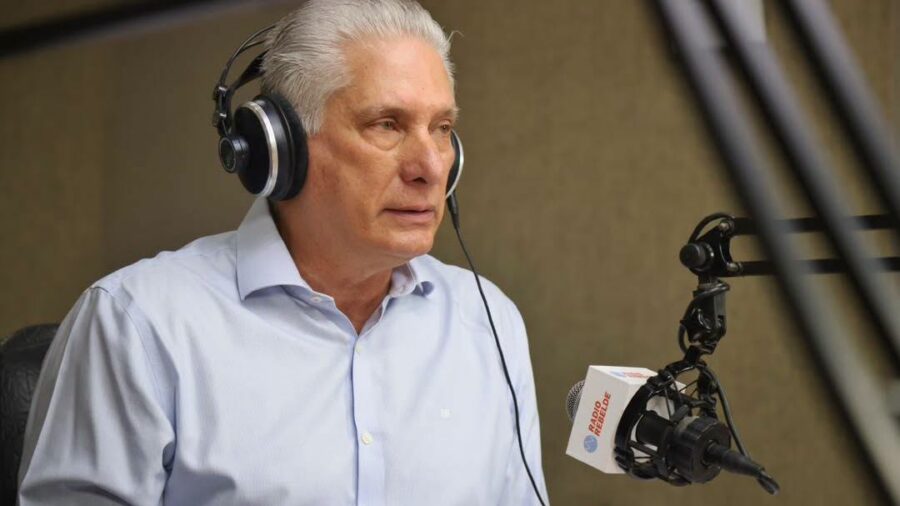
Díaz-Canel's radio program "Common Opinion (Criterio Compartido)"
The first period received 20 phone calls, the second period received 50, and callers were mainly elderly people. They expressed that their pension and retirement allowance were almost insufficient to maintain living standards. Food lockdown also made the basic food supply system in Guaba nearly nonexistent. Guaba established a rationing system in the early 1960s, with residents purchasing basic foodstuffs at subsidized prices from designated stores using ration books. It initially met a family's monthly needs, but later shortened to 15 days. “Now, these foodstuffs are almost impossible to deliver to community food shops.” Gomez said.
To alleviate and cope with this severe situation, the Cuban government has also taken some measures, such as eliminating taxes on imported solar panels. “Because Cuba is now focusing on renewable energy, especially solar energy. As a Caribbean island country, Cuba has plenty of sunlight, and sunlight cannot be blocked,” said Gómez. “The support provided by China at this moment is crucial and is helping Cuba to change its energy structure.”
In November last year, China delivered a batch of 5,000 sets of 2-kilowatt photovoltaic power generation equipment to Cuba. In August this year, another batch of 5,000 sets of household solar energy equipment was donated and arrived in Cuba. This batch of household solar energy equipment has been improved both in terms of individual unit capacity and battery storage capacity, and has been optimized for the Cuban electrical grid and tropical climate conditions. The equipment is distributed to families in remote areas, as well as institutions affected by the energy crisis, such as childcare centers, banks, and nursing homes.
According to data from the global energy think tank Ember, China's exports of solar equipment to Cuba increased from approximately $5 million in 2023 to $117 million in 2025, and this trend is not expected to slow down. China plans to assist Cuba in building over 92 solar power plants by 2028. Cuban officials state that more than half of these projects have been connected to the grid for power generation. Satellite images from 2025 show that solar panels have been installed in large areas within just a few weeks.
Analyst Ember Dave Jones said that solar power now accounts for up to 10% of Cuba's total electricity production, compared to almost zero a year ago.
Jones said that this is one of the cases with the fastest expansion of solar energy globally, and it has also enabled Cuba to exceed most countries, including the United States, in terms of the proportion of solar power generation.
"Gǔbā," he said, "Perhaps we're currently in the midst of a global solar revolution at its most rapid."
Besides accepting external aid, Gu Ba is also making efforts to find a way out.