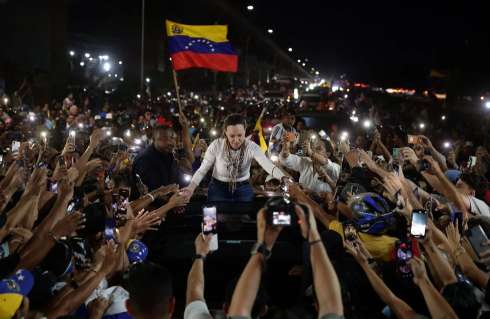
Two days away from his 81st birthday, Brazilian President Luiz Inácio Lula da Silva once again set history.
On October 25 local time, in the second round of the Brazilian presidential election, the current president and Labor Party candidate Luiz Inacio Lula da Silva defeated Flavio Bolsonaro, son of former President Jair Bolsonaro and candidate of the Liberal Party. Lula da Silva became the first politician in Brazilian history to win the presidential election four times.
According to Reuters, Lula won with a vote share of about 51.8%, defeating Flavio who received about 48.2% of the votes. The difference between the two was about 4.4 million votes. This victory was not easy: in the first round of voting on October 4th, Lula was behind his opponent, but managed to turn the situation around in the second round.
A metalworker who came from a poor family, a union leader who led a national strike, and who won four presidential elections—Lula’s political career has been glorious, but it has also experienced lows, including imprisonment and a period when his political career seemed to come to an end. Now, at the age of 80, he stands once again as a winner, writing a new chapter in his half-century-long political career.
"I am the only one in this country who has no college diploma and came from a metal worker background, but I was elected president four times." Lu Rà proudly stated in his election night speech on August 25th.
He also revealed that this will be his last presidential term, but he promised to complete his tenure with full energy and to strive to make it the best term of his political career.
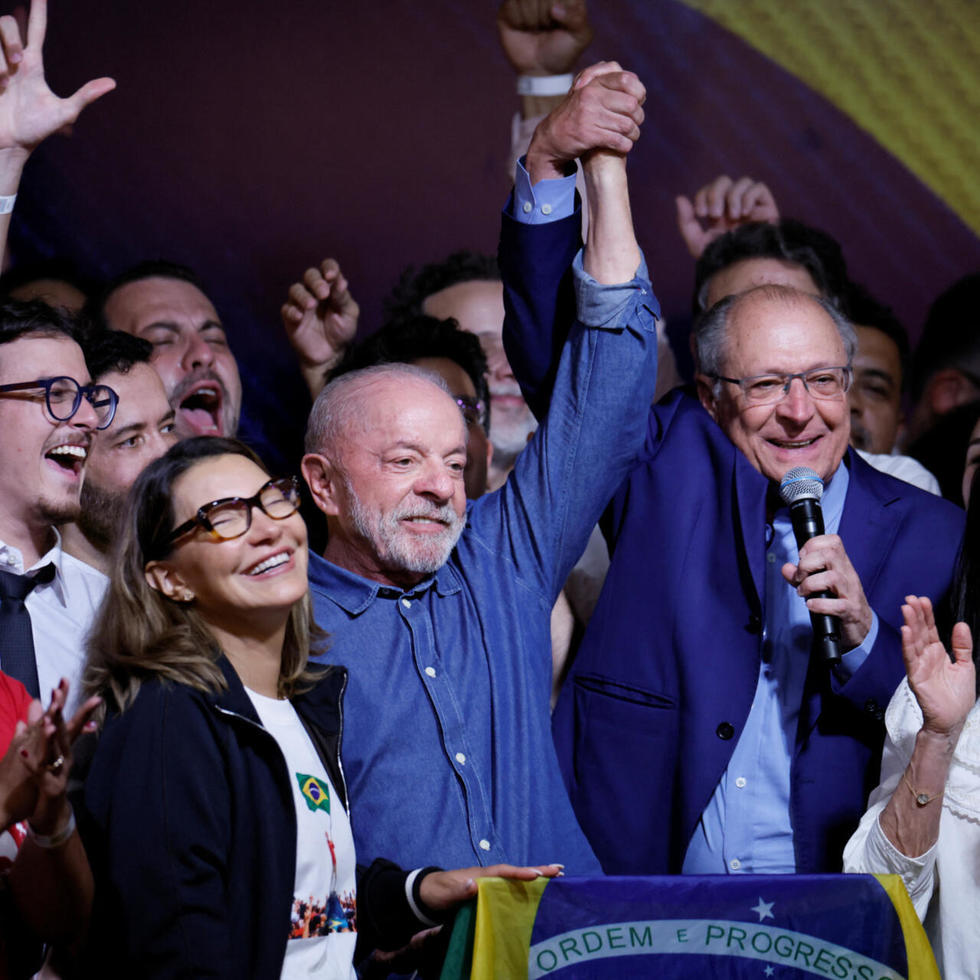
On the 25th local time, Lula celebrated his victory in office.
On October 27, 1945, Lula was born into a poor family in the state of Bahia, in northeastern Brazil. At the age of 7, he moved with his family to the state of São Paulo. He started making a living at a young age, and at the age of 14, he began working as an apprentice in a factory, eventually becoming a metal worker.
The experience at the factory changed Lula's life trajectory. In the 1970s, Brazil was under military government rule. Lula joined the trade union movement and was elected president of the metal workers' union in São Paulo in 1975. He led several large-scale strikes and gradually became a well-known leader of the workers' movement across Brazil.
In 1980, Lula joined the Brazilian Labor Party, officially beginning his political career.
After that, he participated in presidential elections three times in 1989, 1994, and 1998, but failed each time. It wasn’t until 2002 that Lula finally won, and in 2006, he was re-elected successfully.
During its two presidential terms from 2003 to 2010, the Lula government vigorously promoted policies aimed at reducing poverty and providing social welfare. Benefiting from the prosperity of international commodities and domestic economic growth, tens of millions of Brazilians were lifted out of poverty. Lula thus became one of Brazil's most influential left-wing politicians.
After stepping down, Lula’s life was not easy. In October 2011, he was diagnosed with throat cancer and had to undergo months of chemotherapy and radiotherapy. For this former union leader who relied on speeches to mobilize workers and step onto the political stage, losing his voice was even more terrifying than death. Fortunately, after treatment, doctors announced in March 2012 that the tumor in his throat had disappeared, allowing Lula to return to political activities.
However, the health tests did not end there. At the end of 2024, Lula underwent emergency surgery due to intracranial bleeding. In May of this year, he was diagnosed with early-stage skin cancer and underwent a lesion resection along with preventive radiotherapy.
In addition to illnesses, political turmoil also followed. In 2018, Luiz Inácio Lula was sentenced to prison for corruption and money laundering charges, losing his eligibility to run for office. After serving 580 days in prison, Lula was released in 2019. In 2021, the Brazilian Federal Supreme Court overturned his convictions, clearing the way for him to return to politics.
In 2022, Lula participated in another presidential election and defeated Yael Bosonaro, who was seeking a second term, by a narrow margin. It took 12 years for him to return to the presidency.
Four years later, his opponent became Roberto's son, Flavio. This time, Lula won again.
From three consecutive election failures to two successful re-election as president; from being imprisoned and with a dim political future, to winning the fourth election at the age of 80, Lula's tumultuous life story has become a microcosm of Brazil's contemporary political history.
Despite creating history, Laura's fourth run for selection was not easy.
Reuters noted that during this election, Lula faced a rather unfavorable situation. In recent years, Brazilians have grown more dissatisfied with the cost of living, public safety, and economic growth. The Labour Party has also been affected by ongoing corruption scandals, which have continued to undermine its support rate.
After falling behind in the first round of voting, Lula’s camp adjusted its campaign strategy, intensifying social media mobilization, and promised to expand social welfare programs and improve public services in order to gain more voters' support.
Ultimately, Lula achieved a reversal, becoming the first candidate in Brazil since the return of democratic elections to win the second-round presidential election after finishing second in the first round.
However, victory in the election does not mean that the future four years will be smooth sailing.
Reuters noted that the new Brazilian parliament is dominated by conservatives, and the policies promoted by the Lula government may face greater resistance. At the same time, Brazil's public debt has exceeded 82% of its GDP. Issues such as high interest rates, slow economic growth, and heavy household debt burdens will also test the new government's ability to implement policies.
In his victory speech, Lula showed a pragmatic attitude.
"I did not choose Congress, it was the people who chose Congress." Lu Rā stated that even though Congress's political stance had become more conservative, he would respect the election results and collaborate with various parties to promote national development.
He promised to continue expanding investment in education, healthcare, and social welfare during his new term, strengthen public safety, develop renewable energy, artificial intelligence, and the digital economy, while also maintaining national sovereignty and diplomatic autonomy.
Speaking of his upcoming 81st birthday, Lula appears confident.
"I want to make a promise to everyone, I will work hard to achieve the best presidential term in Brazil's history." He said that he would dedicate himself fully to his work and build Brazil into a country the people expect.
Lu La’s fourth presidential term will officially begin on January 5, 2027. According to the term arrangement, he will be 81 years old by then, and will turn 85 when he leaves office in 2030.
Half a century ago, the young Lula walked from the factory workshop to the union, and then onto the political stage. Now, after three failed elections, two terms in office, and a period spent in prison, he has returned to the center of Brazilian power.
However, for this president who has been elected four times, creating history is one thing, but how to complete his last term of office in a time of political division, economic pressure, and changes in the international situation is another challenge.
Over a period of decades in his political career, Lula also developed deep ties with China.
As early as 2003, shortly after becoming president for the first time, Lula made developing relations with China an important direction of Brazil's foreign policy. In 2004, he conducted his first state visit to China, promoting enhanced political, economic, and scientific cooperation between the two countries. In 2009, he visited China once more, further deepening the strategic partnership between China and Brazil.
In 2008, Lula also made a special trip to Beijing to attend the opening ceremony of the Beijing Olympics.
During the first two presidential terms of Lula, China-Brazil economic and trade relations developed rapidly. In 2009, China became Brazil's largest trading partner, and has maintained this position ever since. Cooperation between the two countries in areas such as agriculture, energy, minerals, infrastructure, and space technology continues to deepen.
In 2023, after 12 years, Lula returned to the presidential palace. China was one of the countries he visited during his first state visit since taking office.
In April of that year, Lula led a large delegation to visit China. During the talks with the Chinese side, Lula was described as "an old friend of the Chinese people," and his contributions over the long term in promoting the development of Sino-Pakistani relations were highly praised.
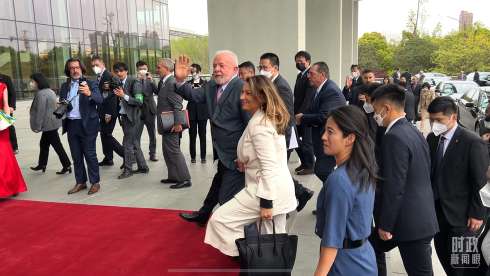
2023, Lu La's visit to China, footage from CCTV
Lula also made it clear that Brazil is committed to establishing closer relations with China. He emphasized that Brazil and China have extensive common interests and share similar positions in international affairs. Brazil is willing to further strengthen cooperation with China in the fields of economy, technology, and multilateral mechanisms.
In November 2024, the heads of state of China and Pakistan jointly announced that their bilateral relations would be upgraded to a partnership for a fairer world and a more sustainable planet.
In May 2025, Lula visited China again. The two sides signed a series of cooperation documents in areas such as artificial intelligence, energy, infrastructure, minerals, aerospace, and trade, further expanding the scope of bilateral cooperation.
Since his first visit to China over 20 years ago, Lu Lan has been actively promoting the upgrading of bilateral relations between China and Brazil. He has personally witnessed and facilitated the transformation of China and Brazil from traditional economic partners into closer strategic partners.
For this left-wing leader who has long advocated for stronger cooperation among countries in the Global South, developing relations with China is not only economically significant, but also an important choice for Brazil to expand its international influence and gain greater development space.
From a poor family, Luiz Inacio Lula de Oliveira grew up as a metal worker. He became a national leader who won the presidential election four times. His political career has experienced many ups and downs, but it has always been closely linked to Brazil's development path.
Today, 80-year-old Lula stands once again at the crossroads of history. Facing domestic political divisions and the complex international situation, he emphasized once again after his election that Brazil will never allow foreign forces to interfere, “not as any person’s backyard.”
This is both a declaration of Lula's national sovereignty and the diplomatic philosophy he has always adhered to throughout his decades of political career: Brazil should take control of its own destiny, maintain independence in the game among major powers, and strive for more say in global affairs.
Four times elected, Lula once again creates history. How to enable Brazil to truly walk its own path will be a more profound question left by this 81-year-old president during his final term.