On October 24th, at a campaign rally in Perry, Georgia, Audi's Global CEO Gernot Döllner stood next to Trump and announced to the agitated crowd present that Audi would invest over $4 billion (approximately 26.67 billion RMB) to build its first assembly plant in the United States. In return, Trump praised Döllner as a "handsome man" from Germany.
In about 10 days, there will be the crucial mid-term elections in American politics. In Georgia, a key swing state, a car company that has been losing money for years and a president who desperately needs positive news have come together due to similar interests.
But after the superficial enthusiasm from both sides, one side has to face the challenges of sales in global markets, as well as mass layoffs in Germany. The other side, on the other hand, is anxious about unfavorable poll results. The support from Georgia cannot relieve Audi's dire situation, nor can it help Trump's election prospects.

Trump (left) and Audi CEO Ferdinand Kern for Reuters
Regarding Trump's embarrassing "confession" to Götner, many German media outlets have expressed criticism. For example, the German newspaper 'Wirtschaftszeitung' dismissed it as "a nightmare" and a "humiliating farce". The German newspaper 'Die Welt' described Götner's posture next to Trump as "kneeling".
However, Audi's choice was actually rather helpless. According to CNBC, Audi was the last German luxury brand to establish a production base in the United States, falling behind Mercedes-Benz and BMW by many years. So far, every car sold by Audi in the US has relied on imports. But due to Trump's continued use of various tariffs, the tariffs alone caused Audi a loss of 1.2 billion euros (about 9 billion yuan) in 2025. In the first three quarters of this year, Audi's sales in the US market decreased by 16% due to these tariffs.
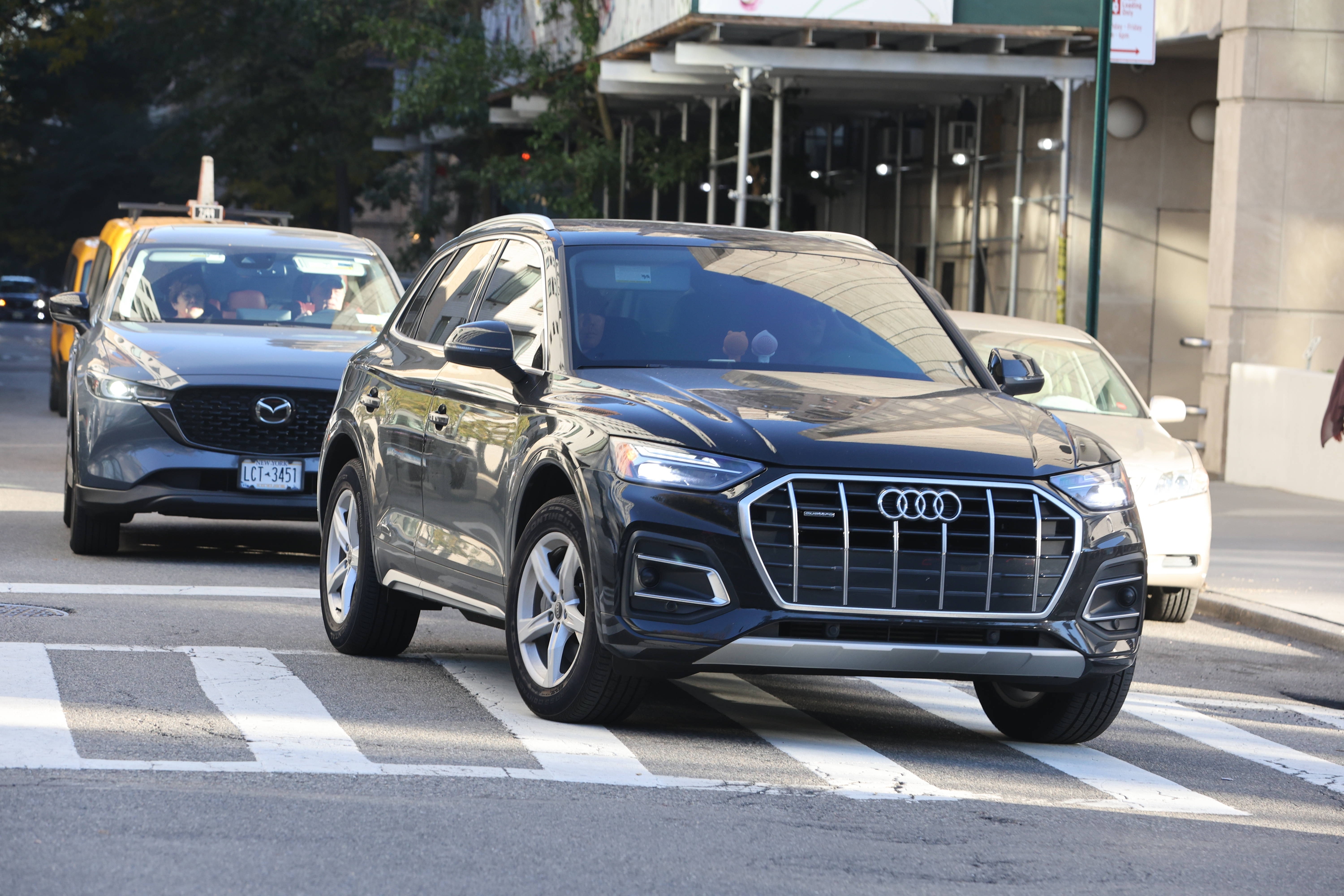
Audis on New York City streets – Visual China
In fact, as early as 15 years ago, Audi had the opportunity to produce locally in the United States. In 2011, the Volkswagen Group built the first full-scale factory in the United States in Chattanooga, Tennessee, for the production of Passat. At that time, Volkswagen considered Chattanooga as a preferred location for Audi’s North American production, but Audi eventually chose Mexico instead. This was because automotive companies could utilize the benefits of the North American Free Trade Agreement to produce at low costs in Mexico and then export to the United States.
Over the following decade, BMW and Mercedes-Benz established their local production capacities in South Carolina and Alabama respectively. However, every Audi vehicle sold in the United States had to pass through Europe or Mexico. For Audi, in years with stable sales, even changes in tariffs and exchange rates could be absorbed by growth. But once the market turned against them, this gap became even more significant, eventually becoming a huge problem. Audi didn’t ignore the need to build factories; instead, they remained stuck in the mindset of being able to survive without building factories, until it became impossible to continue doing so.
As for Trump bringing the Audi manufacturing plan onto the campaign stage, his motives are not even necessary to be concealed.
According to reports from Reuters, Bloomberg, and the Business Journal, Trump is attempting to persuade Americans to support the Republican Party in the mid-term elections, aiming to reverse the unfavorable situation in those elections. Polls show that the Democratic Party currently leads in several states, while Trump’s popularity is nearing historic lows.
《Commercial Times》believes that for Trump, he hopes to grab every straw of life-saving opportunity to save himself. The $4 billion investment from Audi came at the perfect time. Gao De Nuo played along with his performance: first, facing tariffs, then promising subsidies and tariff exemptions, eventually being downgraded in public to a "election helper."

Trump (left) and Audi CEO Ferdinand König at Reuters
But for Trump, the true significance of this “victory” remains a huge question mark. According to the plan, construction at the Audi Georgia plant will not begin until 2027, mass production will start in the early 2030s, and full operation is expected to occur in 2031. Moreover, this project still requires approval from the supervisory board of the Volkswagen Group.
Although the data showing 4500 job opportunities for local residents is impressive, these jobs will not appear until 2027, and certainly not before the mid-term elections. Trump's eagerness to announce the Audi project seems more like a last-minute effort.
More importantly, there is a significant gap between Trump's tariff rhetoric and employment data.
According to the Wall Street Journal, since 2023, the number of manufacturing jobs in the United States has decreased by more than 200,000. After the implementation of new tariffs, the manufacturing sector has been laying off workers for eight consecutive months. The Guardian in the UK reported that since Trump took office, the number of employees in the U.S. automotive and parts industry has declined. Data from the U.S. Bureau of Labor Statistics shows that in July this year, the number of employees in U.S. automotive and parts factories dropped to 964,500, down from 975,300 at the time of the tariffs’ implementation in March 2025.
The World magazine mercilessly criticized that Trump's promises regarding job prosperity have not been fulfilled to this day. Trump wants to use a factory that will not be operational until five years from now to prove that tariffs are 'working', but the jobs that are being weakened by tariffs are precisely the reality that his voters need to feel every day.
On the other hand, the challenges Audi faces today are not limited to the factor of 'having no factories in the United States'.
In the first half of this year, Audi's revenue reached 29.18 billion euros, a decrease of 10.4% compared to the same period last year. Its operating profit margin was only 3.8%. The annual revenue forecast has been lowered to 58 billion to 63 billion euros (approximately 433억 to 4712억 yuan).
For Audi, the impact of U.S. tariffs is just one part of the problem; a bigger blow comes from China. In the third quarter of this year, Audi's sales in China were approximately 94,600 units, a decrease of 24.5% compared to the previous year. In the first half of this year, the profit contributed by Audi's China operations plummeted from 279 million euros (approximately 2.09 billion yuan) last year to 73 million euros (approximately 546 million yuan).
On the future track of electrification, Audi's presence is even more scarce. The sales of electric vehicles like the Q6L e-tron and A6L e-tron are far behind those of Chinese brand competitors in the same price range. Audi's previous withdrawal of its plan to stop selling gasoline vehicles by 2033 already acknowledges that the pace of transformation needs to be re-calibrated.
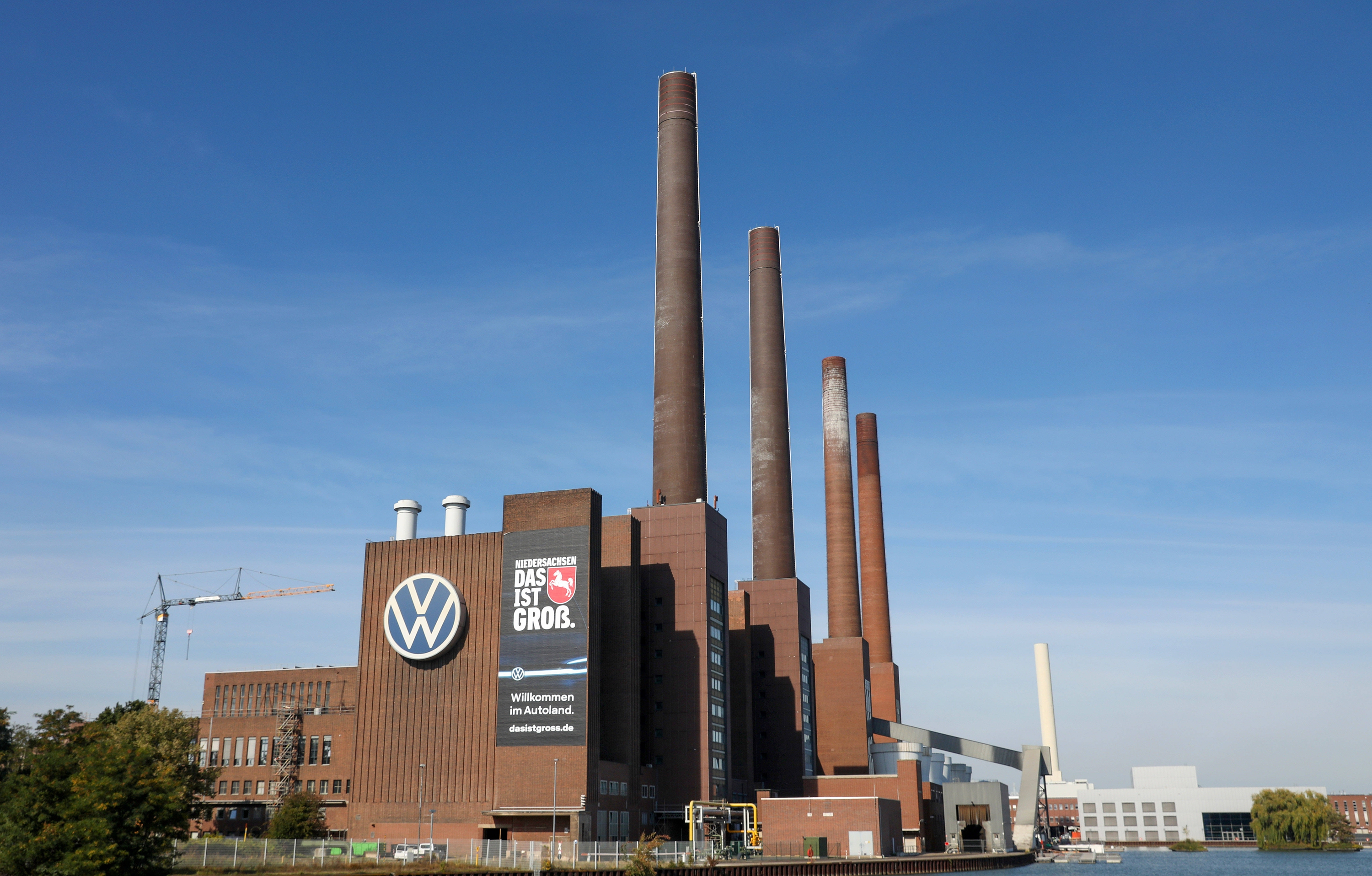
Volkswagen Wolfsburg Factory Visual China
It is also noteworthy that Audi’s investment in the United States stands in contrast to the realities in Germany. In September of this year, Volkswagen Group approved the largest restructuring in German history, planning to cut up to 100,000 jobs and possibly close four German factories, including an Audi plant. Previously, the German metal industry union IG Metall had explicitly demanded that Volkswagen management provide “stable long-term prospects” for the German plants. The future of about 15,000 employees at Audi’s Kassel factory remains uncertain.
For Trump, whether Audi can successfully build its factory may not be important. What he needs is a moment of glory before the mid-term elections: a CEO from a German company standing beside him, proving that Trump’s tariffs have brought manufacturing back to America. For Audi, being able to build its factory in America on time may not be as important. What it needs most now is a chance to breathe normally, without further being consumed by tariffs. The two sides briefly satisfy their respective needs on the stage in Georgia, and then return to their realities: the factory will not start construction until five years later, and votes begin days before the mid-term elections. Distance cannot solve immediate problems.