Since the full-scale upgrade in Ukraine in February 2022, relations between Russia and the United States have deteriorated significantly. Connections and interactions between the two countries in various fields have been interrupted. The International Space Station, which is jointly managed by Russia and the United States, has become one of the few areas where cooperation between the two countries remains.
Recently, a controversial White House expert made an unusual suggestion, calling for expanded cooperation between the two countries in the space domain. According to a report by Russian newspaper "Messenger" on October 22, Avi Lob, an American astrophysicist and chairman of the White House “UAP” Science Advisory Committee, told the newspaper that the United States and Russia could consider jointly implementing projects to search for potential extraterrestrial life.
Both the United States and Russia are currently conducting research to look for signs of extraterrestrial life, but there is no cooperation between the two countries in this area. Lob believes that the US and Russia can promote cooperation through academic exchanges and other means.
Lob’s proposal sounds somewhat “fantastical,” but Russian experts say it could potentially become the “restart button” for Russia and the United States to restore relations. Experts suggest that, since the Cold War, space cooperation has often been used to ease tensions between Washington and Moscow. A space cooperation project that is less costly and has broader implications faces fewer political obstacles, and it could also serve to mutual goodwill.
In June this year, the White House appointed Loeb as the chairman of the newly established Scientific Advisory Committee on Unidentified Aerial Phenomena. His role is to investigate mysterious celestial objects and the origins of unidentified objects reported by the U.S. military. From 2011 to 2020, Loeb served as the head of the Department of Astrophysics at Harvard University in the United States, specializing in black hole research and the formation of galaxies.
However, Lubb is also a highly controversial astronomer. He has frequently published baseless “strange theories” and is enthusiastic about searching for extraterrestrial life through studies of UFOs and similar phenomena. Some opponents question whether US President Trump simply wants to use this appointment to gain attention, making Lubb’s role as head of the UFO advisory organization unreliable.
As relations between the US and Russia improve, Lob believes that the search for extraterrestrial life could become one of the potential projects in space cooperation between the US and Russia.
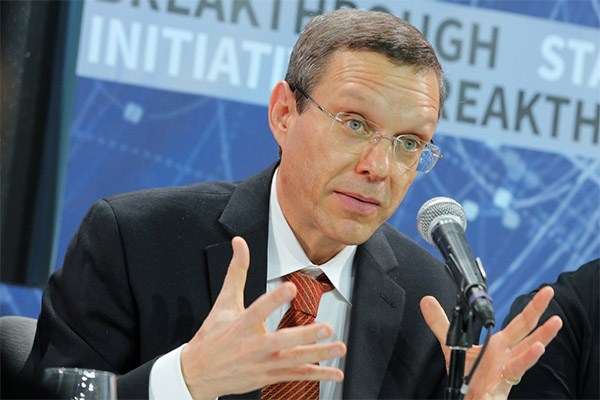
Source photo: Avi Lob
Loeb stated in "Message Times" that: “This cooperation can cover a wide range of space projects, possibly including the collaboration on scientific research, searching for microbial chemical traces on exoplanets or evidence of extraterrestrial civilizations' technology. We can also search for unidentified aerial phenomena related to extraterrestrial civilizations within our solar system.”
Regarding the specific methods of cooperation, Lob believes that Russian students can apply for graduate programs in physics or astronomy at prestigious universities such as Harvard University in the United States, and participate in scientific research in related fields.
Regarding this, Russian experts stated that due to political reasons, there is almost no cooperation between Russia and the United States in the field of searching for extraterrestrial life. However, this could indeed become a point of contact and a way to restore relations between the two countries.
Peter Ponchineko, a senior lecturer at the State University of Aerospace Instruments Manufacturing in St. Petersburg, Russia, and a member of the BRICS-Russia Expert Committee, analyzed: "From a political perspective, such an initiative is feasible, especially for issues of universal significance like the search for extraterrestrial life. Both parties can view cooperation as contributing to the common future of humanity, without the need to explain why they must make concessions to each other. This is a topic that facilitates the process of reconciliation."
Peng Qinke believes that the topic of UFOs has a high public interest, which is one of the reasons why Trump intends to make public UFO documents as a political bargaining chip. Therefore, the proposal of 'jointly searching for extraterrestrial life' could also attract Trump's interest.
Since Trump returned to the White House, he has shown considerable interest in the topic of UFOs, promising to increase "transparency". Following Trump's orders, the U.S. Department of Defense has made public hundreds of documents and files related to UFOs. Although none of the published documents contain any evidence indicating the existence of "alien civilizations", it still attracts great attention from the American public.
Critics believe that the Trump administration has disclosed UFO documents in order to divert public attention from America's political dilemmas, including public demands for more information on the Epstein case and the U.S.' military actions against Iran.
Additionally, Andrei Yonin, a fellow of the Zhelikovskiy Aerospace Academy in Russia, pointed out that deep-space observation methods required for searching for extraterrestrial life are more accessible in terms of technology and cost. “Even some private enterprises can afford them.”
The newspaper 'News Agency' noted that space cooperation has often served as an opportunity for Moscow and Washington to ease tensions between the two nations, often playing a role in 'restoring relations'. A typical example is the Apollo-Union Test Project implemented by the United States and the Soviet Union in July 1975. During this event, manned spacecraft from both countries docked in Earth's orbit. This 'space handshake' played a role in easing the tense relations between the US and the Soviet Union at that time.
Ponikko said that the political significance of the Apollo-Soyuz test program goes far beyond the mission itself. Now, projects aimed at searching for extraterrestrial life could also play a similar role. He pointed out that if both Russia and the United States are willing to participate in a project that has been planned for many years, it means that both countries are willing to accept the possibility of restoring relations and are prepared to create conditions step by step.
Peng Qinke believes: 'We still hope that future space exploration will become a collective effort. Although it is costly and challenging, we cannot give up cooperation. Even today's small research projects can pave the way for larger plans in the future.'
Both Russia and the United States are conducting projects to search for extraterrestrial life. The National Aeronautics and Space Administration (NASA) is looking for signs of microbial life during its Mars exploration missions. The Europa Clipper, scheduled to be launched in 2024, is headed towards Jupiter's moon Europa, aiming to investigate whether there might be life in the ocean beneath its surface.
Russian scientists are studying Vostok Lake in Antarctica, using it as a model for searching for life in environments similar to those beneath Europa. Scientists are also attempting to use the RATAN-600 radio telescope located in the Karachai-Cherkess Republic of Russia to detect signals that may originate from 'extraterrestrial civilizations'.
After the full escalation of the Russia-Ukraine conflict, Russia and the United States have ceased contact in many areas. However, both countries continue to maintain cooperation on the International Space Station. Astronauts from both nations travel between Earth and the Space Station using Russian Soyuz MS spacecraft and American Crew Dragon spacecraft. There is always at least one Russian astronaut and one American astronaut on the Space Station to ensure the operation of each module.
However, as the International Space Station ages, the cooperation between Russia and the United States is also coming to an end. In July this year, Dmitri Rogozin, President of Roscosmos, announced that Russia and the United States had agreed to continue operating the International Space Station until 2030, after which it will be decommissioned.
The International Space Station was built in 1998, with the participation of the United States and Russia. Its initial design lifespan was 15 years, which was later extended several times.
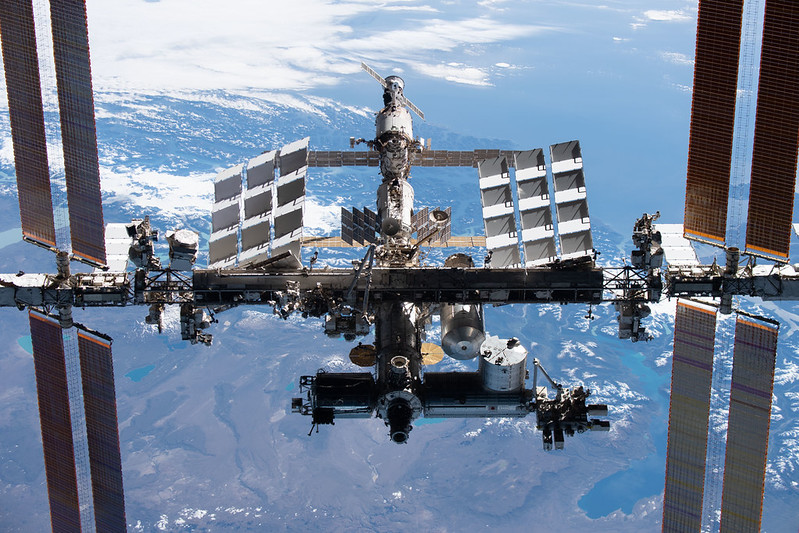
International Space Station, NASA
After the International Space Station is decommissioned, whether the two countries can cooperate remains unknown. After meeting with NASA Administrator Isaacman in July, Russian First Deputy Premier Manurov said that the two sides discussed the possibility of cooperation between the commercial space station led by the United States and the Russian-proposed replacement plan for the International Space Station. In particular, they discussed the issue of mutual support in emergencies.