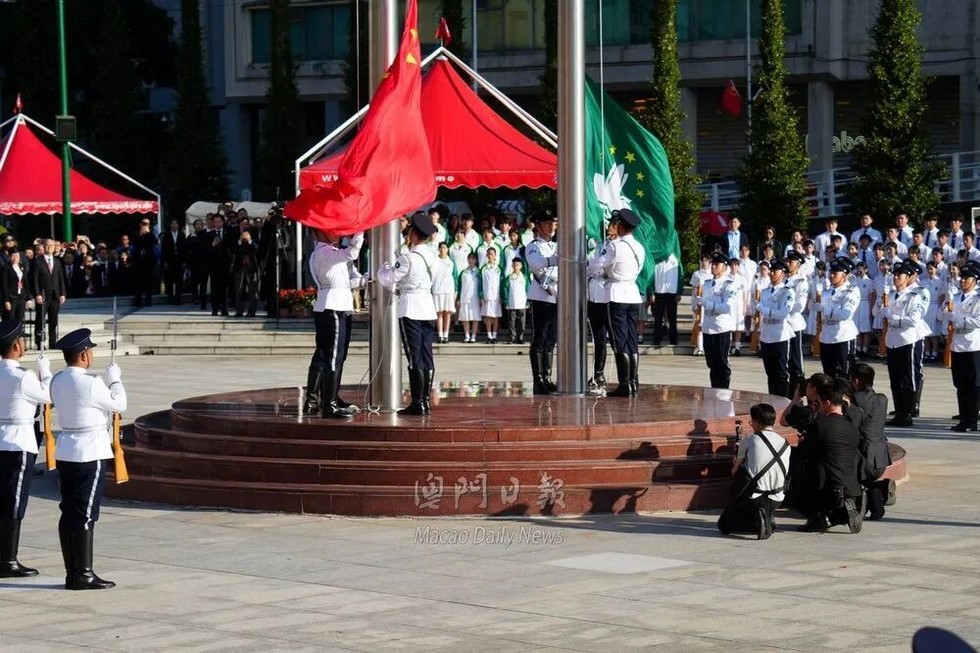
Ten years ago, the concept of “accelerating the development of philosophy and social sciences with Chinese characteristics” was proposed. Ten years later, why do many related studies still remain at the level of theoretical speculation? Meanwhile, the theory of “civilizational states” has broken out of the ivory tower and become a real achievement that influences the transformation of the world order today. What insights can this offer for the construction of China’s independent knowledge system?
On October 15th, at the 2026 Thinkers Forum jointly organized by the Fudan University China Research Institute, the Oriental Studies Journal, Observer Network, Dilan Culture, and Shanghai Spring Development Research Institute, Zhang Weiwei, Dean of the Fudan University China Research Institute, delivered a keynote speech titled "Innovation in Civilizational State Theory: Driving China's Own Knowledge System from Ideal to Realization". She shared her thoughts on promoting the implementation of China's own knowledge system, incorporating the practical process of innovation in civilizational state theory.
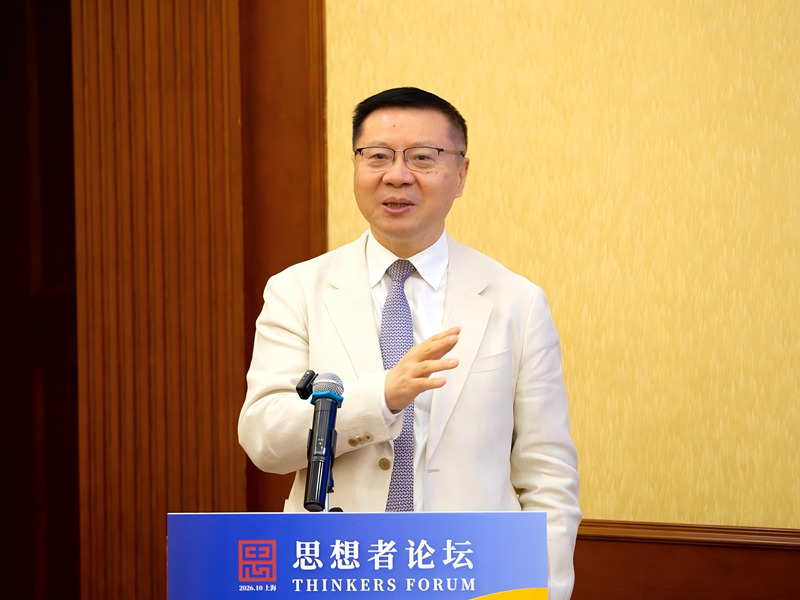
Professor Zhang Weiwei delivered a keynote speech at the 2026 Thinkers Forum.
This year marks the tenth anniversary of the symposium on philosophy and social sciences chaired by General Secretary Xi Jinping. At the symposium, the General Secretary proposed the idea of "accelerating the development of philosophy and social sciences with Chinese characteristics". I was also honored to participate in this symposium and spoke as a representative of political scholars. Subsequently, the General Secretary also proposed the concept of "constructing an independent knowledge system for China".
However, to this day, most of the relevant research we see still remains at the 'what should be' level. Many articles are merely empty statements or text-based reasoning, and they often reflect Western-centric approaches. I believe that time is running out. The Chinese theoretical community should quickly move from the 'what should be' to the 'what actually is'. By conducting solid original research, they can answer specific questions such as 'Questions of China', 'Questions of the World', 'Questions of the People', and 'Questions of the Era'. In this process, they should also build a self-reliant knowledge system for China.
In moving towards the "actual reality," I have made a lot of efforts and achieved some results. Now, I would like to briefly report them to you all.
Since the 1980s, starting from the frequent misinterpretations of China by the West, I have devoted myself to the study of the Chinese model. I questioned Western mainstream theories and focused on Chinese concepts and culture. Later, I delved into the study of Chinese civilization. In 2010, I proposed the concept and theoretical framework of "civilizational states."
Over the following ten years, he dedicated himself to refining his ideas. He published several monographs and a series of papers. He also engaged in numerous conversations, exchanges, and even debates with scholars from home and abroad, as well as political figures and the media. Today, it can be said that the “civilizational state theory” has helped to establish a foundational logic and a knowledge system that can withstand international comparisons, particularly in the context of China’s path, its model, and the great rejuvenation of the Chinese nation.
I am particularly pleased that today, the discourse of civilized nations has broken out of the ivory tower and become one of the mainstream political discourses in the world. Non-Western major countries such as Russia, India, and Iran have also declared themselves as civilized nations. The Economist magazine stated in an article at the beginning of 2020 that the 20th century was the era of nation-states, while the 21st century may be the century of civilized nations. Preliminary data also supports this claim: over the past decade, literature discussing or referring to “civilized nations” appeared in 92 Chinese and 78 English journals, and the number of such articles in the past five years (2021-2025) was 3.8 times that of the previous five years.
The autumn issue of 《Oriental Studies Journal》 this year just published my paper titled “Innovation in Civilizational States: Promoting the Transformation of China’s Autonomous Knowledge System from Ideal to Real”. I am very eager for your critiques and suggestions.
This year, there were two related events. One was in April this year, when Fushan openly acknowledged that "China has created a very remarkable model. If this trend continues, it might truly become a viable alternative to Western democracy." This brought back the debate between me and Fushan about the Chinese model, which had taken place 15 years ago, to the forefront of online discussion.
Secondly, in September this year, the 'Athens Democracy Forum', a platform for discussing Western democracy and its spirit, officially invited me—a scholar who has long been critical of the Western model—to give speeches and engage in debates. The topic of the debates was 'The Identity Crisis of Western Democracy'. In other words, many within the Western establishment also wish to hear different opinions and initiate some reforms within the Western model.
On the eve of the forum, Greek veteran journalist Lucas Velidakis interviewed me. His first question was, "Do you think your debate with Fukuoka fifteen years ago proved that you won and he lost?" I said that many people in China have summarized our debate into five political predictions: "The Arab Spring will turn into an Arab winter," "Populism will destroy Western democracy," "If the U.S. political system is not reformed, it may elect leaders worse than George W. Bush," "World cultures will not converge," and "The End of History Theory has come to an end." I also pointed out that "looking back now, all of these predictions have come true." Time is indeed the best judge.
Fifteen years ago, Fukuyama had already developed a knowledge system related to the end of history. I also developed my own knowledge system regarding civilizational states. Therefore, our views meeting each other is, in a sense, a clash between two sets of knowledge systems. If I say that I won this debate, it can also be said that the knowledge system regarding civilizational states won over the knowledge system related to the end of history.
Below, I will briefly introduce the core concepts of the theory of civilizational states: first, there is the definition and characteristics. The definition of a civilizational state is an organic combination of an ancient civilization that has lasted for thousands of years without interruption and a super-large modern nation. It has the basic characteristics of “four superlatives combined into one”: first, a super-large population size; second, an extremely vast territory; third, a long historical tradition; fourth, a wealth of cultural heritage. Each of these “superlatives” essentially achieves a combination of ancient and modern elements.
Let me give a simple example. At that time, we predicted that the United States would lose the technological battle with China. The underlying reason is that, historically, we have always been a country with a large population. Today's Chinese people have received excellent modern education. Since the founding of New China, great emphasis has been placed on mathematics, physics, and chemistry. Even today, most high school students still prefer these subjects. Every year, we produce more engineers and technological workers than Western countries combined.
If we talk about the main contributions of civilized nations in the construction of knowledge systems, I believe they have achieved a series of fundamental breakthroughs and paradigmatic changes in four fields that have been long dominated by the West: state theory, institutional theory, democratic theory, and party theory.
Firstly, in terms of national theory, there has been a paradigm shift from “national states” to “civilizational states”. Western theories of “national states” include concepts such as “sovereignty resides with the people” and “people's authorization”. Even though China's economy has surpassed that of the United States based on purchasing power parity, Western mainstream theories still refuse to consider China a “modern state”. In the words of American sinologist Bai Lujun, China is an ancient civilization disguised as a national state. Why? Because he believes that China is not a typical national state. In their view, all national states have a Western-defined concept of “people's authorization” or “popular sovereignty”. Without going through such procedures, without the separation of powers and multi-party competition, how can China be called a modern state?
In our country, both public figures and many political scholars still believe that China is still in the process of transformation. I say this is not the case. China has already achieved the integration of a "national state" and a "civilized state", forming a civilized nation—a higher form of statehood. After this theoretical breakthrough, you will often have the feeling of seeing everything in the world from a high vantage point.
Secondly, in terms of institutional theory, it has achieved a paradigm shift from 'political system' to 'political governance'. The mainstream Western institutional theory is based on political system thinking—that is, democratic systems with multiple parties and one-person-one-vote are considered true democracy. I call this lazy scholarship. These people come to China and ask a question: Your economic reforms are good, but why don’t you carry out political system reforms? Why not adopt Western democratic forms? The theory of civilized nations argues that political governance is the key; we focus on principles and techniques.
From a philosophical perspective, what is the purpose of democracy? Why don't Westerners ask this question anymore? I discussed this topic at the Athenian Democracy Forum. We say, 'Water can carry a boat, but it can also capsize it.' Western democracy has caused so many problems because it is detached from both its own people and the people of the entire world, which has led to today's numerous crises.
How to solve this problem? It's about 'using the Way to govern the Art'. From the perspective of the Way, we need to see what democracy is really for. I might not be accepted by everyone who hears these words, but at least I saw many people in the audience nodding in agreement, especially the young people, because they had never heard this kind of theory before. During the debate, I said that 'treating both the symptoms and the root cause' is a principle that even children understand. There are so many idioms in the language of civilized countries, which stem from a wealth of wisdom and much experience. For example, Deng Xiaoping once said 'showing talent while hiding one's abilities', and suddenly everyone understood what this meant. This is something that is hard to imagine in the West.