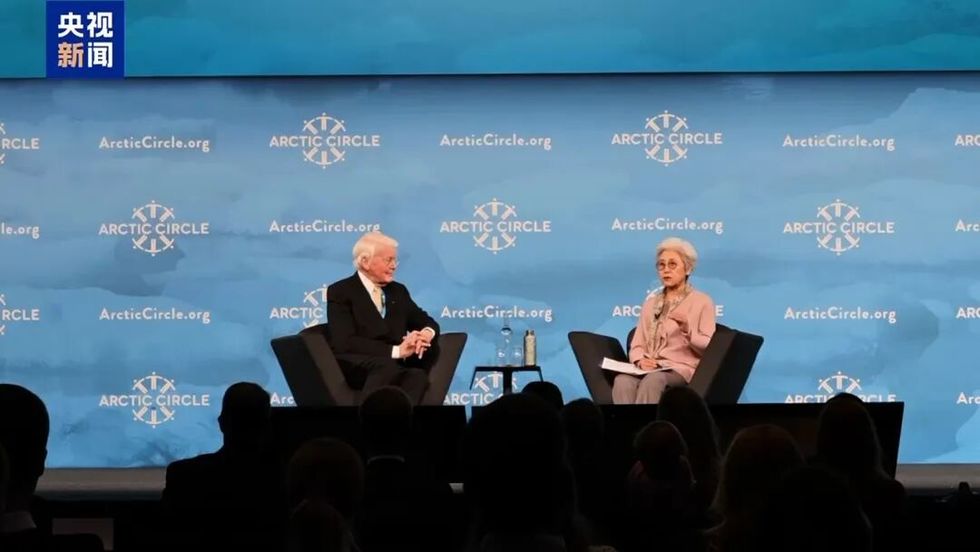
On October 20th local time, the European Commission announced a new Arctic strategy. This is the first update to the EU’s Arctic strategy since 2021. Compared to the previous version, the new strategy emphasizes security and strategic competition more significantly. It proposes strengthening satellite monitoring, protecting submarine cables, expanding maritime monitoring capabilities, and helping member states acquire more ice-breakers.
The European Commission President Ursula von der Leyen, when introducing the new strategy, claimed that the Arctic is a "geopolitical collision zone." She also warned that Europe must take action when sovereignty, territorial integrity, and the rules that support regional stability can no longer be taken for granted.
On the surface, these words seem to be about maintaining international order. However, in the context of the current situation in the Arctic, the issue becomes more complex. With climate warming and ice melt, the commercial value of the Arctic waterways is becoming increasingly apparent. Energy and mineral resources also attract attention from various parties. Russia hopes to expand the use of the Northern Sea Route, China is striving to explore more opportunities for shipping and scientific research, and the United States is pushing its way closer to Greenland, emphasizing the importance of its security there.
China, the United States, and Russia all want to find their place in this icy land. Now, Europe is not willing to fall behind either. However, while the EU emphasizes sovereignty, rules, and open waterways, it also tries to define which countries' participation constitutes a so-called "security threat". Is it trying to maintain rules that apply to everyone, or is it trying to gain more say in its own affairs?
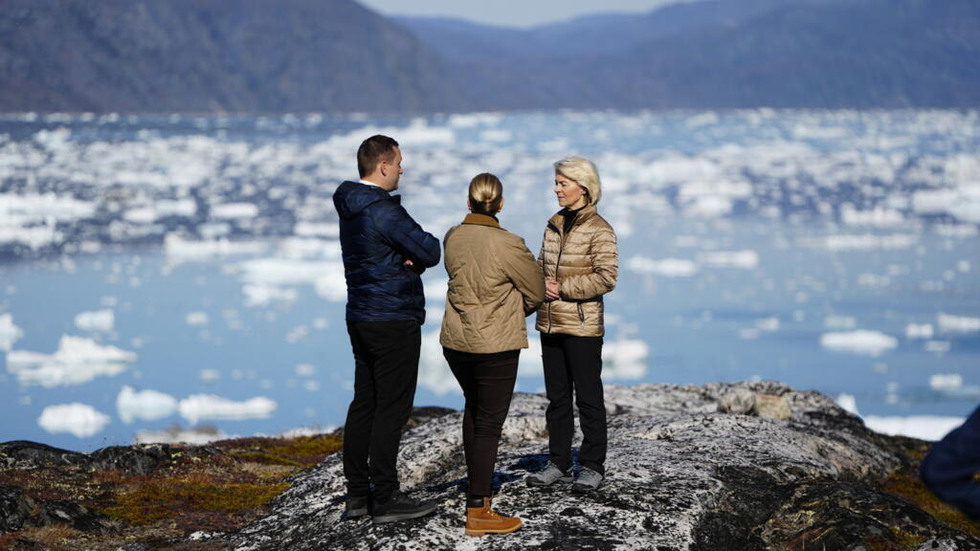
Previously, the President of the European Commission, Jose Manuel Barroso, visited Greenland. Photo.
There is no doubt that Russia is one of the most direct security concerns for the EU's new strategy.
EU officials said that in recent years, Russia has re-activated some of the Arctic military bases left from the Soviet era and upgraded them. They also believe that Russia has deployed a large number of nuclear weapons on the Kola Peninsula within the Arctic Circle.
After the outbreak of the Russo-Ukrainian conflict, the existing security cooperation in the Arctic region was impacted, and the tensions between Russia and Western countries extended further into this region.
The new EU strategy proposes expanding the 'Copernicus' satellite observation network, establishing maritime security centers, strengthening monitoring of key infrastructure such as submarine cables, and supporting member states in acquiring more ice-breakers. These measures involve both environmental and infrastructure protection, as well as concerns related to Europe's monitoring, transportation, and operational capabilities in the Arctic region.
However, Russia does not accept Europe's arguments regarding the regional security situation. The Russian side has long accused NATO of promoting militarization in the Arctic. It believes that it is the continuous strengthening of military presence by Western countries that is a major cause of the escalating tensions in the region.
Both parties stand by their own claims, and have already made their positions clear: the Arctic is no longer just a topic related to climate change and environmental protection. It is also becoming an intersection point for military deployments, strategic routes, and infrastructure competition.
For Europe, it wants to contain Russia's military influence in the Arctic, but it must also face the real limitations of its own capacity building. It is worth noting that the EU has proposed a series of plans such as satellite monitoring, protection of submarine cables, and icebreakers, but it has not announced a total budget in its new strategy. There is still a lot of work to be done by Europe to turn the goals outlined in policy documents into actual influence.
If Russia's military activities constitute a "security threat" for Europe, then China's presence in the Arctic is more often seen by European countries as part of a long-term strategic competition.
The High Representative of the European Union for Foreign and Security Policy, Catherine Ashton, stated in an interview with the British newspaper The Times on October 19 local time that the West must prevent China and Russia from taking control of the Arctic. She particularly emphasized the Northern Sea Route, advocating for cooperation between the EU and partners such as the United States and Canada to avoid China and Russia gaining full control over this route.
The Arctic route is a maritime passage that connects the Atlantic Ocean and the Pacific Ocean via the Arctic Ocean. Currently, the available Arctic routes mainly include the Northwest Passage and the Northeast Passage.
The Northern Sea Route can be considered a part of the Northeast Sea Route. Since most sections of the Northeast Sea Route lie along the northern coast of Russia, Russia imposes many restrictions on passing ships using these waters as its internal waters. This has sparked criticism from other countries. Currently, disputes over the Northeast Sea Route mainly revolve between the United States and Russia.
This statement reflects European concerns: as ice melts, the commercial value of the northern sea routes may increase, and ports, minerals, undersea cables, and communication infrastructure will also become more strategically important. The Europeans believe that Sino-Russian cooperation could change the power dynamics in the Arctic region.
But European judgments on safety should not be confused with objective facts that have already occurred.
In August this year, the British newspaper The Guardian reported that Chinese shipping company Sea Legend has begun to attempt to operate regular container transportation services through the Northern Sea Route. The Russian National Atomic Energy Corporation also previously stated that it has approved Chinese ships to travel via this route to Europe.
China is indeed expanding its scientific research and shipping activities in the Arctic. The Arctic route is no longer just a geographical and scientific concept for China; there are also actual commercial attempts being made. However, seasonal ice conditions, operational costs, safety risks, and Russia's management of the route still limit the use of this route. It cannot be simply regarded as a mature passage that can operate continuously throughout the year and completely replace traditional routes.
Similarly, it cannot be concluded that China and Russia have already 'controlled' the Northern Sea Route just because they cooperate in the Arctic. The 'complete control' claimed by Caras is entirely a result of Europe's fear of the future strategic landscape, rather than an objective description of the current situation.