(Text by Observer Network, Guo Guanghao)
On October 21, Yu Hongjun, the director of the National Central Museum of Korea, announced his resignation as a measure of accountability.
Previously, the most representative national museum in South Korea made a significant mistake during a special exhibition, mistakenly identifying a calligraphy work by a pro-Japanese person as the legacy of an anti-Japanese independence movement leader. This caused a nationwide uproar. As the incident continued to escalate, it was discovered that this work was actually part of Yu Hongjun’s private collection, and he had personally recommended it for exhibition.
This initial controversy was viewed as a result of misjudgment in the artifact identification process. Gradually, it evolved into an issue concerning the review of museum exhibits, personal collections by museum directors participating in exhibitions and potential conflicts of interest. Despite Mr. Yu Hongjun's repeated public apologies, these criticisms remained unaddressed, leading to his resignation as museum director only 15 months after taking up the position.
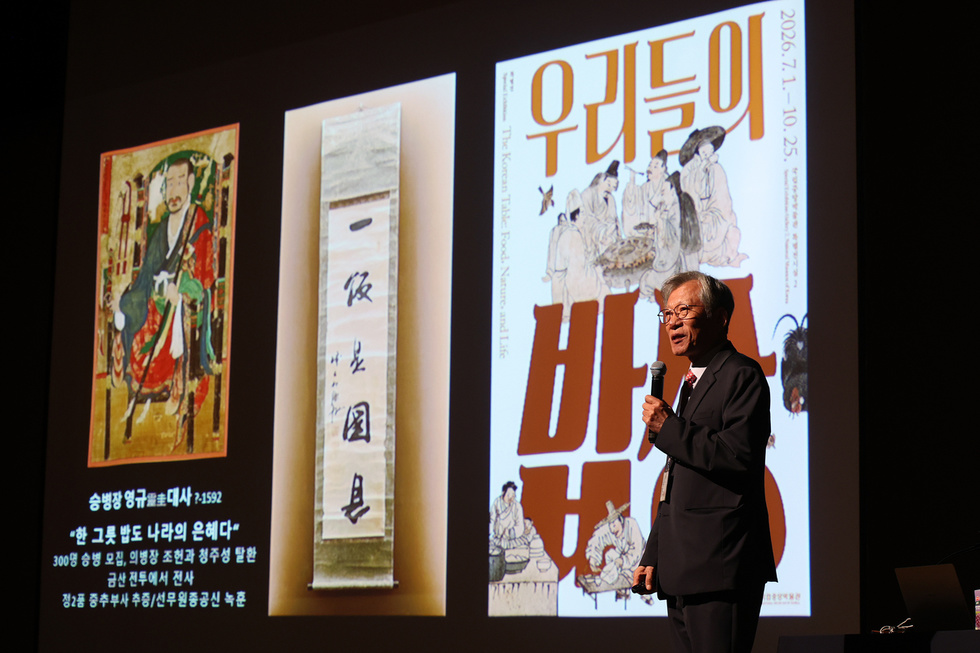
Yu Hongjun
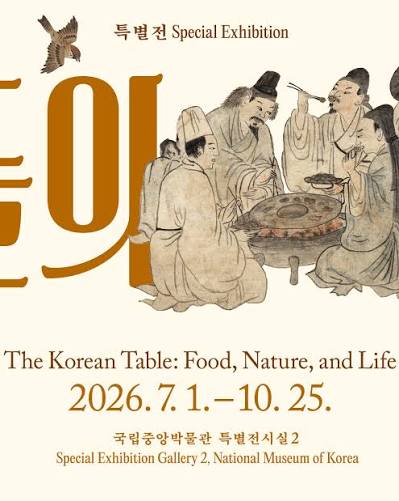
On July 1 this year, the National Museum of Korea in Yanggun District, Seoul, launched a special exhibition titled "Our Dining Table" (우리들의 밥상), which will be ongoing until October 25.
This exhibition aims to trace the history and traditions of Korean food culture, and to explore the historical roots of Korean food culture that have attracted international attention in recent years. The exhibition is organized by 51 institutions, featuring a total of 488 sets and 684 cultural relics and related exhibits.
Among the exhibits was a calligraphy work titled "One Meal is National Virtue".
According to the National Central Museum, this statement is related to the Nanjin Wanyou, a period during the 16th century when the Joseon Dynasty resisted Japanese aggression. It is said that Master Rengui, who organized monks to fight against the Japanese, used this phrase to call on monks to participate in the battle.
The museum believes that this text has profound historical and cultural significance, and therefore included it in an exhibition themed on food culture.
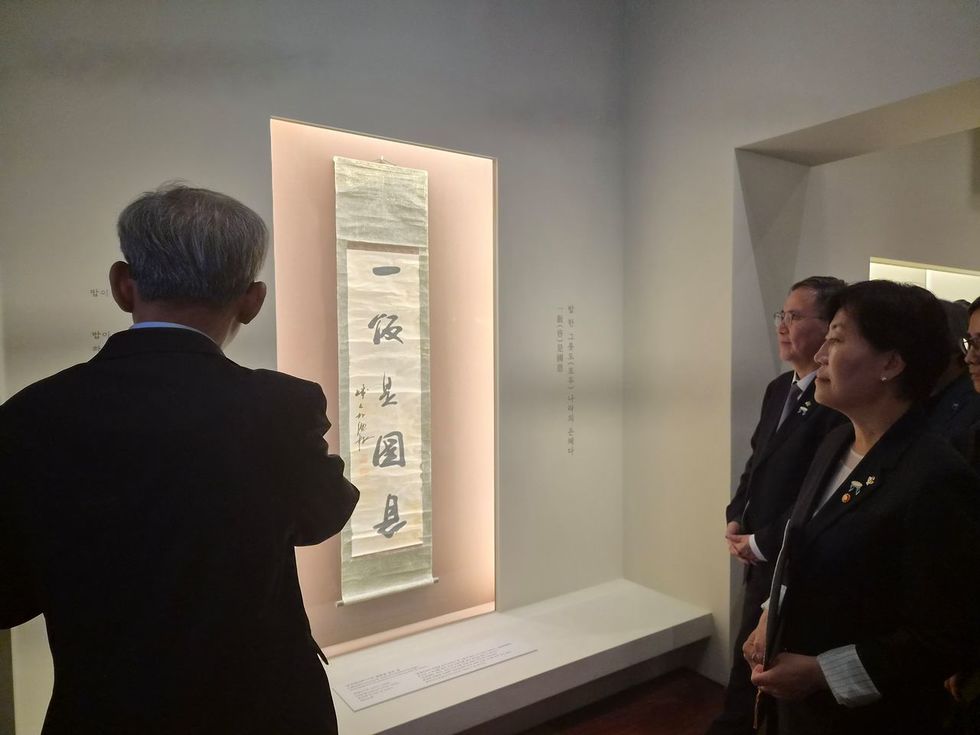
The calligraphy work bears the inscription “Han people Park Won-geun”. Initially, the institution identified it as the handwriting of Park Won-geun (1912–1950), a Korean anti-Japanese independence movement leader, and presented it to the audience in that capacity.
However, just over a month after the exhibition opened, the identity of the artist behind this work was questioned.
In August, an outside person informed the museum that the name "Park Won-geun" mentioned in the works might not be that anti-Japanese independence activist, but rather another historical figure who once used this name—Park Chung-ang, a notorious pro-Japanese figure in modern Korea (1874–1959).
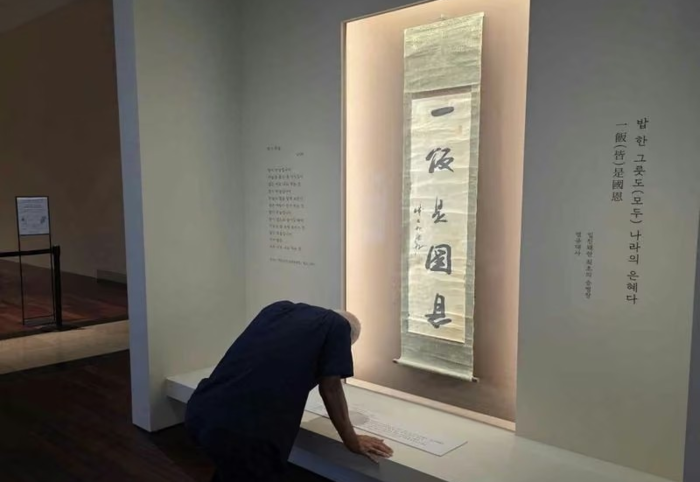
The museum conducted an investigation and removed the work from the exhibition hall on August 10. On August 12, the museum officially issued an apology statement, acknowledging that there were deficiencies in the review of the exhibits.
On September 7th, the National Central Museum announced its final investigation results: this calligraphy work was not actually created by Park Won-geun, a leader of the anti-Japanese independence movement, but by Park Chang-gung, a pro-Japanese anti-nationalist.
According to the survey report released by the institution, seven experts from the fields of calligraphy, modern history, ancient literature, and conservation science were invited for this verification. They cross-verified the handwriting, text, historical background, and related materials of the work. Ultimately, it was determined that the work is a calligraphy piece created by Park Chongyang during his study in Japan, using the name 'Park Won-geun'.
The museum acknowledged in its statement that it did not fully fulfill its responsibilities for investigating and evaluating exhibits, and promised to improve the procedures for examining exhibits to prevent similar incidents from occurring again.
So, why did a fighter against Japan have the same name as a pro-Japanese person?
According to the "Dictionary of Names of Independence Movement Figures" compiled by the Korean Independence Memorial Hall, the true independence movement leader Park Won-geun was born on December 8, 1912, in Boeon-gun, Chungcheongbuk-do.
In 1929, while studying at Seoul Central High School, he formed a secret organization called the “Evolution Society” with other students. They published official publications and studied new ideas. In 1931, the organization was renamed the “Sanren Society,” and its activities gradually shifted towards guiding workers in strikes and organizing students to take leave from school for practical struggles.
Pook Won-geun was later arrested and sentenced by the Japanese colonial authorities for participating in anti-Japanese activities. In 1939, he was arrested again for participating in anti-Japanese activities such as the "New People's Club," and was imprisoned once more.
However, this independent activist was not able to enjoy a peaceful life after the end of Japanese colonial rule. After the outbreak of the Korean War in 1950, he became involved in the “National Security Guidance Alliance Incident” carried out by the South Korean government against so-called leftists, and he was murdered on July 10 of that year.
In 2009, the South Korean government awarded him the National Order of Merit 'Eoju' as a recognition of his contributions to the Anti-Japanese Independence Movement.
In contrast, the person who actually left behind this calligraphy is Park Choongyang, a key pro-Japanese bureaucrat during the Japanese colonial rule of Korea.
According to the 'Great Encyclopedia of Korean National Culture' compiled by the Chosun Institute of Korean Studies, Park Chongyang was born in Yangju, Gyeonggi Province in 1874. In 1897, he went to Japan to study as an official student. He had a close relationship with Ito Hirobumi, the first Korean supervisor in Japan. During the Russo-Japanese War, he served as a translator for the Japanese army.
After that, Park Jeong-Yang entered the Korean bureaucratic system and held important positions during the Japanese colonial rule. He served as Minister of General Affairs for the Crown Prince's Residence, Governor of Haejangdong Province, and Vice-Director of Chungcheong North Province. He was later promoted to the Vice-Minister of the Ministry of Civil Affairs.
During the "March 1st" independence movement in 1919, he participated in organizing self-made units aimed at suppressing the anti-Japanese independence movement. On the eve of the Pacific War in 1941, he served as a consultant for the Korean War-time service corps and actively participated in the wartime mobilization activities conducted by the Japanese colonial authorities. Later, he also played a role in encouraging Korean youth to join the Japanese army.
In April 1945, the Japanese government appointed him as a specially elected member of the Imperial Diet's Peers' Chamber.
After Japan's defeat, Park Chongyang was arrested by the Special Investigation Committee Against Nationalist Acts in South Korea in 1949. However, he did not face any criminal charges and passed away in 1959. Later, South Korean authorities classified his activities during the colonial period as pro-Japanese nationalist acts, based on relevant laws.
Coincidentally, Park Chongyang used the name 'Park Won-geun' in his early years, and 'Won-geun' is also a character in his name. The later-born independent activist Park Won-geun has exactly the same name as the person he used before.
This coincidence is what caused the serious confusion regarding the authorship of the items in the National Central Museum this time.
According to a historical report published in the October issue of the Korean magazine 'Weekly Kyungshang', the life trajectories of two people, Park Won-geun and others, show a stark contrast: one was imprisoned repeatedly for resisting Japanese colonial rule, while the other served long-term under colonial authorities and actively participated in suppressing independence movements and military mobilizations.
Such opposite characters have been confused with each other by South Korea's highest-level national museum, which has sparked criticism from the outside world regarding the museum's professional capabilities and review procedures. This has also harmed the families of independent activists.
However, as the event continued to develop, people gradually realized that the mistake in identifying the author's identity was not even the whole of this incident.
More than a month later, things took a new turn.
On October 15th, Chung Won-soo, a member of the Culture, Sports, and Tourism Committee of the South Korean Parliament and a member of the New Korea Party, disclosed information obtained from the National Central Museum. The data shows that the calligraphy that was previously removed from the museum did not come from other museums or ordinary private collectors, but was actually part of the personal collection of the museum director, Yu Hong-jun.
Moreover, this work was chosen for display at the National Central Museum because it was actively recommended by Yu Hongjun himself.
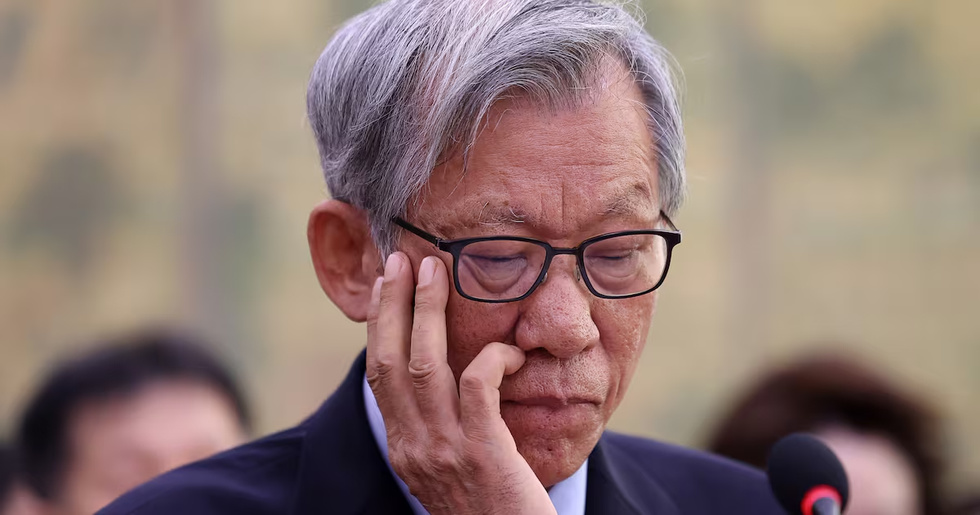
The materials submitted by the museum to the parliament acknowledge that the calligraphy in question was a personal collection purchased by Yu Hongjun for donation to the Fuyu Cultural Institute. After obtaining the recommendation from the curator, the museum borrowed the work according to relevant procedures and used it for an exhibition.
As the investigation progressed, details about the purchase and exhibition process of this calligraphy work gradually emerged.
It turns out that as early as 2019, Yu Hongjun acquired this calligraphy piece at an auction for 50,000 Korean won. The starting bid for the piece was only 10,000 Korean won. The auction house also introduced the artist as “Park De-yon”, who had participated in a Korean diplomatic mission.
Yonhap explains that the reason for this signature is that the calligraphy uses cursive script. The auction party misread it as "Park De-won" when identifying the signature. It is not clear when the work was later recognized as the handwriting of the independent activist Park Won-gyun.