According to Japan's Kyodo News, at 4:41:03 on October 20th, the Japan Aerospace Exploration Agency (JAXA) launched rocket H3-10 from the Tanegashima Space Center in Kagoshima Prefecture. This rocket carried the Mars satellite exploration mission 'MMX' detector.
After approximately 70 minutes, the probe was launched into its pre-determined orbit, with a successful launch.
MMX is a joint international exploration project led by Japan, which plans to collect samples of sand and soil from the Martian satellite "Phobos" and return them to Earth in July 2031.
This is also the first time the H3 rocket has been used to launch into other planetary orbits. The rocket illuminated the sky with orange flames before dawn, soaring into the air with a roaring sound. It was also confirmed from the ground that the booster rocket separated successfully. Officials from the Japan Aerospace Exploration Agency smiled and applauded in celebration after confirming that the probe had separated.
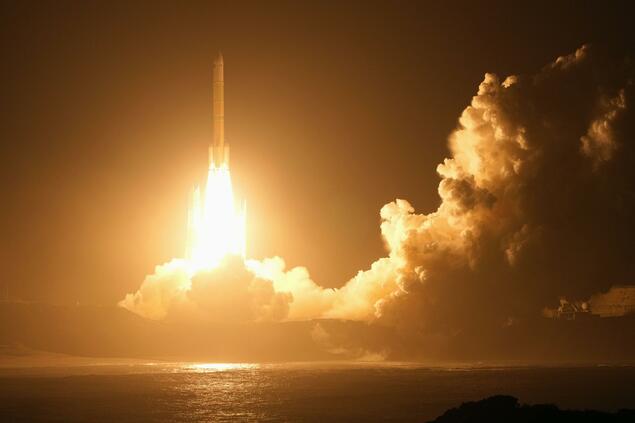
H3 Rocket 10 Launch into Flight and Joint Society
Apart from Japan, NASA, ESA, DLR, and CNES have also participated in the MMX project. Some of the equipment used was provided by overseas institutions.
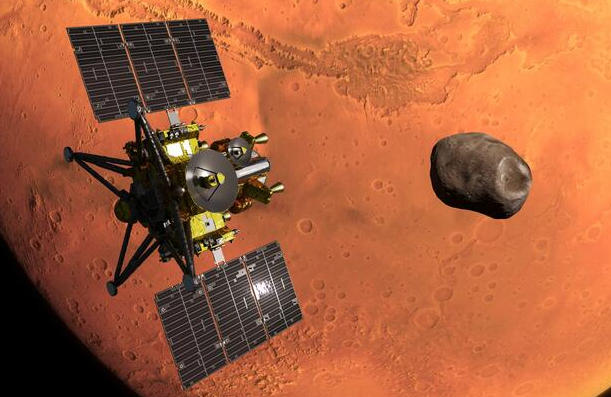
Rendering of the “MMX” probe approaching Mars, by Kyodo News.
According to Japan, the detector weighed 4,480 kilograms when it was launched. It is the heaviest detector that Japan has ever launched. Its height is approximately 5.3 meters, and its width is about 9 meters when the solar panels are extended.
According to the plan, the probe will reach the Martian orbit in August 2027. After the lander developed by DLR and CNES lands, the probe will attempt two landings and collect samples. Subsequently, observations will be conducted on Mars' other moon, Phobos, and the probe will leave the Martian orbit in November 2030. It is expected to return to Earth in July 2031, deploying a recovery capsule carrying samples such as gravel.