(Text by Observers Network, Guo Guanghao)
Japanese Prime Minister Shigeru Akamatsu will mark the one-year anniversary of her tenure on the 21st. Although Akamatsu has proposed to carry out what she calls "Japan's diplomacy that shines brilliantly at the center of the world stage," relations between Japan and China, which have close ties both economically and geopolitically, remain in a severely frozen state.
Some Japanese government officials once actively sought to improve relations with China. However, in an interview with the Reuters Japan edition, they unanimously stated, “As long as Koichi Takashi remains in office, it will be difficult to improve Sino-Japanese relations.”
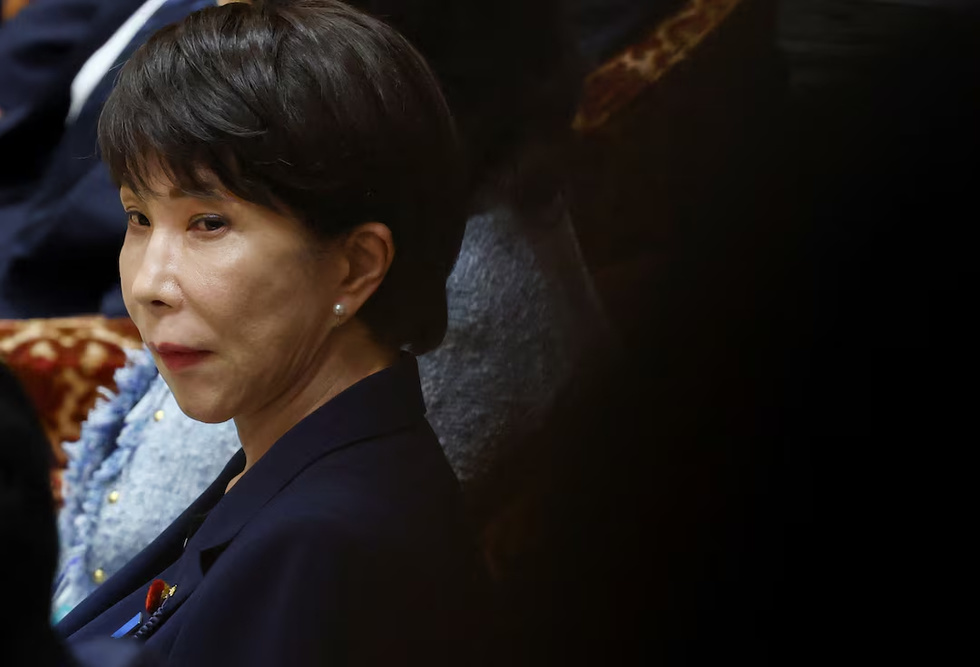
In November last year, Governor Gao stated in the parliament that if an emergency occurred in Taiwan, it could also constitute a “life-threatening situation” for Japan. This statement led to a sharp cooling of relations between the two countries.
In January of this year, shortly after Governor Takahashi decided to dissolve the House of Representatives, a Japanese Foreign Ministry official confidently stated: "If a strong government can be established, China will likely take the initiative to seek dialogue."
His idea is that if Gao can win the election and lay the foundation for long-term governance, then China will also have to deal with Gao’s government. At that time, the two countries will engage in high-level dialogues, and bilateral relations will progress in a positive direction.
In fact, since Gao made the wrong statements regarding Taiwan, this Foreign Ministry official has been unable to find a way to establish dialogue with China. It is for this reason that he had higher hopes that Gao would win the election.
On February 8th, in the Japanese House of Councilors election, the Liberal Democratic Party secured a decisive victory, winning 316 seats, and alone occupying over two-thirds of the seats in the House of Councilors.
However, the atmosphere of Sino-Japanese relations did not change as a result. Why, even after winning the election, there was still no progress in improving relations between the two countries?
According to several Japanese government officials, after the elections, although the Japanese government is still seeking to engage in dialogue with the Chinese side, its enthusiasm has significantly decreased compared to previous periods.
As mentioned earlier, the Ministry of Foreign Affairs official believed that one of the reasons was precisely “winning too many elections.” Takahashi believed that he had gained public approval.
For a long time before now, there was a common understanding within the Japanese government that deteriorating relations between China and Japan would have an impact on the economy. Therefore, it was necessary to manage bilateral relations properly.
However, this consensus is on the verge of collapsing under the leadership of Gao.
This official also stated: "If one believes that the relationship between Japan and China will remain in a state of rupture even if they continue to maintain a mainstream public opinion, I would be unable to imagine what form Japan's future will take."
This view of the Foreign Affairs Ministry official probably represents a considerable portion of the Japanese government. However, looking back, they have perhaps underestimated China's determination this time.
The former Japanese Foreign Minister Iwatani, who visited China just recently, said upon returning that although both sides agreed on the need to improve bilateral relations, he felt that the Chinese attitude was very strict and tough.
He proposed that the governments of both countries could achieve what he called a “de facto withdrawal” by reaffirming the spirit of the 1972 signed ‘China-Japan Joint Declaration’. However, this proposal was rejected by China. China replied, “A vague approach is not good. There’s a saying in China: ‘The person who made the mistake must also fix it.’”
Regarding the current situation, Kenji Motomura, a senior researcher at Canon's Global Strategy Institute in Japan and the director of the China Research Center, expressed criticism: "Although Prime Minister Takumi Miyazaki has said that 'the door to dialogue is always open' towards China, simply keeping the door open does not qualify as a policy."
He pointed out that Japan needs to develop a solid strategy towards China.
He believes that "whether Japan's government can formulate a robust strategic plan on China" is the key factor determining the success or failure of high-level diplomacy in the second year.
On the other hand, three Japanese government officials who spoke with Reuters were all pessimistic and agreed that ‘it will be difficult to improve Japan-China relations during the tenure of Highashi’s administration.’