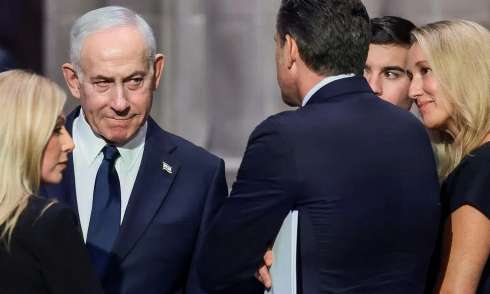
With only nine days left until Israel's parliamentary elections on October 27th, Trump posted a message on “Truth Social” addressed to “the great Israeli people”, expressing his “complete and thorough support” for Netanyahu.
In the post, he referred to Netanyahu as “a great warrior prime minister, and an even greater peace partner in fighting against the Islamic Republic of Iran.” He also wrote, “If Israel chooses the wrong leader—meaning anyone other than Bibi—the United States will have to do this work itself, and I don’t see that happening.” At the end of the post, he wrote in all capital letters, “Bibi Netanyahu will never disappoint you.”
The timing of this endorsement is quite special: Trump refused to make a statement for several months, and only made a choice in the last week before the election.
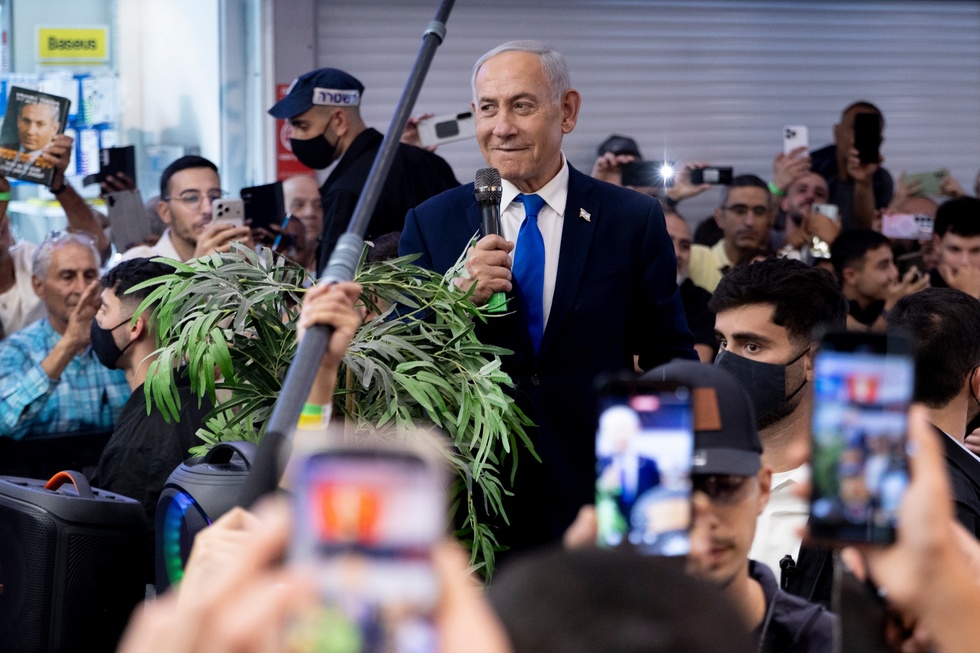
Netanyahu is participating in campaign activities in Visual China.
According to a statement quoted by the Jewish Telegraph (JTA) from former Netanyahu advisor Bushinsky, “This is the first time in history that a U.S. president has publicly endorsed a candidate in an Israeli election.” Bushinsky recalled that Netanyahu had complained about U.S. interference in Israeli elections in 1999 and 2001, and even advocated for measures to prevent foreign funds from participating in electoral campaigns. “Now, I think he no longer complains about it.”
According to journalist Barak Rajvid of American media Axios, Trump said in a brief phone call on the day of the announcement that he 'has always planned to do this. I just didn't want to do it too early.' When asked if he could cooperate with the Israeli leader who would replace Netanyahu, Trump told Israel Channel 12, 'Maybe, maybe not. Who wants to take that risk?'
However, according to the Israeli Times, on Thursday before that, Trump also said he “had not even considered” supporting any candidate in Israel’s elections. Earlier this month, Trump told Time magazine that “I no longer engage in politics” – although he continued to run and endorse American politicians. When asked directly by Newsmax whether he trusted Netanyahu, Trump replied, “I don’t trust anyone in the political world.”
In fact, the timing of Trump’s endorsement is noteworthy. Less than two weeks before the October 27 vote, Natania’s advertisement reappeared on Israeli streets, but this time “there was no U.S. President present.” CNN noted that in previous Israeli elections, Natania often compared his image to that of Trump. This time, Trump’s absence itself served as a signal.
After Trump’s endorsement was released, Netanyahu’s camp responded in a matter of minutes. According to the Israeli Times, about seven minutes later, Netanyahu posted a video compilation, which included clips from Trump praising him in recent years. The post read: "Thank you, President Trump, for your tremendous support and our joint efforts. We will complete this task together!"
In another video statement, Netanyahu said: "Trump will eliminate the threat from Iran in the next two years, maybe even shorter, but only with me, not with any other candidate."
Israeli Defense Minister Katz described this endorsement as “the most important strategic information regarding Israel’s future security.” Finance Minister Mosert and National Security Minister Ben-Gurion, in their statements, tried to present Trump’s endorsement as a source of legitimacy for Netanyahu’s formation of a right-wing government. Mosert wrote that Israeli voters “would be better off listening to the words of the president of the world’s largest superpower, simply because he is right.”
Contrary to the Netanyahu faction, Gadi Eisenkot, former Chief of the General Staff of the Israel Defense Forces and leader of the opposition camp, said that he “has a great respect for the President of the United States,” but “Israel is a democratic country, and only Israeli citizens can decide who will be the prime minister.” According to The Israel Times, Eisenkot also revealed in an interview on Channel 12 that he “requested not to interfere in Israel’s internal elections.”

Candidacy posters feature Netanyahu (left) and opposition leader Eisenkott (right). Visual China
Right-wing former Prime Minister Naftali Bennett said that the Israeli public will decide who will lead the country. “I know I can get along well with President Trump,” he said. “Ultimately, in international politics, every leader from another country works together with the elected leader.”
However, how much votes a candidate can gain through endorsement is not very promising according to Israeli polls. According to a poll released by the Israel Public Radio (KAN) on October 11th, Netanyahu led with 43% to 38%, making him the more suitable prime minister in the eyes of the respondents. According to a summary by The Israel Times, neither side has even come close to reaching the threshold of 61 seats, but most polls over the past few days show the opposition camp leading.
Israel Democracy Institute's Tamar Herman believes that Trump's endorsement is "too late and too early." She explained, "Too late because people have already decided their election preferences. They may switch parties within their own groups, but they won't cross parties due to this endorsement. Too early, because there are still nine days before the election, and we can already see other American leaders—even those from the Republican Party—cooling down Trump's chances."
Baiyan University senior lecturer of political science, Irena Shpajzman, told Jewish Telegraph: “I don’t think this will change anything.” She believes that Netanyahu’s followers already trust him and do not need additional confirmation; those who oppose him “know that Trump forced him to accept the ceasefire and prisoner agreement in Gaza, and know that Trump has the final say on Iran. So they don’t need that additional confirmation either.”
Former Netanyahu advisor Buzinsky gave a positive assessment, calling this endorsement Netanyahu’s “ultimate campaign boost,” as it brought the debate back to Iran: “This allows Netanyahu to claim that he can now work with Trump on one task.” However, Buzinsky also made a conservative assessment of the endorsement’s impact: “I think Trump might give Netanyahu one more seat and some cabinet position, but nothing more.”
According to the Associated Press, Netanyahu is the first Prime Minister in Israel to be criminally charged during his tenure. He has long faced allegations of fraud, breach of trust, and bribery. Israeli prosecutors claim that he engaged in deals with wealthy businessmen for personal gain. The trial has been delayed for six years since the charges were filed in 2019 and the trial began in 2020. Netanyahu denies all the accusations and describes the case as a “political persecution” orchestrated by the media, police, and prosecutors. According to Reuters, Trump has repeatedly publicly urged Israeli President Ehrlich to pardon Netanyahu, calling his actions “shameful.” However, Ehrlich’s office responded that “Israel is a country under the rule of law, and the president has not made any decisions regarding this matter.”
According to the timeline compiled by several American media, when Trump and Netanyahu jointly announced a military strike against Iran on February 28, 2026, they showed complete consistency in their statements, claiming that they aimed to eliminate Iran’s so-called “existential nuclear threat.” However, in April, Trump began to take a diplomatic approach, publicly asking Israel to reduce its military activities in Lebanon. On April 9, Trump told NBC News, “I talked to Bibi, and he will handle things quietly. I just felt that we needed to be a bit more discreet.” A week later, he used even more forceful words on “Real Social News,” saying, “Israel will no longer bomb Lebanon. They are prohibited from doing so by the United States. That’s enough!”
The tension between the two sides became public around June. According to reports, Trump lashed out at Netanyahu over the phone, saying, "You’re crazy!" Later that month, Trump told Axios that Netanyahu had "no judgment" regarding Israel’s ongoing military actions. According to CNN, during a call on May 20, Netanyahu was "furious" after being told about a "revised peace memorandum" drafted by Qatar and Pakistan. A source said he was "in hell." Netanyahu wanted to resume hostile actions against Iran, while Trump delayed the planned "Operation Hammer" attacks and instead sought diplomatic solutions.
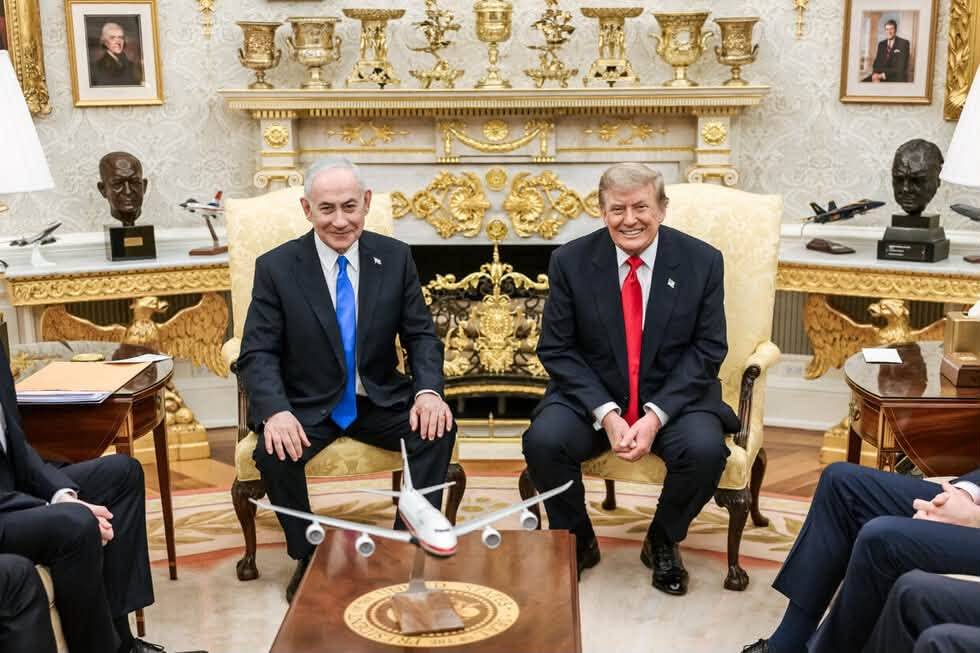
Trump and Netanyahu in the White House – Visual China
Trump's intervention in the Israeli elections is not isolated within his overall actions during his second term. According to statistics from the Reason magazine, during his second term, Trump has openly supported Hungarian Prime Minister Orbán, Japanese Prime Minister Shinzo Abe, Argentine President Cristina Fernández Mieles, Honduran President Guillermo Santos Zapateport, and right-wing candidates in Colombia.
According to CNN, in most cases, Trump has promoted leaders who “support his populist nationalism, flatter him, or face legal battles similar to their own.” In this specific case involving Israel, CNN further noted that if Trump can help Netanyahu get away from criminal prosecution, he will “make Netanyahu grateful to him personally.”
A comment in The Washington Post stated: "Former presidents would occasionally express their preferences, but they often regretted it later. Bill Clinton supported Boris Yeltsin... Barack Obama criticized Netanyahu during the Israeli elections in 2015. But few U.S. presidents have openly interfered in foreign politics like Trump."
According to Reuters, Herman noted that Trump's delayed endorsement "may help to win back some wavering supporters of Netanyahu, but it is unlikely to attract widespread support." Reuters also pointed out that the war with Iran has entered its seventh month, disrupting the global energy market, destroying key infrastructure, and causing economic instability in the region. Before the congressional elections on November 3rd, this war is not popular among American voters, and domestic support for Israel has also declined due to the conflict with Iran and the Gaza war.
Similar judgments are also popular within the Israeli political arena. A source from the right-wing party Likud said that Trump’s popularity among Israeli voters, especially those on the right, is not what it used to be. This endorsement may not help Netanyahu much, and he hasn’t invested much effort into it. “Trump won’t endorse other opponents, so this endorsement is certainly beneficial, but not essential.” At the same time, while Netanyahu’s opponents are still watching, their vigilance has decreased compared to before. A senior Israeli opposition figure said, “A year ago, our camp would have called anyone close to Trump to try to prevent him from endorsing them. Now it doesn’t really matter anymore; that kind of influence is no longer present.”