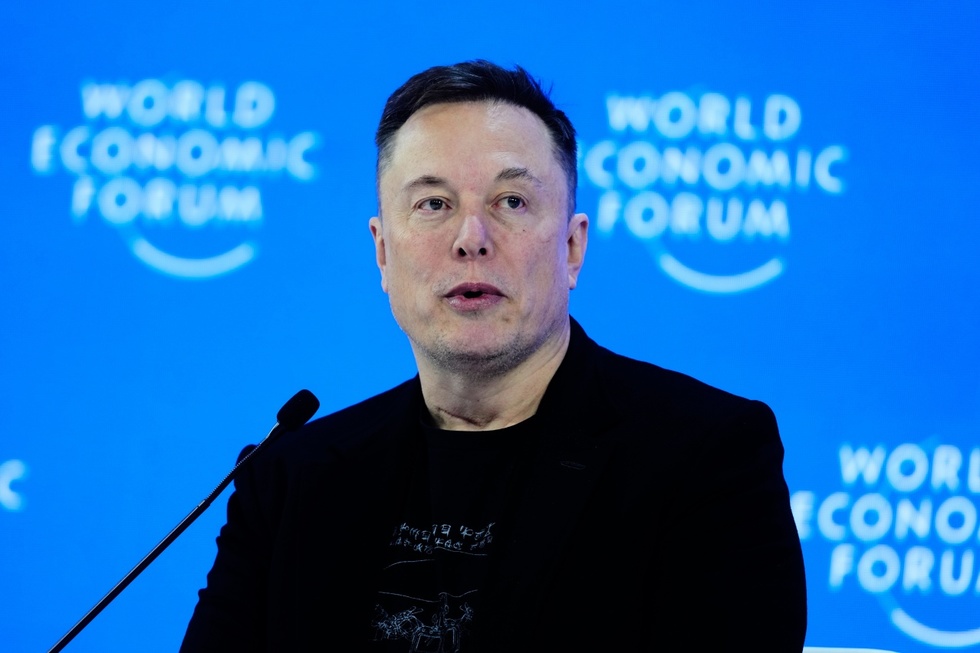
Last year, he also threatened to start anew, but this year he has become the Republican Party’s biggest donor.
As the U.S. midterm elections enter their final stage, Elon Musk once again uses an astonishing number to prove that he has not stepped back from politics.
The New York Times reported and was confirmed by Musk’s team that since July this year, Musk has invested over $276 million in Republican political organizations and his own super PAC. Over the entire 2025-2026 election cycle, he has invested approximately $366 million in federal political committees, which is more than the $290 million invested during the 2024 presidential election cycle.
The largest contribution was $158 million invested in the Senate Leadership Fund, which helps the Republicans win seats in the Senate. This is considered one of the largest single political donations in American history. Additionally, over $76 million went to America PAC, a fund created by Musk himself.
Most intriguing is that it has only been over a year since Musk announced his intention to reduce political involvement.
In May 2025, after experiencing the first months of Trump's second term in Washington politics, Musk publicly stated that he would "significantly reduce" political spending in the future, as he felt he had "done enough."
Subsequently, the relationship between the two deteriorated rapidly.
Musk fiercely attacked the large-scale tax and spending bills pushed by Trump, while Trump publicly threatened to cut government subsidies and contracts for Musk's companies. The two sides engaged in mutual attacks on social media platforms, with Musk even announcing the formation of an "American Party" in July 2025, aiming to break the dominance of the Democratic and Republican parties.
But this third-party plan ultimately did not actually get off the ground.
A year later, the two stood together again.
On October 8th, Trump personally awarded Musk the National Science Medal of the United States, and praised his technological achievements. The White House even emphasized in Musk's official recognition that he has promoted America's technological leadership in fields such as space, artificial intelligence, communications, and manufacturing.
If you only read this far, it's easy to misinterpret the story as "Trump and Musk have reconciled."
However, $2.76 billion in destination funds suggests that the situation may not be as straightforward as it appears.
This time, Musk did not place his entire personal political influence on Trump, as he did in 2024. Instead, he invested a significant portion of his funds into the America PAC that he controls.
This organization has now entered seven key Senate states and nearly 30 House electoral districts, and has established a large offline mobilization force. In just the past week alone, America PAC deployed about 3,000 paid campaign workers; as of now, the organization claims to have visited the doors of approximately 6.5 million voters.
Its goal is also very clear: it is not to persuade swing voters, but to find those who are politically conservative but have had lower voting rates in the past, and then find ways to get them to the polls.
This is essentially a matter of tradition involving political parties.
It is also worth noting that America PAC has clearly stated that it plans to continue its activities in the 2028 presidential elections.
This means that the money that Musk invested today is not just for the mid-term elections on November 3rd.
In 2024, Musk became even more of a super-rich benefactor: he donated nearly $300 million to help Trump return to the White House.
By 2026, he is trying to become a different kind of person—one who not only contributes money but also has his own voter database, grassroots organizations, advertising channels, and political teams.
In other words, he is moving from "financing the Republican Party" to "owning a portion of the Republican Party's political infrastructure".
This also explains why Musk, despite having such a strong conflict with Trump, still ended up back in the Republican camp.
For someone who wants to have a long-term impact on American politics, creating a third party would be too costly; taking over, funding, and transforming part of the Republican Party's machinery would be much more practical.
Moreover, Musk's current political stance is also significantly different from that in 2024.
He no longer holds large-scale campaign events frequently, and rarely takes a direct role in supporting candidates. The number of discussions about the midterm elections on social media has decreased significantly compared to two years ago. What has actually grown rapidly are the funds, data, and grassroots organizations that operate behind the scenes.
This may be Musk's biggest change in 2026.
In 2024, he wants to help Trump win an election.
In 2026, he seemed to be thinking about a more long-term issue.
Therefore, it is not contradictory for Musk to get closer to Trump.
Trump still holds the majority of the Republican Party's support, so Musk has no need to compete directly with him. However, through the America PAC, he is gaining a capability that almost all tech billionaires have never had—not just writing checks for politicians, but actually organizing voters themselves.
Trump needs Musk's money.
The Republican Party needs ground organizations from America PAC.
By 2028, Republican candidates who hope to inherit Trump's political legacy may still need this machine from Musk.
This is where the real focus should be on these 366 million dollars.
Musk indeed tried to establish a new political party last year.
Now it seems that he may have found a cheaper and more effective way to do things.