This year, he was promoted to a tenured professor in the United States, but he decided to give up the favorable research conditions there and return to China to start a new career. Facing the efforts of his former employer to retain him, the 49-year-old Chinese scientist Wu Jun remained firm in his decision.
On October 15th, Hong Kong English media outlet The South China Morning Post published an interview with Wu Jun. This stem cell research expert, who has studied and worked in the United States for over 20 years, officially joined Hangzhou West Lake University in September this year as a chair professor of stem cell biology and regenerative medicine.
During the interview, Wu Jun was sitting in a temporary office at West Lake University. There were also unopened luggage on the shelves, and new laboratories and offices were still under construction.
This is just a temporary office, my lab and office are still being arranged. He said.
Just earlier this year, Wu Jun was promoted to tenured professor at the University of Texas Southwestern Medical Center in the United States. When his former employer learned that he planned to leave, they tried to retain him sincerely, even considering proposing a new compensation plan, but Wu Jun ultimately declined.
"I had already decided to return to China; no amount of money could keep me there," Wu Jun told The Nanda Morning Post.
For this scientist who is at an upward phase in his research career, returning to China was not due to a lack of development opportunities in the United States. On the contrary, the continuous accumulation of scientific talents in relevant fields in China and the increasingly active academic environment have become important factors that led him to make this choice.
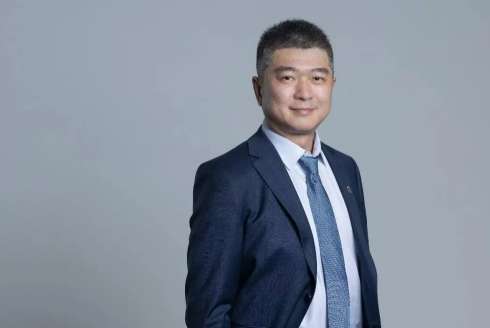
Wu Jun, born in Shandong in 1977, graduated from the School of Medicine at Shandong University with a bachelor's degree. In 2003, he went to the University of Tennessee in the United States to pursue a doctoral degree in life sciences. Subsequently, he conducted postdoctoral research at the University of Southern California and the Salk Institute for Biological Sciences.
In 2018, Wu Jun joined the Department of Molecular Biology at the University of Texas Southwestern Medical Center as an assistant professor. Thanks to his achievements in stem cell biology, embryonic development, and cross-species chimeric studies, he was promoted to associate professor in 2023, and finally to full professor in 2026.
Wu Jun has considerable international influence in related fields.
In 2017, the research team he participated in successfully created human-pig chimeric embryos, which attracted attention from the international scientific community. Chimeric embryos refer to embryos that contain cells from another species inserted into an animal embryo. This approach allows researchers to study how different species' cells develop together and to explore the possibility of creating transplantable human organs using animals in the future.
In this experiment, researchers injected human stem cells into pig embryos and implanted the embryos into sows. The research team implanted a total of 2075 embryos, of which 186 developed to the 28th day stage.
This research is still in the stage of basic science, but it provides new directions for organ regeneration medicine.
Since then, Wu Jun's team has also achieved a series of results in areas such as multi-functional stem cells and embryonic models derived from stem cells. In 2024, he received the Award for Outstanding Young Researcher from the International Society for Stem Cell Research (ISSCR).
For a scientist who is in the midst of a rising career in research, why would they leave the United States at this time?
Wu Jun told The South China Morning Post that one of the important factors that drove him to make this decision was the continuous accumulation of scientific research talents in relevant fields in China.
Including us in the laboratory and other laboratories that cultivate people, among those doing research on embryonic stem cell models, I think there are many people who are working in China now. He said.
Wu Jun said that many postdoctoral researchers he trained in Texas have returned to their countries, and they have demonstrated world-class levels of performance in their respective research positions.
In his view, China has already established a clear advantage in research fields such as human embryonic development, embryonic models derived from stem cells, and organ models.
China has obvious advantages in research areas such as human fetal development, embryonic stem cell sources, and embryo and organ models. He said.
Wu Jun also mentioned that Westlake University has attracted a large number of young scientists who have received training in world-class laboratories.
These researchers bring new scientific concepts, knowledge, and technology back to China, and also create a vibrant academic atmosphere in universities.
He believes that China's emphasis on cutting-edge life science research, as well as the research environment that is relatively favorable for the study of human embryonic models, are also important reasons that led him to decide to return to his home country.
In fact, Wu Jun's connection with Westlake University did not begin this year.
According to The South China Morning Post, he began paying attention to this newly established research university around 2018.
At that time, Yu Hongtao, a scientist who had worked at the University of Texas Southwestern Medical Center for nearly 20 years, decided to join Westlake University. This gave Wu Jun a deeper understanding of this university located in Hangzhou.
After that, at the invitation of scholars such as Hong Tao, Wu Jun visited West Lake University several times to participate in academic exchanges and give academic lectures.
As the communication continued to deepen, he became increasingly familiar with the scientific research environment and development direction of Westlake University.
This year, considering his own research development stage, as well as the support and expectations of his family, Wu Jun believes that the time is ripe to return to his country full-time.
According to the official website of Westlake University, Wu Jun will officially join the university in September 2026 as a Chair Professor of Stem Cell Biology and Regenerative Medicine. He will also lead the Laboratory of Stem Cell Embryology and Chimeric Biology.
Lecture Professor is the highest rank level in the faculty system of Xihu University.
Currently, he is forming a new research team, and it is expected that dozens of doctoral students and post-doctoral researchers will join in the future.
For future research, Wu Jun hopes to continue exploring the fundamental questions in life sciences: How exactly does life develop and form at the molecular and cellular levels?
He plans to use pluripotent stem cells to create in vitro models of early human embryonic development, to study how cells differentiate and tissues form during embryonic development, as well as how different cells interact with each other.
These studies are expected to help scientists gain a deeper understanding of early human development processes, providing new tools for disease research and regenerative medicine.
Wu Jun's team will continue to advance research on cross-species chimeras, exploring whether it is possible to cultivate specific tissues and organs using the developmental environment within animals.
In the long term, this research direction has the potential to provide new solutions for addressing the shortage of transplanted organs. However, there are still many scientific and technological challenges that need to be overcome before it can be truly implemented in clinical practice.
In addition, artificial intelligence will also become an important research tool in Wu Jun's new laboratory.
He plans to introduce AI algorithms into stem cell research, to accelerate the screening process for experiments related to organ generation, improve research efficiency, and explore the creation of more functional embryonic models.
In addition to continuing to conduct frontier research, cultivating young Chinese scientists is also a major undertaking that General Wu hoped to devote himself to upon returning home.
According to Westlake University, Wu Jun's future research will focus on the regulation of pluripotent stem cells, biological disorders across species, and the mechanisms of human early embryonic development.
Meanwhile, he also plans to use stem cell research platforms to explore some species in nature that possess special biological abilities. These include animals with antifreeze capabilities or natural anti-cancer properties. He aims to uncover the molecular mechanisms behind these characteristics.
These research directions involve both fundamental issues in life sciences and are closely related to potential applications such as regenerative medicine and disease treatment.
From 2003 when he went to the United States to study, until 2026 when he returned to China, Wu Jun spent more than 20 years studying and conducting research overseas.
This time, he left not a position that was facing development difficulties. On the contrary, he has just been appointed to a tenured professorship at a university in the United States, and his former institution also hopes that he will stay there.
But in Wu Jun's view, the continuous accumulation of scientific research talents in relevant fields in China, the continuously improving research environment, and the opportunities to cultivate the next generation of young scientists are sufficient for him to make a new choice.
Today, a new laboratory is being established at Hangzhou West Lake University. For this scientist who has been deeply involved in stem cell and embryonic development research for over 20 years, a new scientific journey is about to begin.
