Mongolia's grassland fires have once again affected neighboring countries.
The fire location is in the Numrug Strictly Protected Area, in the county of Kharahat Ghola, Eastern Province, in Mongolia’s easternmost part. From a map perspective, Eastern Province resembles a wedge, deeply embedded between Xilin Gol League, Xing'an League, and Hulunbuir City in Inner Mongolia Autonomous Region of China, adjacent to the famous ecological tourism city of Alshan in China.
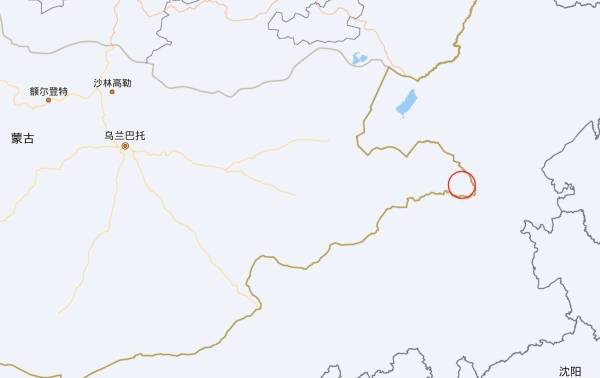
Approximate fire zone location illustration
On October 8th at 11:55, after the fire started, the intense flames became uncontrollable due to the strong northern winds in the autumn grasslands and the extremely dry grass layer. The fire spread rapidly southward and approached the Chinese border around 1:00 pm on October 9th. Dense smoke spread to cities such as Ulanhot and Tuquan in Xing'an League, China. For several days, the skies over these areas remained dark, and there was a noticeable accumulation of ash indoors.
Inner Mongolia has activated the highest-level emergency response. More than 3,400 firefighters and local fire-fighting forces have been deployed along the border to establish defensive lines. Barriers have been constructed, and combustibles have been cleared. For the first time, mobile intelligent weather stations and anti-fire remote sensing platforms have been used to cooperate with the New Zou 60 rainfall-enhancing aircraft and ground rockets in artificial rainfall operations. After four days and nights of hard work, by October 13th, the fire was contained beyond the border line.
In comparison, Mongolia sent a total of 215 personnel for the defense role.
Within Mongolia, the fire caused severe ecological damage. According to preliminary estimates by the Mongolian Emergency Management Agency and the government of Dongfang Province, the affected area spans about 96 kilometers in east-west direction and approximately 82 kilometers in north-south direction, covering a total area of about 7,200 square kilometers. Chang·Yao Le, the governor of Dongfang Province, admitted that about 80% of the Nurmug Strict Protection Area was destroyed, with almost no living creatures remaining in the area. A large number of wild animals, including brown bears, Ussuri otters, hares, and wild boars—many of which are rare and endangered species—were forced to cross the border to escape. Chinese border guards created passageways for these migratory animals while preventing the spread of the fire.
More shocking than the disaster itself is the almost absurd cause behind it.
On October 7th, U. Otgonbayar, a member of the Mongolian National Great Hural (parliament), along with senior management of Mobicom, Mongolia's largest mobile communication operator, including its CEO Yoshikou Yokochi, visited Songbelle Port in Harahar Highland County to attend the delivery ceremony for the 4G network and high-speed fiber optic connectivity project at the border guard station.
The next day, which was October 8th, without any official approval from the Mongolian Border Guard General Administration, and during the autumn season when entering mountains for fire prevention is strictly prohibited, a group consisting of three executives of Mobicom, the brother of former congressman Ji Batzandandan, and local guides, traveled in five off-road vehicles. They entered the Nurmug Nature Reserve, where human activities are strictly restricted by law, solely based on an oral permission from Colonel Na Gangtugus, commander of the 0198th Mongolian Border Guard unit.

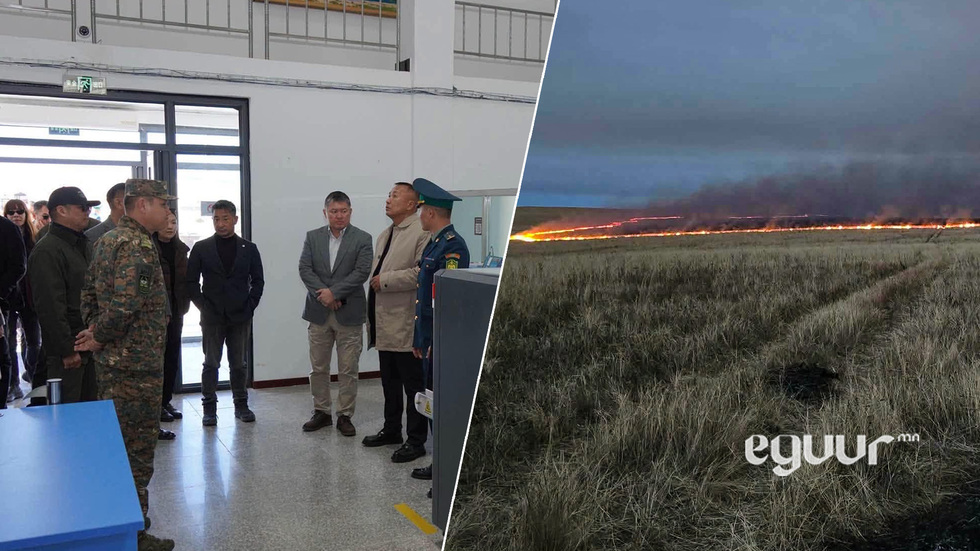
Mongolian politician U·Ogtynbayar and directors of Mobicom company in Eastern Province
Mongolian media reported that the purpose of their entry into the protected area was to catch the threatened freshwater sturgeon, which is listed in the Mongolian Red Book. However, there is no confirmation from the police or any companies yet. While driving across the wilderness, the Nissan Terela SUV driven by Mobicom's Japanese director caught fire due to a missing or damaged undercarriage panel, with a large amount of hay getting stuck near the exhaust pipe, causing the vehicle to burn out and eventually sparking the fire in the grassland.
The multinational fire that occurred in October 2026 was by no means an isolated incident. Along the long border between China and Mongolia, large-scale fires in the forests and grasslands on the Mongolian side occur almost every one to two years, becoming a “periodic disaster” that burdens China. Moreover, the severe sandstorms that sweep across northern China every spring, as well as the cross-border atmospheric pollutants that move southward with the cold air currents in winter, all have their root causes in Mongolia.
Mongolia has become the "number one exporter" of ecological risks in Northeast Asia. On the surface, this is due to its vast and sparsely populated natural conditions. However, the deep-rooted cause lies in the ecological dilemmas that are intractable within the country.
The primary cause of the problem is overgrazing. Although Mongolia has one of the highest per capita land areas in the world, its grasslands are under devastating “livestock density” pressure. According to statistics from the United Nations Development Programme, the total number of livestock in Mongolia has exceeded 71 million, which is 1.5 times beyond the natural carrying capacity of the country’s grasslands. Overgrazing and degradation have occurred in more than 75% of the country’s pastures, and the rate of vegetation growth has dropped to one-fifth of what it was before.
What’s worse is that, driven by profits in the global cashmere market, the proportion of goats among livestock in Mongolia has soared from 19% to 60% over the past 30 years. Unlike sheep and cattle that only eat grass, goats pull the grass out of the soil when feeding. This causes more direct damage to the topsoil and vegetation on the grasslands, quickly turning once vast prairies into bare sandlands.
In addition to overgrazing, extensive open-pit mining also plays a significant role in Mongolia's economy. The mining industry contributes about 30% of the country's GDP and more than 90% of its exports. Open-pit mining involves the removal of topsoil and damage to groundwater systems. Degraded mines and tailings waste further exacerbate land degradation.
Due to the combined effect of multiple factors, as much as 77% of Mongolia's territory has experienced desertification and land degradation. In 45.4% of the country, the landscape is in a "severe" or "extremely severe" state of desertification. The Gobi Desert is encroaching on the grasslands at a rate of 6 to 7 kilometers per year. During the dry seasons (March to May) and autumn droughts (September to October), the remaining dry grass has extremely low water content. With strong winds in the north, even a small spark could become a wildfire that spreads over hundreds of miles.
Not all wildfires in the grasslands are natural disasters. Approximately 95% of wildfires in Mongolia are related to human activities, including burning waste, using fire for outdoor purposes, sparks from agricultural machinery and vehicles, and smoking. In some pastoral areas, burning waste is still considered a traditional practice that promotes new grass growth. As long as the fire does not burn down people’s yurts, local authorities and communities do not even consider it a “fire disaster” but rather a normal use of fire for “production and living activities”.
As for fires caused by hunting, they are quite common. The UN Food and Agriculture Organization’s "Global Forest Fire Assessment 1990–2000" section on Mongolia mentions that some people who go into the mountains to collect or hunt deer antlers set fires in the forests for warmth. Sparks from vehicle exhaust, as well as military tracer bullets that end up in the hunting market, can also ignite vegetation. The report also notes that after the economic transition and the end of Soviet support, Mongolia’s capabilities for aerial surveillance and rapid fire extinguishing have sharply declined, significantly increasing the damage caused by fires.
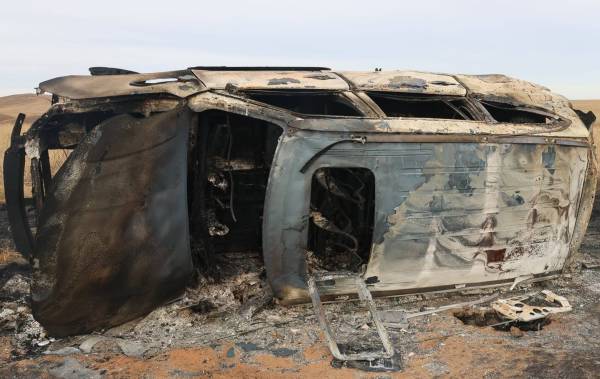
MoBicom representative's car caught fire and burned down within the protected area. Mongolian News Network
If high-ranking officials fishing caused a fire, which is already quite bizarre, then stretching the timeline further reveals that Mongolia's history of ecological disasters isn't lacking similar absurdities. These appear to be random incidents, but they often point to the same set of problems: lack of regulation, institutional failures, and the pressure of short-term livelihoods over long-term environmental costs.
In the history of mining in Mongolia, there was a special group—the "Ninja Miners". From the late 1990s to the early 2000s, due to a large number of livestock dying from freezing and rising gold prices, many pastoralists who lost their livelihoods and unemployed people flocked to the tailoring areas of gold mines and river basins to engage in illegal manual gold panning. They carried green plastic gold panning basins, and from a distance, they resembled ninjas from animated films, which is why they were given the name "Ninja Miners".
In the Zamar area, about 190 kilometers northwest of Ulaanbaatar, there used to be a large number of gold miners along the Tuula River. The area was even jokingly called “the Persian Gulf”. The river valley was extensively dug, leaving deep pits caused by heavy machinery and manual excavation. It was common to see livestock dying, pastures being damaged, and water sources being disrupted.