At the beginning of the Russia-Ukraine conflict, many Western countries openly declared they were “welcome” to Russian refugees. However, over four years later, Europe and America have significantly tightened their refugee asylum policies, forcing a large number of failed asylum applications from Russian activists and deserters back to Russia.
According to the BBC, in December last year, a flight landed in Moscow, and Russian security officials were already waiting at the airport. The flight carried Russians who had been expelled from the United States, including activists who failed to obtain political asylum.
One of the expelled individuals, Kaja, stated that she left Russia two years ago to apply for asylum in the United States. She submitted evidence proving her involvement in protests and her membership in opposition organizations, but the U.S. government rejected her asylum application.
According to Kaja, after arriving in Moscow, officials from the Russian Federal Security Service (FSB) issued military service documents to all male repatriates, requiring them to register at local conscription offices.
During Trump's second term, the overall number of immigrants expelled from the United States increased. The number of Russian citizens deported surged from 222 in 2023 to over 1,200 in 2025. Activists claim that among those deported are dissidents and Russian soldiers who deserted from the military. Some of those returned to Russia end up in prison or are sent to battlefields.
"Anti-war activist" Leonid Melekhin is an example of such a person. He was arrested during protests in Russia and later went to the United States to apply for asylum. After being returned to his country last year, Melekhin was charged with "defending terrorism" and sentenced to six years in prison.
Exiled Russian opposition member Andrei Pivovarov of the "Anti-War Committee" said: "Many people have been sentenced to eight years in prison after crossing into Russia's border."
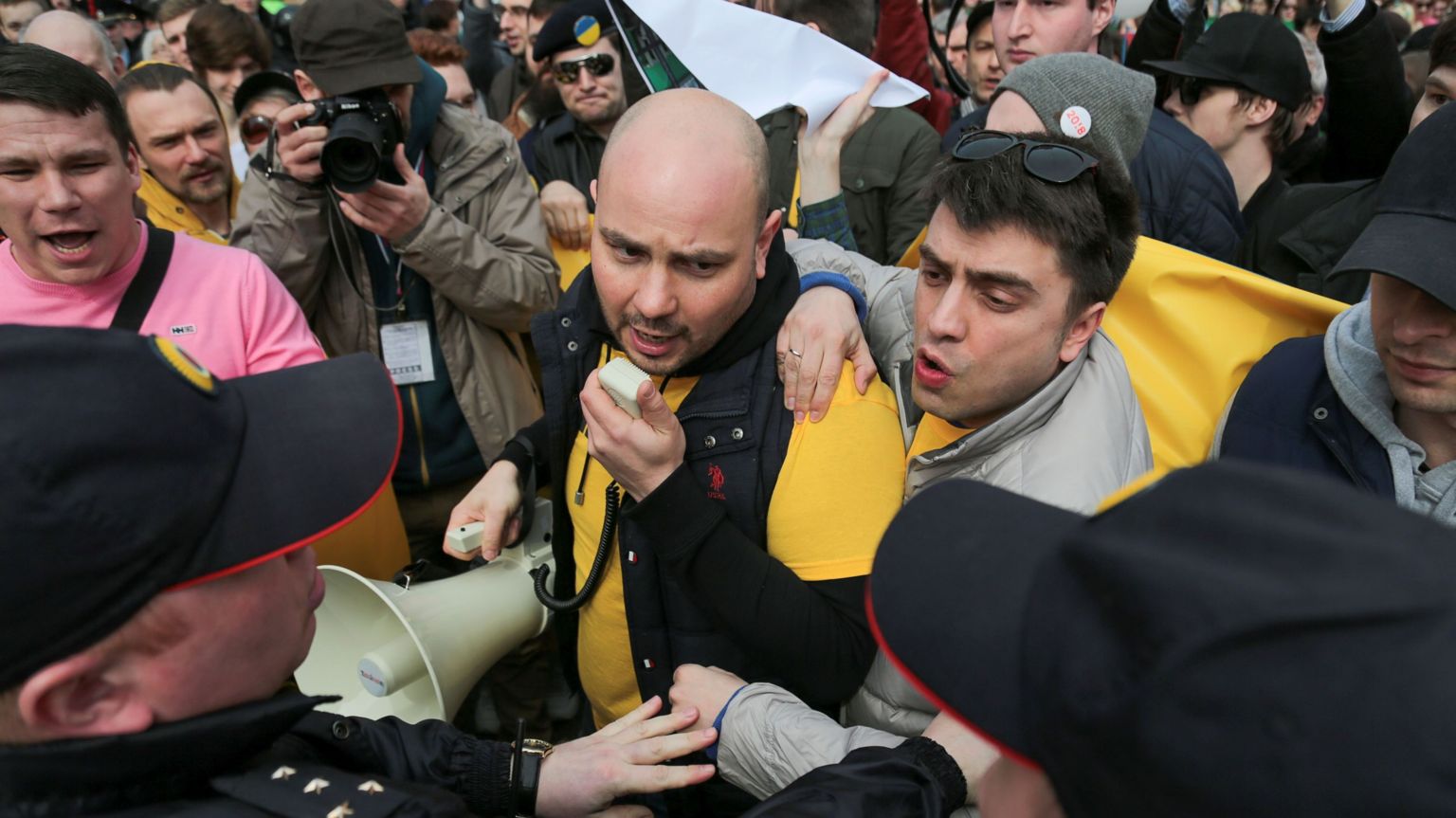
Pivowaroff was sentenced to four years in prison by Russia for "organizing activities against organized political groups." BBC
Many European countries are also implementing repatriation measures. The 'Anti-War Committee' has revised its advice for Russian dissidents seeking refuge: the EU is no longer safe, and it is better to find another refuge.
Germany significantly increases the number of deportations of Russian citizens. Official German data shows that only 7 Russian citizens were deported in 2023, and this number increased to more than 110 in 2025. Between 2022 and 2025, more than 21,000 Russians applied for asylum in Germany. However, the approval rate dropped from 29% in 2023 to just 6.8% in the first 11 months of 2025.
The German Federal Immigration and Refugee Agency (BAMF) told the BBC that asylum eligibility is granted only to applicants who have “real and sufficient reasons for fearing persecution.”
Overall EU data shows that in 2024, Russian applicants received various forms of asylum protection at a rate of 23%, which dropped to approximately 17% in the first nine months of 2025.
As countries in Europe and America tighten immigration laws due to an influx of illegal immigrants and asylum applications, as well as under security pressures, opposition figures who are trying to escape Russian control have also become involved in this broader wave of immigration crackdowns.
The founder and lawyer of the organization 'Ark' (Kovcheg), which assists Russian activists in leaving the country, Anastasia Burakova, said that Western governments are focusing on cutting humanitarian programs and restricting asylum applicants. This round of tightening policies is in response to public concerns and the rising support for right-wing parties.
After a request for asylum is rejected, Russian applicants can usually leave the country on their own. However, an increasing number of them are forcibly repatriated, typically through third-country intermediaries to return to Russia.
Numerous Russian dissidents abroad complain that immigration officials deem their return home "harmless", often failing to understand the real risks they face.
Former Russian soldier Arzhom said, "I tried to explain that if I were sent back to my country, I would end up in prison or be sent to the battlefield and die. But they simply didn’t believe me."
"Other countries could investigate my case and provide me with protection. Why not give me this opportunity, instead they specially send me back to Russia? This has completely ruined my life." said the deserter.
According to reports, after being deported to Moscow, Alchom was detained in a military detention facility, but he managed to escape and is currently hiding overseas.
Bracco said that the number of people seeking help and wishing to leave Russia in August this year has increased tenfold compared to May. For those who plan to flee now, the question is whether the West will provide them with asylum or deport them back to their country.

