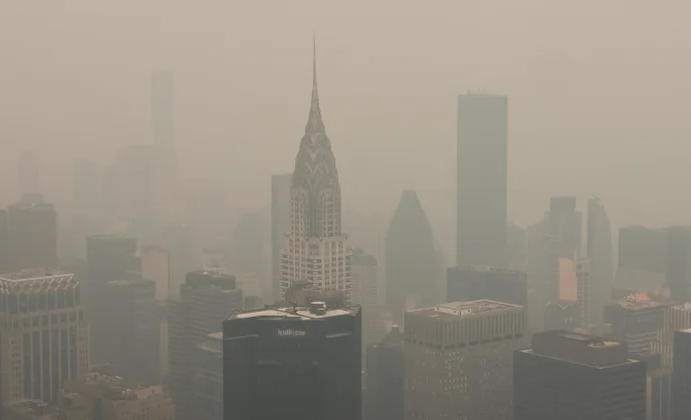
According to reports by the BBC on October 15th, as toxic smoke continues to be emitted from wildfires in Indonesia's forests and peatlands, authorities in Indonesia are studying an experimental method to disperse the haze.
It is reported that a test will be conducted on the 15th, where an aircraft will disperse dry ice particles—solid carbon dioxide—over the state of South Sumatra. This region is one of the most severely affected by the fire-related haze.
At this time, Indonesia is facing the worst wildfire season in ten years. The extreme El Niño phenomenon has exacerbated the drought conditions, making it even more difficult to extinguish the flames.
As efforts to clear dangerous air become increasingly urgent, authorities in Indonesia and neighboring Malaysia have turned to various methods of artificial weather modification. These include the artificial seeding of clouds: by spreading compounds such as silver iodide to form ice crystals, thereby accelerating the natural process of water vapor condensation within the clouds.
The authorities have been carrying out such tasks for several weeks, but the experiment involving dry ice on the 15th was different.
The Minister of Political and Security Affairs, Du Dong·Abdurahman, stated that "ice fog" does not interact with clouds to trigger rainfall, but rather aims to "decompose" haze in the lower atmosphere, enabling it to rise.
Abdulrahman said, 'If this experiment is successful, we will continue our operations in the core areas of smog, such as Central Kalimantan and its surrounding regions.'
The authorities said that 1.5 tons of dry ice will be used in this experiment.
Indonesia President Prabowo Subianto called on various agencies to intensify efforts to extinguish wildfires and mitigate the impact caused by the toxic smoke emitted from the fire sites.
From the 14th to the 15th, a new artificial cloud seeding operation will also be carried out in Central Kalimantan, another area in Indonesia severely affected by smog.
Meanwhile, ground firefighters continue to fight the uncontrolled fires. Authorities have deployed dozens of helicopters to try to extinguish the wildfires. However, these efforts are sometimes disrupted due to poor visibility in the smog.
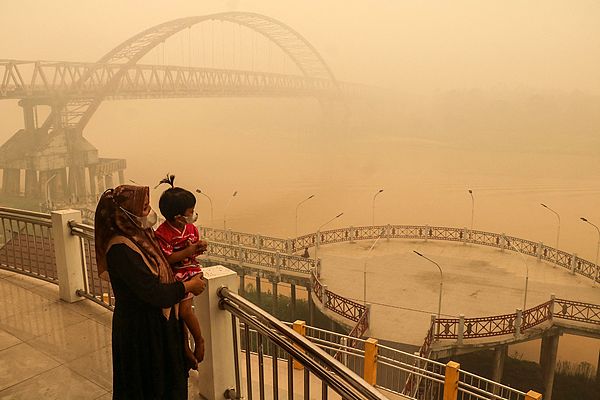
Residents in Kalimantan and southern Sumatra are suffering the worst impacts of toxic smoke. The air in many cities has turned a amber-colored, dusty appearance.
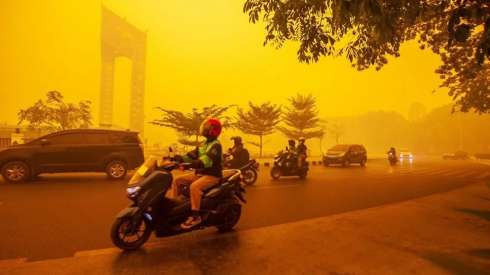
Photos of the affected areas’ networks, illuminated in amber colors
Pollutants also cross borders into neighboring countries like Singapore and Malaysia. As the air quality index soars to unhealthy levels, it raises concerns about public health.
According to the independent forest monitoring platform Nusantara Atlas, more than 1 million wildfire sites have been recorded in Indonesia this year, destroying nearly 900,000 hectares of land.
Local people’s anger is largely directed at agricultural companies, which burn vegetation as a cheap way to clear large areas of land. Indonesian police have listed more than 200 individuals and 9 companies as suspects related to these fires.