(Text by Observer Network, Guo Guanghao)
"We should open an 'economic capital' era with Seoul as the 'economic capital city' and Sejong City as the 'administrative capital city', like New York and Washington D.C."
On September 18th, South Korean President Li Jae-myung announced this in Suseong Special Autonomous City. South Korea's long-term 'capital relocation' plan is now facing a major turning point.
A month after that, the Korean government announced on March 13th the largest scale of the second round relocation plan for central administrative organs.
Among them, what is most notable is the decision by the South Korean government to overturn an arrangement established back in the early stages of the “capital relocation” plan more than 20 years ago: core departments such as the Ministry of Foreign Affairs, the Ministry of Unification, and the Ministry of National Defense, which were exceptionally permitted to remain in Seoul in 2005, are also included in the relocation list.
Strictly speaking, this is not a legal relocation of the capital, but rather a “second round of relocation of the central administrative organs.” However, since its ultimate goal is to make Sejong a national administrative center, Korean politicians and media have long referred to this series of policies as “construction of an administrative capital.” Therefore, it can be simply called “relocation of the capital.”
After several governments' efforts, adjustments, and even intense debates, the South Korean government has decided in principle to move all central ministries and commissions to Sejong. However, there are still many questions regarding whether this ambitious plan will actually be implemented. In particular, how will South Korea maintain national security and the normal operation of diplomatic activities after the relocation of foreign affairs and defense agencies?
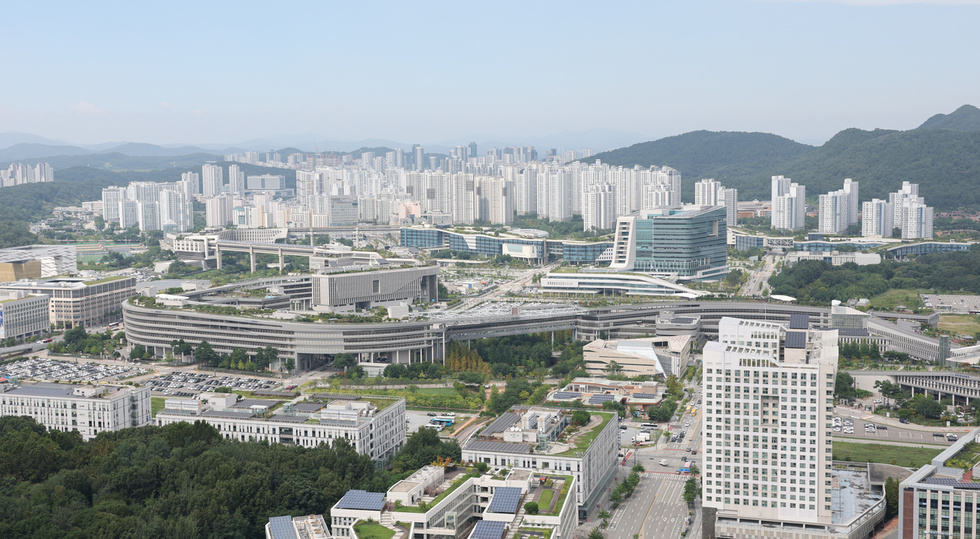
On September 3, the South Korean government announced the “Direction for Advancing the Second Round of Relocation of Central Administrative Organs”. It proposed to further strengthen the national administrative system centered around Sejong. The central administrative organs that remain in the capital area will be gradually relocated to Sejong, in order to reduce the administrative costs caused by having government departments located both in Seoul and Sejong.
At that time, the government had clearly proposed to include departments such as the Ministry of Justice and the Ministry of Gender Equality and Family, which had not been relocated before, in the second round of relocations. It was also planned to study the future locations of departments such as the Ministry of Foreign Affairs and the Ministry of Unification. However, arrangements regarding national security agencies such as the Ministry of National Defense have not yet been determined.
On October 13, the Korean Ministry of Public Administration and Security officially announced the new plan. At a press conference, the ministry stated that since the initial guidelines were announced on September 3, the government has conducted reviews of 142 administrative agencies in the capital region, held consultations with relevant departments, and solicited expert opinions in four rounds. After considering the functions, nature, and office conditions of various agencies, it was decided in principle to relocate all central ministries and commissions to Sejong, with only those agencies that provide services directly to the public or have close business ties with their locations being excluded.
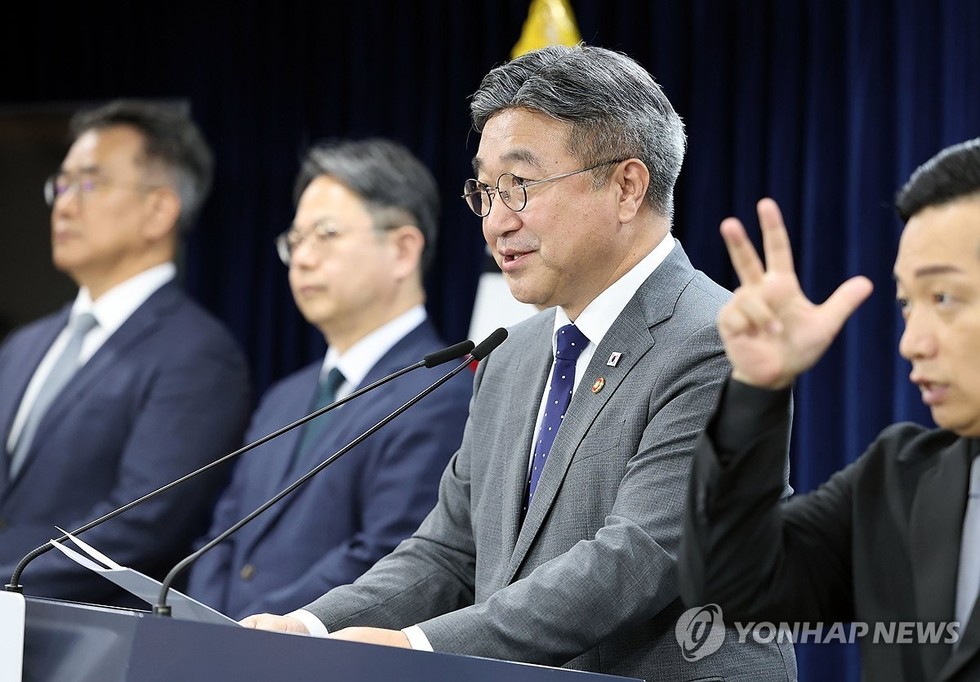
According to the final plan, the relocation will involve 44 agencies, resulting in a total of 9929 positions based on the approved civil servant staffing levels. It should be noted that this figure does not represent the actual number of people who will relocate, but rather the size of the civil servant staff assigned to each agency. Family members who will accompany the relocated personnel, as well as some non-civil servant staff members employed by certain agencies, are not included in this calculation.
The specific relocation is divided into two stages.
The first phase will be implemented in 2027, involving 27 agencies and 2,995 civil servants. These agencies do not need to build dedicated office buildings; they will primarily use leased office spaces within Sejong City to carry out their work.
Among them, six agencies including the Broadcasting Media Communication Committee, the Personal Information Protection Committee, the Atomic Energy Safety Committee, the National Human Rights Committee, the National Education Committee, and the Foreigners’ Affairs Department plan to relocate first in the first half of next year. The total number of civil servants involved is 1,101.
In the second half of the year, 19 institutions including the Financial Commission and some central government departments and advisory committees will continue to relocate their locations.
As for the Ministry of Justice and the Department of Gender Equality in Families, both departments were originally scheduled to relocate by 2027. However, due to current laws stipulating that they cannot be relocated to Sejong, the government decided to determine the exact relocation date based on the progress of legal reforms. The total number of civil servants is 1,107.
The second phase involves 17 agencies and 6,934 civil servants. Since these agencies are responsible for special tasks such as diplomacy, security, investigation, confidentiality, or monitoring, it is necessary to build independent office buildings and supporting facilities. Construction is expected to begin in 2027, with the goal of completing the relocation in several phases around 2031.
Including the Supervision Institute, Police Bureau, Prosecutor's Office, Major Crime Investigation Bureau, and Senior Public Official Offender Investigation Department, which involve 4171 government positions. Additionally, there are nine affiliated institutions: The Ministry of Foreign Affairs, the National Defense Propaganda Institute, and the Land Survey Information Institute, for a total of 657 positions.
The three most-watched departments are the Ministry of Foreign Affairs, the Ministry of National Defense, and the Ministry of Public Security, with a combined total of 2106 civil servant positions.
Adding the Ministry of Justice and the Ministry of Gender Equality and Family, a total of five central ministries that were originally excluded from the relocation targets by law will be included in the second round of relocations.
The South Korean government estimates that measures such as using leased office buildings and supporting the relocation of civil servants will cost approximately 897 billion won in 2027. Building new office buildings is expected to cost about 3.1 trillion won, making the total cost for both measures around 3.2 trillion won. The government plans to allocate approximately 286 billion won for basic design costs in 2027, to initiate the construction process for the new office buildings.
The government also plans to provide moving expenses and initial resettlement fees for civil servants who will be relocated. Additionally, the government is considering providing temporary transportation support for civil servants who are unable to relocate immediately due to reasons such as housing issues or children's school trips. The existing government office buildings in Seoul and Gwangju may be transferred to special local administrative agencies, or used by government agencies that currently rent private buildings.
However, not all state agencies will relocate out of the capital area.
Firstly, the Presidential Secretariat, National Security Office, and Presidential Security Department, which directly serve the President, have not been included in this list. The government stated that they will consider this issue again based on the timeline for the full implementation of the President Sejong’s office facilities in the future.
Secondly, the Supreme Court, the Constitutional Court, and the Central Election Management Committee, among other constitutional institutions, are not directly subject to the relocation of these administrative agencies. Their future arrangements need to be discussed separately.
In addition, the government has decided to retain some of the subordinate agencies that provide public services, including the National Gwangju Science Museum, the Central Radio Management Office, the National National Music Academy, the National Central Library, the Police Hospital, and the National Gugwan Museum. These agencies either directly provide public services to residents or handle services that have regional characteristics. Therefore, relocation is not necessary.
The Korean government emphasizes that the goal of this reform is not to concentrate all government agencies in the same city regardless of their nature, but to centralize national-level policy-making and administrative coordination functions in Sejong.
And this time the most symbolic change is that the departments of foreign affairs and national defense no longer enjoy special status.
Many Korean media also did not anticipate this disruptive decision. In reports from September, the relocation of the foreign affairs, unification, and defense departments was generally considered an issue that remained undecided.
According to a report by the 'Korea Daily News' on the 14th, during the previous presidential election, the current ruling party proposed moving all central administrative offices to Sejong, but also emphasized that full national consent and social consensus must be obtained. After the Lee Jae-myung government came to power, they focused on promoting the construction of office facilities for President Sejong, and did not explicitly announce the need to relocate foreign and defense departments.
Regarding this change, a government official explained to the 'Korean Daily News' that the government's national policy originally included the relocation of presidential offices and the additional relocation of central administrative agencies in the capital area. During the specific review process, it was decided to relocate all central departments to Sejong.
This indicates that the relocation of the foreign and defense departments is the result of a government policy aimed at centralizing all government agencies, rather than a mere adjustment of offices initiated by these departments.
But this decision does not mean that the relocation has met all legal requirements.
According to Article 16 of the current Special Act on the Construction of Administrative Central Complex Cities, the Ministry of Foreign Affairs, the Ministry of Unification, the Ministry of National Defense, the Ministry of Law, and the Ministry of Gender Equality and Family are still listed as agencies exempt from relocation. The South Korean government needs to promote amendments to the relevant provisions by Congress, removing these five agencies from the list of excluded entities. After that, procedures such as consultation with relevant agencies, public hearings, and official announcements regarding changes to the relocation plan must be carried out.
21 members of the Common Democratic Party, including Bok Ji-wang, submitted a proposal for an amendment to the Special Law on the 2nd of this month. The South Korean government plans to promote the legislation during the regular parliamentary session in the second half of this year.
South Korea's "relocation of capital" is also a complex process that has lasted for over twenty years.
