After reaching a diesel supply agreement with Russia, the U.S. government also pressured Ukraine to stop attacking Russian refineries, even threatening to cut off weapon supplies and intelligence sharing.
According to a report by the British ‘Financial Times’ on October 11, local time, several European officials revealed that the Trump administration is threatening to suspend a NATO-managed arms procurement mechanism for Ukraine, in order to force Kiev to stop attacking Russian energy infrastructure. Previously, U.S. President Donald Trump had reached an agreement with Russian President Vladimir Putin regarding diesel supply, aiming to alleviate the high fuel prices within the United States.
These European officials said that they received calls from American officials on the 10th and 11th, or were briefed on related conversations. The United States is putting pressure on European governments and Kiev, demanding that Ukraine stop attacking Russian refineries.
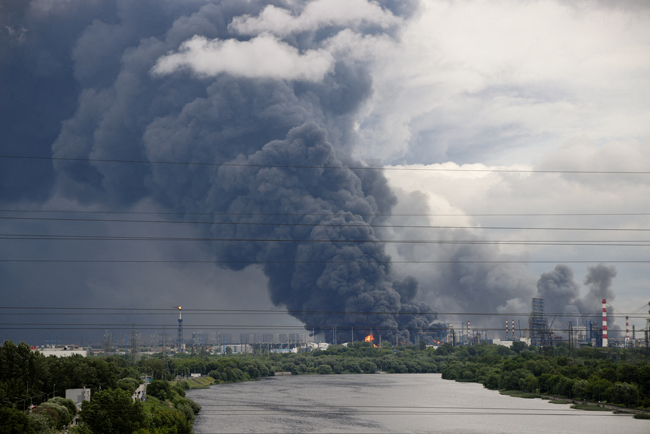
A Russian refinery was attacked by Ukraine
The US also threatened to cut off intelligence sharing with Ukraine and to suspend the supply of American weapons to Ukraine through the "Ukraine Priority List" mechanism.
An European official who received a call from a U.S. Department of Defense official said, "They are calling Kiev... They are calling everyone in Europe."
The PURL mechanism is managed by NATO. It primarily involves European allies funding the purchase of weapons manufactured in the United States, which are then delivered to Ukraine. The United States does not contribute any funds to this mechanism. Therefore, if the US decides to suspend this mechanism, even if European countries are willing to continue paying for the purchases, it may be impossible to provide Ukrainian forces with American weapons through this channel.
According to reports, among those who received contact from U.S. officials was Pavel Palyasa, a military advisor to Ukrainian President Zelensky and a former general of the 93rd Mechanized Brigade of the Ukrainian army.
The White House refused to confirm or comment on the call.
The direct context of the pressure from the United States is the diesel supply agreement that Trump just reached with Putin.
On October 9th, after a call with Putin, Trump announced that Russia agreed to immediately supply over 300,000 tons of diesel to the United States and global markets. Another 500,000 tons will be supplied in November, followed by an additional 1 million tons. In addition, based on the condition of Russian refineries, Russia will also supply 3 million tons of diesel in the short term.
The US Treasury announced on the same day that it would lift sanctions on Russian diesel trade, allowing related transactions and imports, with the validity period until April 7, 2027.
Since the United States launched war against Iran, the price of diesel in the U.S. has risen by about 70%. Data from the American Automobile Association shows that on October 9, the average price of diesel in the U.S. remained at $6.28 per gallon. As the midterm elections approach on November 3, the Trump administration is eager to lower fuel prices.
However, continuous attacks by Ukraine on Russian refining facilities have affected Russia's fuel production and export capabilities.
According to a report by the American news site Axios on the 10th, an informed U.S. official revealed that Trump had asked Zelenskyy at least six times to stop attacks on Russian refineries, but the Ukrainian side never complied. Subsequently, Trump decided to pursue a diesel oil agreement with Putin.
The official stated that although the attack on Russian refineries in Ukraine caused losses to Russia, it also increased the fuel costs for American consumers.
"The attack on the oil refinery caused pain for Russia, and also pain for the United States." said the official.
According to reports, Zelenskyy told Trump and his envoy Wittkowitz and Kushner that Ukraine was willing to stop attacks on Russian refineries, provided Russia ceased attacks on Ukrainian power facilities. However, U.S. officials stated that Trump hoped for Ukraine to cease attacks unilaterally and did not consider the impact of Ukrainian forces on Russian refineries to be equivalent to Russian forces’ attacks on Ukrainian power grids.
A Ukrainian official also said that Witkov and Kushner threatened to cut off U.S. intelligence sharing with Ukraine during their negotiations with the Ukrainian side. However, U.S. officials denied having made such a threat.
On October 11th, Trump suddenly announced on the “Real Social” platform that Russia and Ukraine had reached an agreement to cease attacking each other’s energy infrastructure.
"From now on, a power outage will be implemented in energy facilities during the Russian-Ukrainian war. Both parties have agreed to this. No violations are allowed!" wrote Trump.
This news came as a surprise to both Ukraine and Europe. Zelenskyy said in the evening that Trump’s announcement of a ceasefire for energy facilities was “good news for everyone, and what matters is making it a reality”.
He also pointed out that Russian forces were still using drones and glide bombs to attack Ukraine on that day, and a power plant in Kharkov was attacked that night.
Zelensky said that Ukraine has previously proposed several measures to ease the situation, but Putin has refused to accept them. He hopes that Russia will implement the ceasefire arrangements announced by Trump.
According to the Financial Times, it is still unclear whether Russia has agreed to this agreement. Zelensky’s office also stated that they are unaware of any cease-fire agreements.
Zelenskyy also mentioned earlier that Ukraine would be willing to hold presidential elections if Russia agreed to a 60-day ceasefire. The White House refused to say whether Trump would support this proposal.