From October 12th to 18th, the Paris Motor Show will kick off. Compared to two years ago, the lineup of participating companies has significantly expanded. Over 60 automobile manufacturers have confirmed their participation, including 20 Chinese brands, which is a doubling in the number of Chinese companies participating. At the same time, well-known brands such as BMW, MINI, and Jaguar Land Rover have confirmed their absence.
According to a report by Reuters on October 9th, the concentrated presence of Chinese brands has also attracted more industry observers and automotive professionals from China to pay attention to the Paris Motor Show. Participating in the exhibition is not only a window to understand the European market and observe competitors, but also an opportunity to get close to local consumers, dealers, and industry partners. As Chinese automakers accelerate their international expansion, the significance of the Paris Motor Show is evolving from just showcasing new cars to facilitating the exchange of market information and establishing commercial relationships.
International Automobile Manufacturers Organization Secretary-General François Roudier also said that the arrival of Chinese brands is helping to revitalize the auto shows. In his view, auto shows remain an important platform for automakers to capture consumers' attention. Brands that are absent from these events may thus miss opportunities.
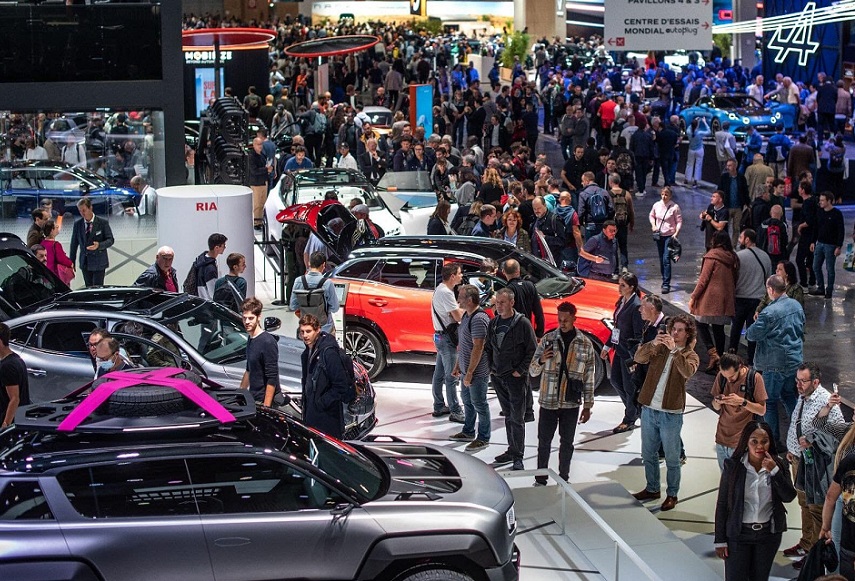
On one hand, Chinese brands are accelerating their move towards Europe. On the other hand, some traditional European automakers are adjusting their exhibition strategies. The changes in the lineup at the Paris Motor Show provide a window for observing the European automotive market. As the share of Chinese brands grows and European domestic automakers face operational pressures, competition between the two sides extends to multiple aspects, including product pricing, power systems, brand recognition, and market positioning.
One of the major highlights of this Paris Auto Show is how European brands respond to competition from Chinese automakers.
Reuters reported on October 9 that 20 Chinese car brands will participate in this Paris Auto Show, doubling the number compared to 2024. Brands such as BYD and Chery will continue to exhibit, while brands like Wenjue and Avita will also make their appearances. The increase in the number of Chinese brands participating in the exhibition reflects the expansion of their influence in the European market.
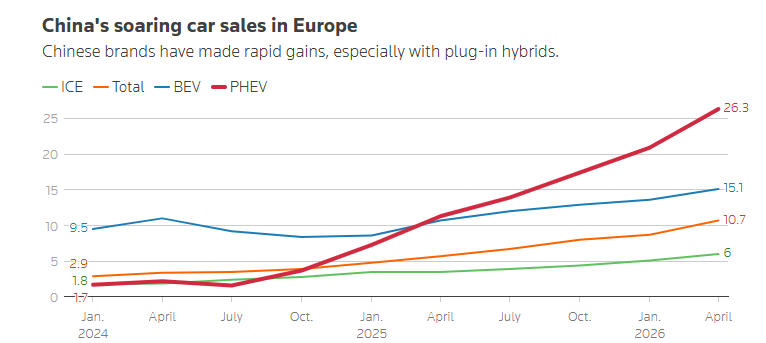
According to data released by Schmidt Automotive Research, in the second quarter of 2026, Chinese brands accounted for 10.7% of the European automotive market, which is a rise from 5.7% a year earlier. In the European plug-in hybrid vehicle market, Chinese brands’ share also increased from 2.2% two years ago to over 26%. This indicates that the competitiveness of Chinese automakers is expanding from pure electric vehicles to various types of power sources.
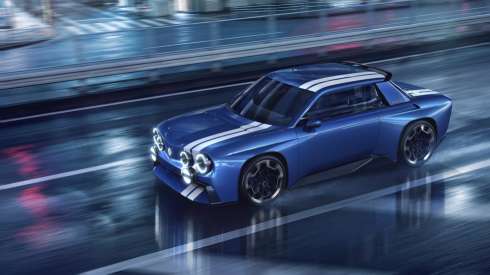
The all-electric Renault 8 Gordini concept car will be unveiled at this Paris Auto Show. Official website of the Renault Group
In response to this change, European car companies are also adjusting their product strategies. At this car show, Citroën will showcase an electric concept car inspired by the classic 2CV; Renault will bring its vintage-style Renault 8 Gordini concept car at the show; Mercedes-Benz will display new-generation all-electric C-class models, continuing to expand its electric product lineup; brands such as Audi and Skoda are also expanding their electric vehicle product lines.
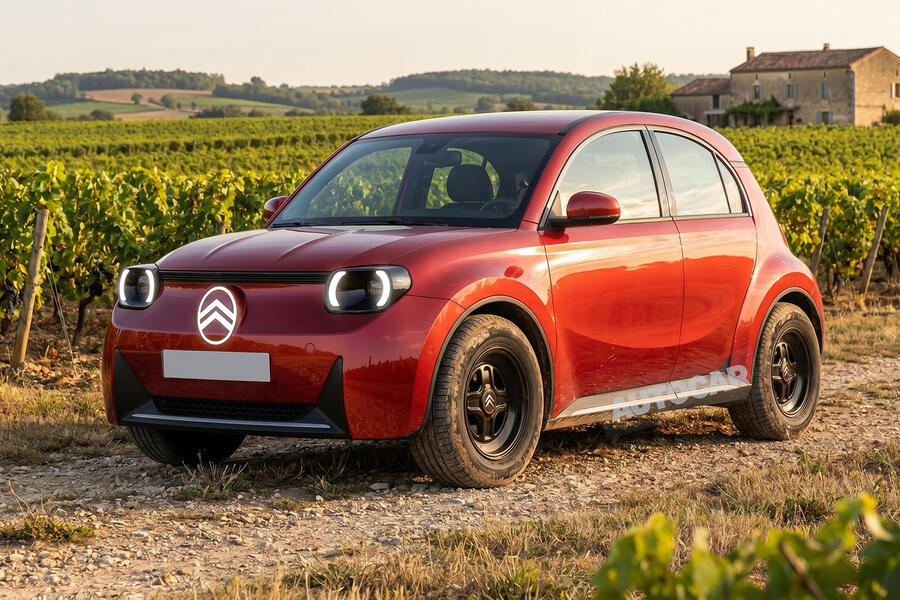
Tesla 2CV Pure Electric Concept Diagram
Reuters said that in the face of the high cost of electric vehicles, European automakers need to make electrification not just a technical showcase for high-end models, but something that can enter the lives of more ordinary consumers.
For European car companies, finding a way to provide attractive products while controlling costs has become a real challenge. Volkswagen is cutting costs and adjusting production capacity, and BMW also faces the pressure of layoffs. The competition from Chinese brands, combined with weak European market demand, US tariffs, and the cost of electric transformation, further increases the operational pressures on traditional car companies.
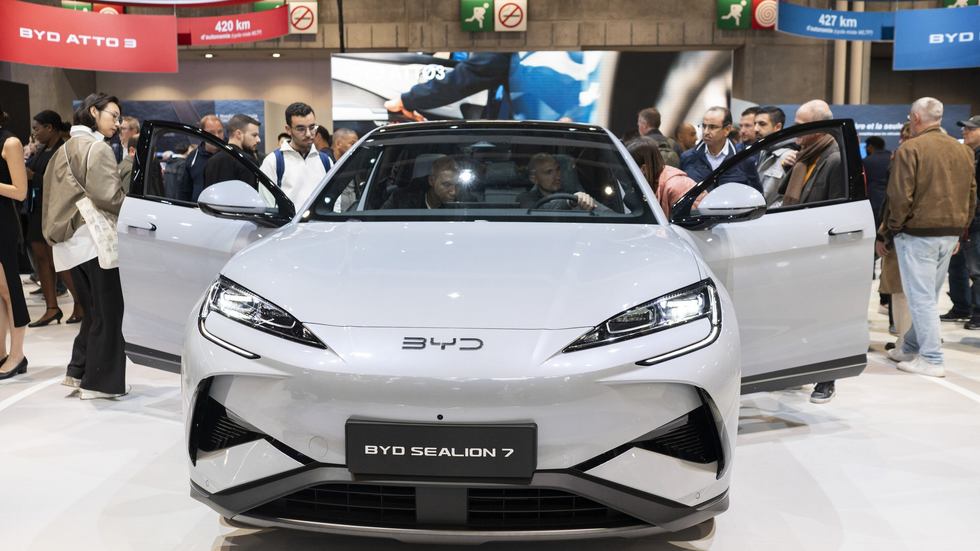
BYD New Vehicle to Make Debut at Paris Motor Show in 2024, according to Bloomberg.
In recent years, the scale of Chinese brands participating in exhibitions has been continuously expanding. This also indirectly confirms that the strategic deployment of Chinese brands in Europe is extending to a wider market. According to incomplete statistics, the number of Chinese brands participating in this automobile exhibition reached a record high, with more than 20 Chinese automakers and Chinese-funded brands participating (including BYD, Geely, Chery, Changan, WM Car, Li Auto, XPeng, LeTEC, GAC, etc.).
Among them, brands such as BYD and Chery that have already entered the European market will continue to showcase their products. Brands like Wenjue and Avita will also take this opportunity to reach out to European consumers.
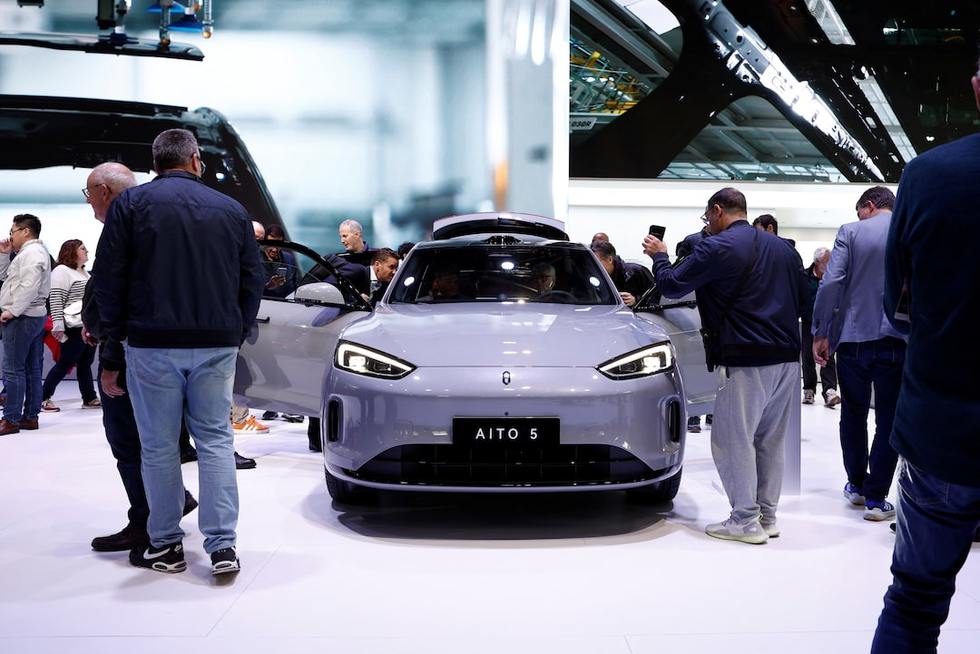
The Wings brand made an appearance at the 2024 Paris Motor Show, according to Reuters.
According to Reuters, Lucid plans to showcase four high-end electric SUVs targeting the European market in Paris. They aim to increase the overseas sales percentage to 20% within the next three years; currently, this percentage is less than 1%.
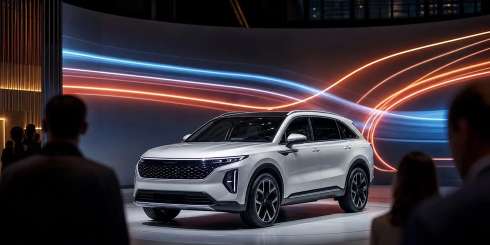
Geely will launch the hybrid model of Monjaro EM-i (Xingyue L Global Edition) at the Paris Auto Show. Motor1
This matrix-style presentation indicates that more and more Chinese automakers are no longer satisfied with relying on a few models to enter the market. Instead, they hope to cover more market segments and gradually establish a brand image. However, participating in exhibitions and releasing new models is just the first step. Regulations, certification, sales channels, after-sales services, and consumer awareness in the European market will still play a role in determining whether these models can actually be sold successfully.
Meanwhile, European car manufacturers' attitudes towards Chinese automotive technology also exhibit a mix of competition and cooperation. On one hand, the European industry is concerned about Chinese brands expanding their market share. On the other hand, some European companies are also seeking to leverage China's electric vehicle technology, supply chains, and production capabilities.
The concentration of Chinese brands does not mean that all traditional car manufacturers are willing to continue investing in large auto shows. After many Japanese brands and Mercedes-Benz were absent from the Paris Auto Show in 2024, there are still many car manufacturers announcing that they will skip the exhibition halls this year.
According to the latest report by French automotive media L'Argus, the main brands absent from this Paris Auto Show will include BMW, MINI, Jaguar Land Rover, Toyota, Nissan, Mazda, Mitsubishi, Suzuki, Lexus, and Abarth under Stellantis.
These brands do not have identical situations.
BMW and MINI had originally announced their participation in this auto show, but later canceled their plans in July. Judging from the progress of new product launches, BMW is still working on its Neue Klasse (new generation) electric vehicle platform. The absence of BMW does not indicate a lack of new products. Jaguar Land Rover is also working on its own product and brand transformation, but chose not to launch new cars at the auto show.
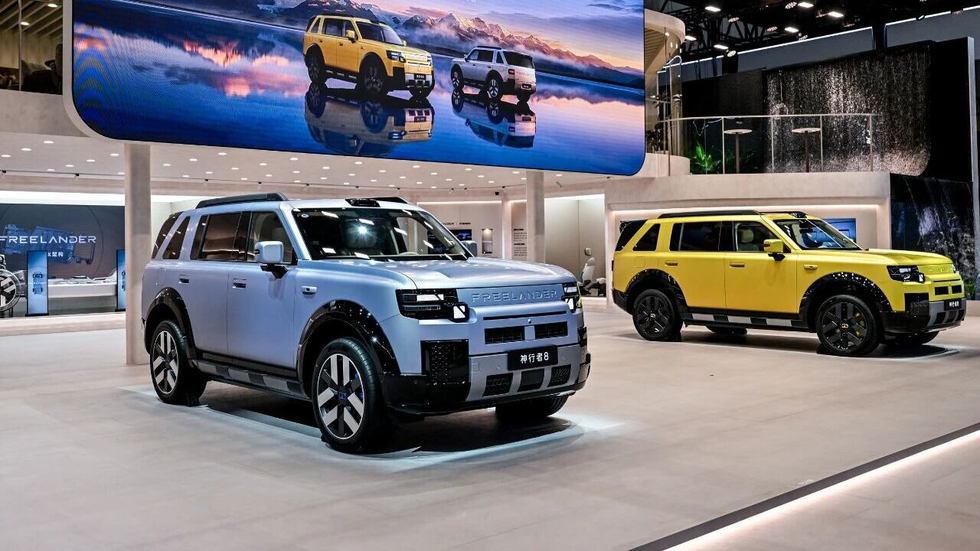
Chery and Jaguar Land Rover have collaborated to create the X-Treme brand, which will be launched in Europe. Official website of the X-Treme brand
Several Japanese brands that were absent did not lack new vehicles. Nissan plans to launch a small car, the Pixo, targeted at the European market. Mazda has already opened pre-order options for its all-electric SUV, the CX-6e, in France. These brands did not choose the Paris Motor Show as their primary exhibition platform, indicating that some automakers still lack enthusiasm for participating in large-scale auto shows.
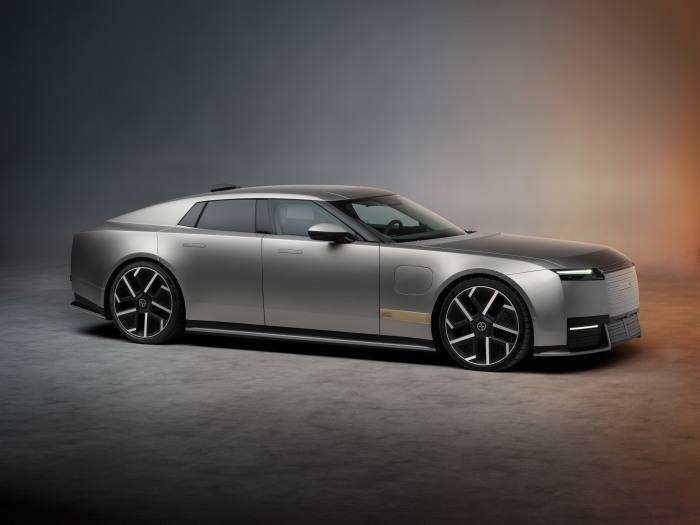
Jaguar chooses to launch its new electric vehicle, the Type 01 Jaguar, in the United States. Official Jaguar Land Rover website
From this perspective, the absence of brands cannot be attributed to cost pressures, nor can it be simply understood as traditional automakers voluntarily withdrawing from the European market. As one of the former marketing channels for companies, car shows are now being overshadowed by factors such as the pace of new car releases, marketing investments, and expected returns.
However, against the backdrop of Chinese brands making concentrated entries into the market, the absence of traditional brands still indicates certain trends in market dynamics. Consumers could originally compare designs, spaces, configurations, and prices of different brands within the same venue. Now, the choice of some traditional brands to remain absent has allowed Chinese brands to gain more room for display.
This auto show also presents a contrast: on one side, some traditional automakers are re-evaluating the value of investing in large-scale exhibitions, while on the other side, Chinese brands hope to leverage this platform to quickly enter the European market. The choices made by both parties reflect the changing perceptions of different companies regarding opportunities and marketing channels in the European market.
Furthermore, the changes in the European auto market are reflected not only in the addition and removal of participating brands but also in consumer vehicle purchase choices. As the electric car market continues to expand, prices, range, convenience of charging, and daily operating costs have become important factors affecting consumer decision-making. Meanwhile, hybrid vehicles still hold a considerable share of the market, indicating that consumers' choices in Europe haven't been concentrated on a single powertrain line.
According to data released by the European Automobile Manufacturers Association (ACEA) on September 24, from January to August this year, electric vehicles accounted for 21.7% of new car registrations in the EU, which is higher than the 15.8% during the same period last year. Hybrid vehicles accounted for 36.6%, while plug-in hybrids accounted for 10%. The combined share of gasoline and diesel vehicles dropped to 29%.
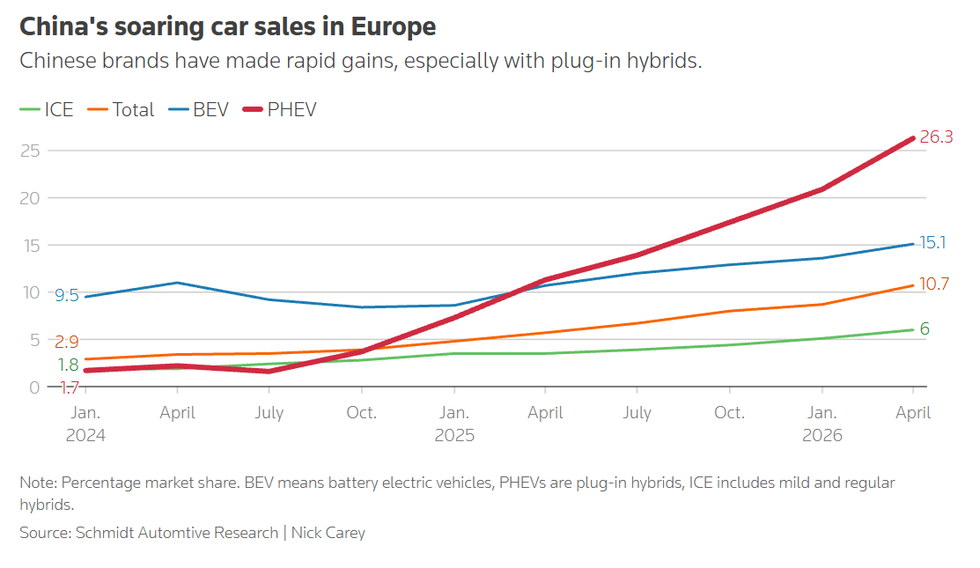
Chinese car brands are seeing a surge in sales in Europe and offer a variety of engine options, Reuters
These data indicate that the European car market is undergoing rapid transformation, but consumer needs remain diverse. For automakers, being able to offer products that are priced reasonably and meet daily travel needs is just as important as being able to introduce new electric technologies. Chinese brands that enter the European market also need to be tested in terms of product pricing, energy supply systems, after-sales services, and local operations.
Reuters reported recently that Chinese car brands have achieved a market share of 10.7% in the European market, which is significantly higher than one year ago. At the same time, Chinese brands are expanding their reach through more powerful models and product types. European automakers, on the other hand, need to maintain their brand advantages while controlling costs, diversifying their products, and accelerating their electrification efforts.
For European consumers, an increase in the number of brands and a wider range of products are direct changes. However, whether different brands will ultimately be recognized in the market also depends on whether the models meet local needs, as well as whether pricing, sales channels, and after-sales service can keep up.
The 2026 Paris Auto Show not only showcases the competitive landscape between Chinese and European car manufacturers, but also reflects the changing dynamics of competition in the European automotive market.
Traditional car companies hope to stabilize their markets through new models, while Chinese brands are accelerating the establishment of brand recognition and expanding market share. The competition between both sides extends to multiple aspects such as product positioning, pricing, technical experience, and service systems.
The increase in participating brands does not mean that traditional car shows have returned to the center of the industry. The absence of some established automakers cannot be simply equated with their withdrawal from the European market. For automakers, whether they participate in car shows depends increasingly on the pace of new car launches, market strategies, and marketing tactics, rather than the historical significance of the car shows themselves.
But whether car companies choose to stand on exhibition stands or reach consumers through other channels, they ultimately face the same problem: whether they can produce products that meet local needs and are competitive in the market. For Chinese brands that are rapidly entering the European market, converting product advantages into sustained sales and brand recognition also requires testing in the market.