A electric vehicle designed, developed, and produced in the UK. Why did it receive a lot of criticism from British media right after its debut?
On October 7th, Jaguar's new all-electric luxury GT Type 01 made its global debut in New York. As the first production model of the rebranded Jaguar brand, the new car is available from £130,000 in the UK and starting at $130,500 in the US. It has a length of over 5.2 meters and a width of about 2 meters. Equipped with three electric motors, it features a maximum horsepower of over 1000 PS, a 0-100 km/h acceleration time of 3.2 seconds, and an estimated EPA range of up to approximately 644 kilometers.
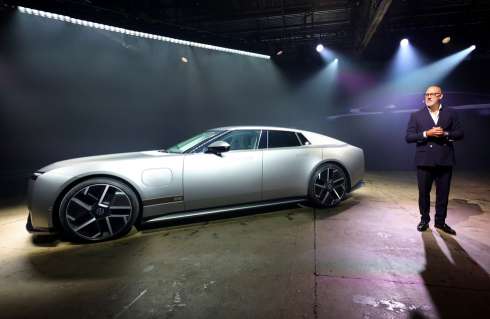
Jaguar GT Type 01 Getty Images
But what British media is concerned about is not just how fast it is.
The British newspaper The Guardian described the Type 01 as a "gigantic escape vehicle worth £150,000", noting that its large size, weight of over 2.5 tons, and 23-inch wheels do not fit well with British urban roads and parking conditions. The Guardian also pointed out that the vehicle has only four seats, and its rear vision is mainly provided by cameras.
British media's questions are actually quite simple: Do British consumers really need such a car?
But Jaguar is now dealing with another issue—whether high-net-worth consumers around the world are willing to pay for it.
According to a report in 'Auto News Europe' prior to the release of the Type 01, Jaguar is shifting from focusing on sales volume to prioritizing 'value over size'. In other words, Jaguar is no longer aiming to increase sales volume as its primary goal. Instead, it hopes to enter the luxury market with higher prices, greater brand premium, and a smaller customer base, thereby achieving higher profit margins.
This explains why Type 01 was done in such an "over-the-top" manner.
It is not a product that helps Jaguar regain momentum in the volume market, but rather a name card that redefines the brand. A body size of over 5.2 meters, 23-inch wheels, a four-seat layout, and a power output of over 1000Ps all emphasize design, performance, and scarcity, rather than practicality.
The European Automotive News also pointed out that Jaguar has accepted that future sales volume will not return to past levels. For the new Jaguar, selling fewer cars may not be a problem; the key is whether each car sold can create higher value.
And the United States was the testing ground that Jaguar used to test this logic. The key point is that the Type 01 was chosen for its global debut in New York, rather than the UK.
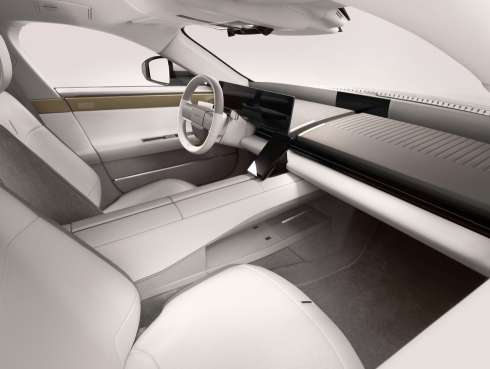
Type 01 Interior – Jaguar Land Rover Official Website
According to Reuters, Jaguar is targeting high-net-worth consumers in the American technology industry, hoping to attract young, wealthy individuals who value design and technology. The acceptance of large luxury cars in the American market is also significantly higher than that in the UK.
However, the United States is not a “electric vehicle paradise” that can be easily bet on.
In recent years, the US electric vehicle market has faced multiple challenges, including a slowdown in growth, divergent consumer demands, and changes in policy environments. Compared to Europe and China, American consumers have relatively limited acceptance of pure electric vehicles. Factors such as the lack of charging infrastructure, concerns about battery range, and the dominance of large SUVs and pickups in the market are all affecting the further popularization of pure electric vehicles.
For Jaguar, this means that the Type 01 will face two variables: on the one hand, the demand from high-income Americans for high-end electric vehicles; and on the other hand, whether the American electric vehicle market can continue to grow.
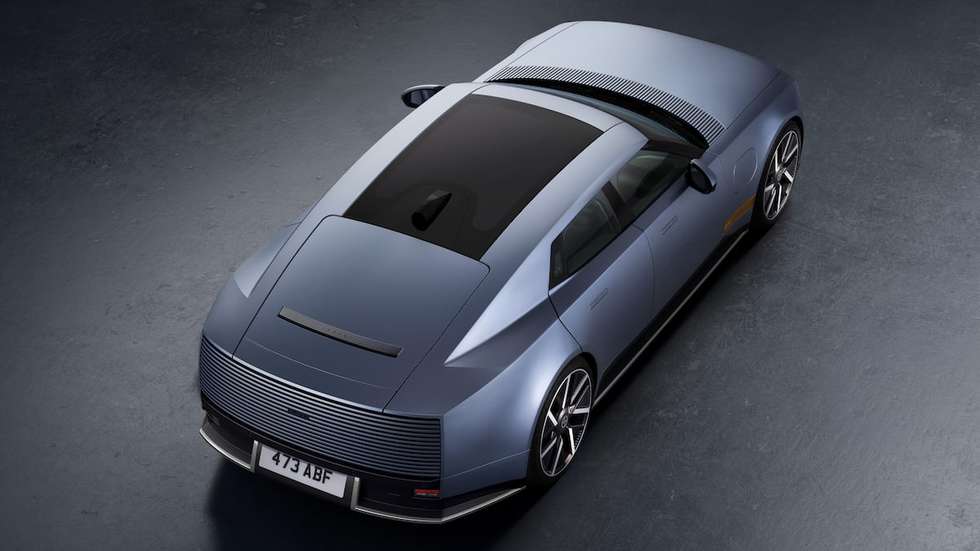
Type 01 is the first of three new vehicles planned by Jaguar Land Rover.
Especially, the Type 01 is not a product with a affordable price. The starting price of over $130,000 limits the target audience to a very small group. If demand from American consumers for pure electric luxury cars does not grow as expected, Jaguar will face greater challenges in achieving higher profits through its 'small-scale, high-value' model.
As for the Chinese market, British media reports indicate that Jaguar plans to delay the launch of this model in the Chinese market, with no launch expected in the next one to two years.
For Jaguar, this choice is not difficult to understand. Many overseas media have also expressed a consistent view: China has become one of the most competitive markets for new energy vehicles globally. The competition in the high-end new energy market has long expanded from brands, design, and performance to intelligent driving, intelligent cockpits, three electrical systems, and localized services.
If Type 01 enters the Chinese market now, it will have to face both traditional luxury brands and a group of Chinese brands that have established their competitiveness in the high-end new energy market. Therefore, Jaguar is actually choosing a risky path: to test the high-price, small-scale brand model in the United States, while avoiding the highly competitive new energy market in the Chinese market at the moment.
Interestingly, unlike the media's opinions, in the eyes of the British manufacturing industry, the Type 01 is still a very “British” product. Jaguar Land Rover emphasizes that the new car will be produced at their Solihull factory in the UK. The electric drive system and battery pack are sourced from British factories, but its target market is no longer limited to the UK.
Therefore, the reason why British media finds this car 'awkward' also indicates that Jaguar's transformation is breaking the brand's established logic. However, whether this transformation will be successful still requires an answer from American consumers.
Additionally, for Jaguar, which has been betting on ‘value prioritizing over scale’, the fact that the Type 01 was sold in small quantities is not particularly concerning. The real issue is whether Jaguar can achieve the high value that it aims to give its products by selling them at a sufficiently high price after the reduced sales volume.